

Audio By Carbonatix
As Artificial Intelligence (AI) reshapes education, business and everyday life, a growing number of educators and technology leaders argue that exposing children to AI early may determine how well societies adapt to the future.
That belief is driving a new wave of youth-focused AI training programmes in Ghana, where young learners, including those from under-resourced communities, are being introduced to emerging technologies long before they enter the workforce.
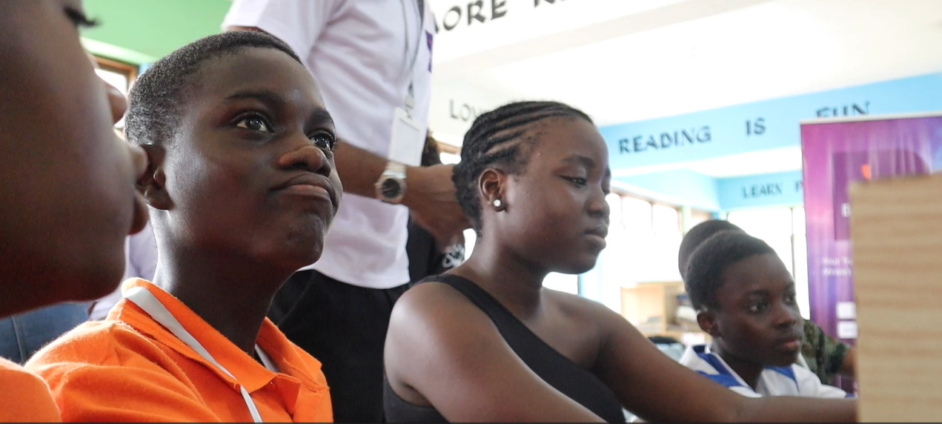
One such initiative, organised by Brainwave and supported by Ghanaian technology company Hubtel, is equipping pupils with practical skills in artificial intelligence, ethical AI use, prompt writing, image and video generation, and real-world applications of AI in creativity and education.
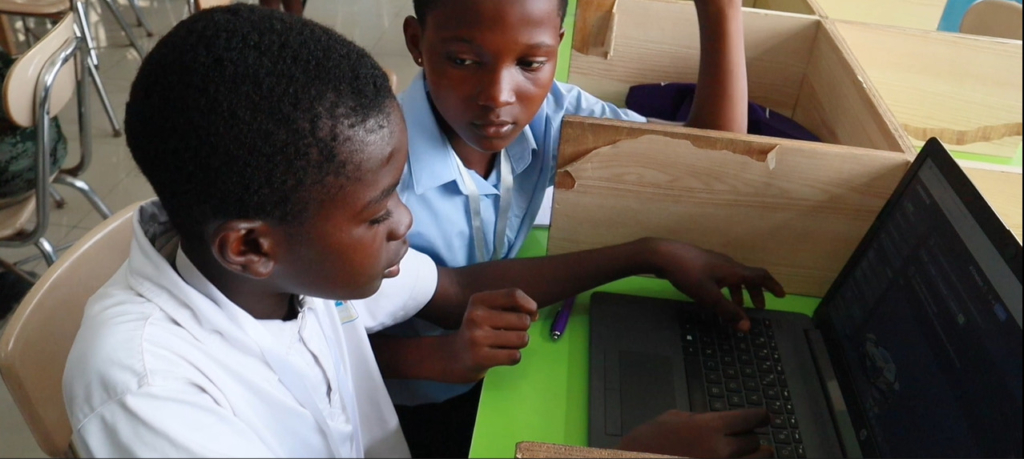
Rather than teaching children to passively use digital tools, the programme is structured to help them understand how AI works and how it can be applied to solve real problems.
Participants begin in the AI Explorers Club, where they learn foundational concepts.
They then progress to hands-on project development before advancing to more complex innovation stages that challenge them to build solutions relevant to their communities.
The idea, organisers say, is to move young people from curiosity to capability, and eventually to leadership in technology. Technology experts involved in the training argue that waiting until tertiary education to introduce AI may be too late.
Head of Engineering at Hubtel, Augustine Gyawu Adjei, said preparing young people for a digital future requires starting early.
“Our children need to learn how to learn, how to think critically and how to distinguish between helpful technology and harmful or unnecessary technology,” he noted. “If we delay exposure, we risk raising a generation that consumes technology without understanding it.”
With AI increasingly integrated into industries such as finance, health, agriculture and education, early training could improve Ghana’s long-term competitiveness.
For many participants, the programme marks their first interaction with AI tools, and in some cases, their first use of a computer.
Anan Christach, a pupil of Somanya Basic School, described the experience as transformative after experimenting with an AI image-generation platform to design a futuristic gold-coloured car.
“I didn’t know AI could create something like this,” she said. “It’s my first time seeing how powerful it is.”
Beyond creativity, she quickly grasped its economic implications.
“AI can help you create things and even make money from your ideas,” she explained.
Facilitators say such moments are critical — when children begin to see technology not as distant or intimidating, but as something they can control and use productively.
One of the biggest societal benefits of youth AI training lies in expanding access. Academy Manager at Brainwave, Elizabeth Adei, observed that some participating schools lack ICT laboratories and basic digital resources.
“Without sponsorship support, many of these children would never have had the opportunity to explore AI,” she said.
By targeting under-resourced communities, programmes like this aim to prevent the emergence of a digital divide where only children from well-equipped schools gain advanced technology skills.
Beyond technical skills, the training also emphasises responsible AI use, including ethics, awareness of bias, and safe application. As misinformation, deepfakes and automation reshape online spaces, raising a generation that understands both the power and limits of AI could strengthen digital accountability across society.
Organisers say the ultimate goal is to develop confident problem-solvers who integrate AI into areas such as agriculture, small business, environmental protection and public services.
Hubtel, which operates across Ghana’s digital payments ecosystem and recently launched an indigenous AI lab focused on fraud detection and machine learning applications, says its involvement reflects a broader commitment to developing future-ready talent.
As artificial intelligence becomes central to education, employment and innovation, partnerships between technology firms and training organisations may play a decisive role in preparing Ghana’s youth for a rapidly changing world.
If scaled nationwide, initiatives like this could help ensure that Ghana’s next generation does not merely adapt to artificial intelligence but actively shape how it serves society.
Latest Stories
-
‘I don’t make music for awards, I make it to connect people’ – Rocky Dawuni
3 minutes -
Farmer jailed for three months over assault on wife in viral video
8 minutes -
Police arrest eight in Okaishie operation targeting illicit drugs and medicines
11 minutes -
David Agyemang Yeboah: Marriage is not the problem; your approach is
14 minutes -
Lawyer sues Standards Authority over used-vehicle import restrictions
16 minutes -
Ukraine to restart strikes on Russian oil refineries, Zelensky says
17 minutes -
CIMG awards drive competition among Ghanaian businesses
22 minutes -
NSA regional director Emmanuel Reagan files nomination to contest NDC Ashanti Regional Organiser position
27 minutes -
Obuasi SHTS: Number of students alleging sexual abuse rises to 16
33 minutes -
Ghana’s economy grows by 7.4% in July 2026
43 minutes -
NDC member challenges Dennis Yeboah Twumasi’s eligibility for Bono Regional Secretary elections
53 minutes -
Popular Nigerian gospel singer Toluwanisings dies
1 hour -
Spio-Garbrah proposes debt swaps to fund reparative justice in Africa and Caribbean
1 hour -
Alban Bagbin calls for governance reforms and coordinated action to address Africa’s debt crisis
1 hour -
AAK Academy Ghana trains 22 chocolate and confectionery companies in production techniques
1 hour