

Audio By Carbonatix
The Energy Commission has intensified awareness and education in Bolgatanga on the draft Electric Vehicle (EV) Charging Infrastructure and Battery Swap Systems Regulations.
When finalised, the regulations will help establish safety and technical standards for EV charging infrastructure, battery swap systems, and licensing regimes, significantly promoting electric mobility in line with Ghana’s climate and sustainability goals.
It is also part of efforts to strengthen Ghana’s resolve to phase out Internal Combustion Engines (ICEs) by 2070.
The draft regulation will also include sanctions to ensure compliance once it is finalised and passed into law.
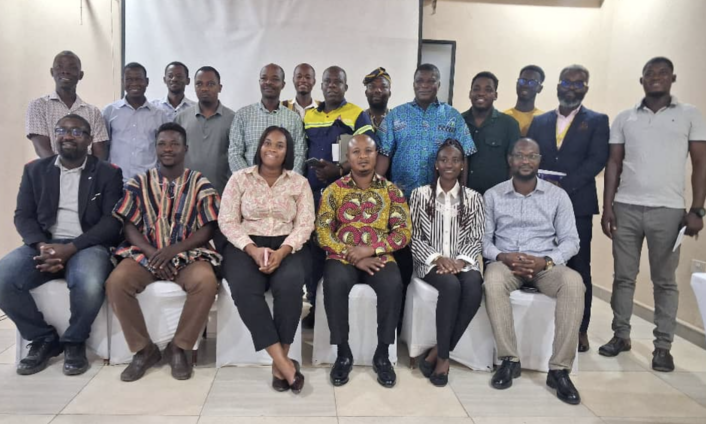
Speaking on the sidelines of the engagement, which brought together stakeholders in the energy value chain and institutions in Bolgatanga, Ms Joyce Caitlyn Ocansey, Drive Electric Programme Manager at the Energy Commission, said the engagement formed part of a nationwide awareness campaign on draft regulations currently awaiting approval.
She noted that the stakeholder engagement followed an earlier engagement in 2022, where the Commission introduced baseline information on electric mobility to stakeholders in Bolgatanga.
“This is a follow-up to inform stakeholders that the Commission has developed draft regulations for EV charging and battery swap systems. We are creating awareness and sensitising the public on what the regulation entails,” she explained.
Ms Ocansey said the initiative had become necessary due to the rapid evolution of technology and the increasing entry of electric vehicles into the Ghanaian market.
“Whether we like it or not, EVs are coming into the country. Most of them charge at home, while others rely on public charging using the national grid. The Commission wants to ensure the safety of the grid, the public, and consumers,” she said.
Ms Ocansey highlighted the environmental benefits of the initiative, noting that Ghana’s transport sector accounted for about 50 per cent of greenhouse gas emissions, adding that transitioning to EVs would significantly reduce emissions, pollution, and ensure public safety.
She stressed that the regulation would cover the entire EV value chain, including manufacturers, assemblers, importers, installers, and operators of charging and battery swap systems.
According to her, individuals who intend to install private charging stations at home will be required to register with the Commission, while commercial operators will need to obtain licences before engaging in the business.
“Anyone who wants to manufacture, import, install, operate, or supply EV charging systems must go through the Energy Commission. We are regulating the entire value chain to ensure order and safety,” she added.
On Ghana’s readiness for electric mobility, Ms Ocansey said adaptation to new technology was an ongoing process.
“Nobody is ever fully ready for change, but government has taken proactive steps to ensure that EVs are introduced sustainably while protecting the power grid and consumers,” she stated.
She disclosed that a 2025 market opportunity study conducted by the Commission had identified several business prospects within the EV space, including charging station operations and battery swap services, particularly for two- and three-wheeler vehicles.
Touching on government support, Ms Ocansey said the policy direction favoured private sector participation, with a strong emphasis on renewable energy integration.
“The government has made it clear that the EV transition will be private sector-led and based on renewable energy. This aligns with the broader national agenda on green transition and sustainability,” she said.
She added that the Commission planned to undertake a grid impact study and develop a national charging station map to ensure equitable distribution of infrastructure across the country, beyond major urban centres.
Dr Godwin Kafui Kwesi Ayetor, Senior Lecturer at the Department of Mechanical Engineering, Kwame Nkrumah University of Science and Technology (KNUST), and a consultant on the draft regulation, noted that the world was transitioning to green systems through electric vehicles and that it was imperative for the country to do so with a regulated system.
The stakeholders commended the government for the initiative and recommended investing in renewable energy to align with the new technology.
Latest Stories
-
Ghana eyes stronger trade ties as Australia hosts multicultural trade and investment forum
2 minutes -
Margaret-Marie Krakue
4 minutes -
Ayariga announces plans for live broadcast of MMDAs’ meetings on local radio stations
7 minutes -
Mrs Anna Tackie
9 minutes -
Ghana links Afghan heroin and Brazilian cocaine to global drug markets – Global Organised Crime Index
17 minutes -
NHIA launches nationwide inter-school quiz to deepen students’ knowledge of NHIS
23 minutes -
Political protection could be masking Ghana’s cocaine trade – Global Organised Crime Index
28 minutes -
AFCON 2027Q: ‘We have to dissolve the GFA’ – Effia MP after Black Stars lose to Gambia
30 minutes -
NPP announces voting schedule and ID requirements for October 3 national elections
32 minutes -
Lupus can mimic HIV symptoms and damage kidneys if untreated – KNUST expert
35 minutes -
Focus on Sickle Cell Foundation seeks to introduce sickle cell education through comics in Ghanaian schools
41 minutes -
NPP rewrites the campaign playbok as opposition reality shapes National Executive contest
42 minutes -
Road safety education will fail without enforcement – NRSA boss
43 minutes -
Daily Insight for CEOs: Finishing Q3 strong and entering Q4 with purpose
44 minutes -
National Ambulance Service begins ‘Operation Restore Fleet’ to restore grounded ambulances
45 minutes