

Audio By Carbonatix
Stakeholders in Ghana’s financial and policy sectors have called for stronger collaboration to improve access to credit and social protection for informal sector workers, particularly traders and smallholder farmers.
The call was made at a National Policy Dialogue on Financial Inclusion and Social Protection for Informal Sector Workers, organised by the Centre for Social Justice in Accra.
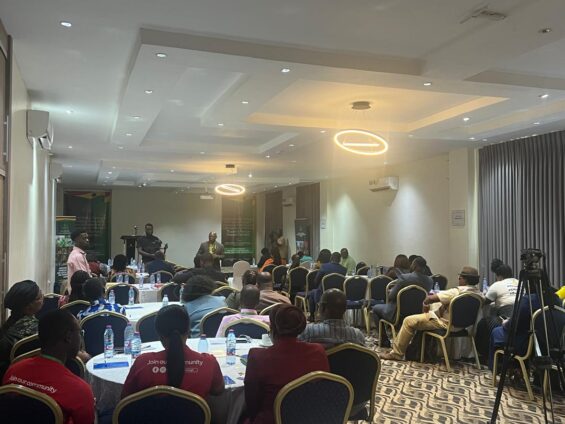
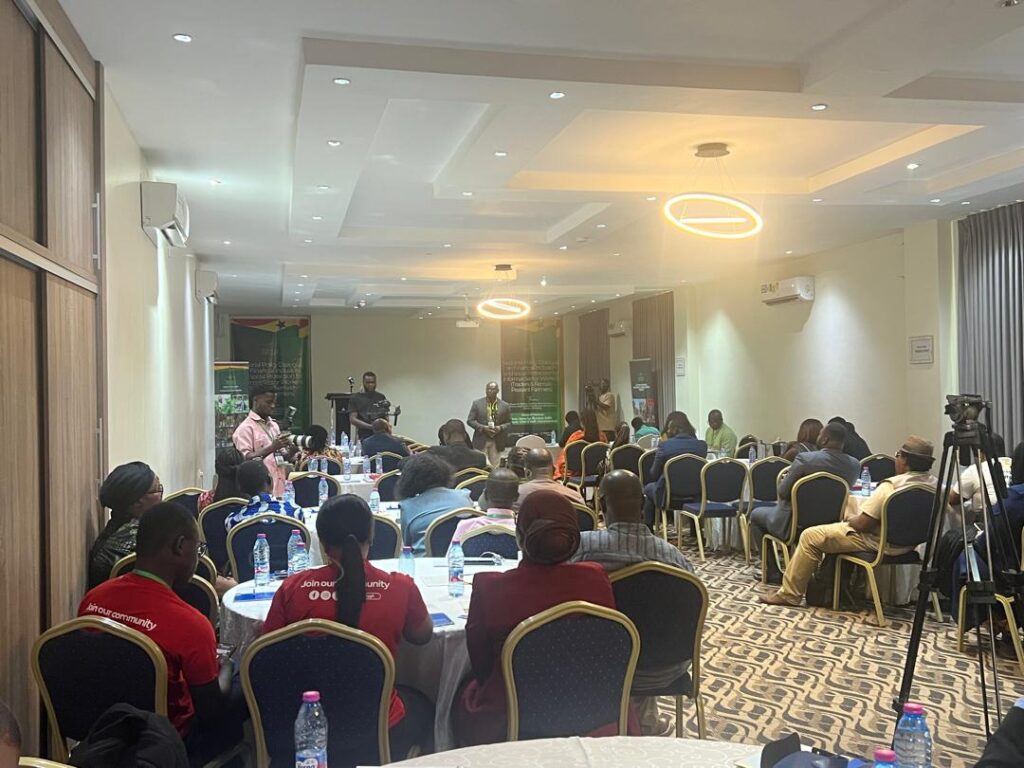
The event, held on Thursday, April 16, at the Airport View Hotel, brought together representatives from banking and insurance institutions, regulators, policymakers, development partners and informal worker groups.
The aim was to develop practical policy proposals to strengthen financial inclusion in Ghana.
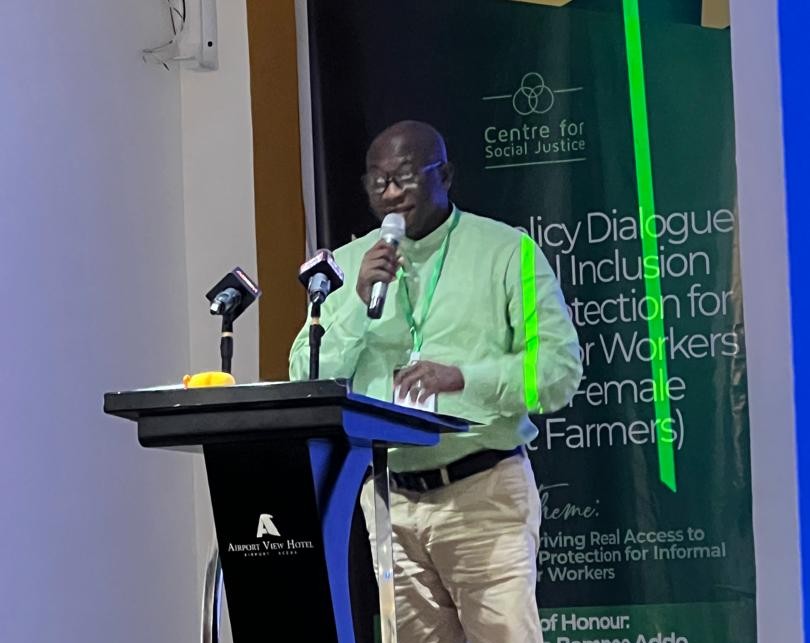
Speaking at the event, the Executive Director of the Centre for Social Justice, Professor Alex Manu, said the timing of the dialogue was critical.
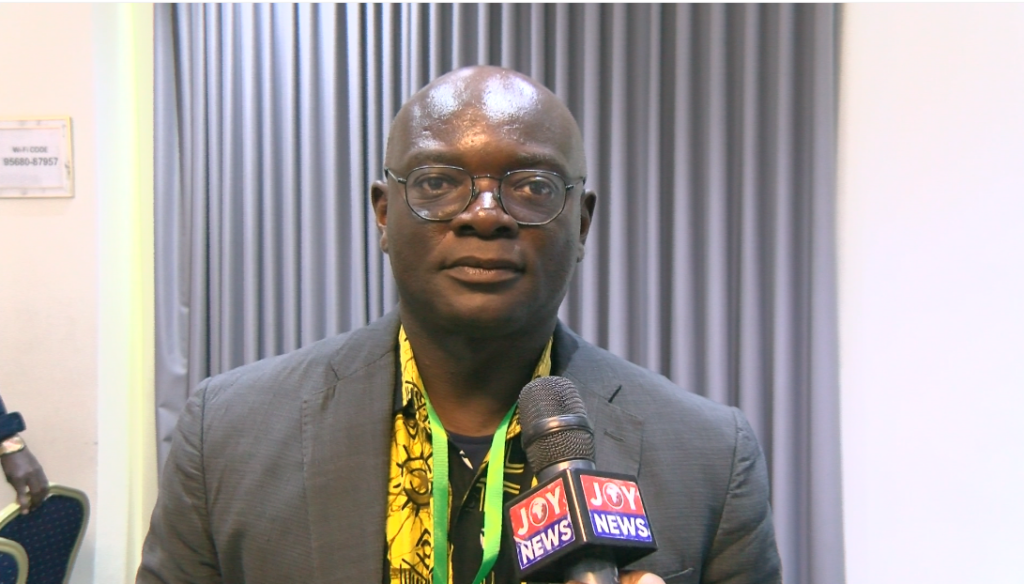
“We are having this dialogue at this time because Ghana is at a critical stage of its evolution,” he said.
“In this evolution, we need to be inclusive so that we have a Ghana that includes all Ghanaians. The informal sector has been left out for a long time.”
He said there was a need to bring the concerns of farmers and market women into national discussions.
“We want to make sure that Ghana remembers its farmers, its market women… who are affecting the lives of those of us who are in the big cities,” he added.
Prof Manu identified three main challenges facing informal workers: access to finance, lack of awareness, and unsuitable financial products. He explained that many workers struggle to meet the requirements for loans.
“Before they access various financial packages, the informal sector suffers the challenge of bureaucracy and the unavailability of what they call collaterals,” he said.
He also said that even when financial products exist, many people are unaware of them. In addition, he questioned whether existing packages truly meet the needs of informal workers.
“Do they have packages specific for the farmer who would have money in the rainy season and would go through a whole dry season without money?” he asked.
He said that the dialogue was not meant to impose solutions, but to develop them collectively.
“We don’t want to make prescriptions… let’s go create what we like, so that we have a package that works for the farmer, it works for the market woman, and it works for the banks,” he said.
Also speaking at the event, the Manager for Right to Services at the Star Ghana Foundation, Raymond Danso, described the informal sector as central to Ghana’s economy but largely underserved.
“We are dealing with a sector that constitutes over 80% of our workforce, yet they remain largely invisible to the financial institutions,” he said.
He pointed to a gap between financial innovation and real access. “Today, we see mobile money penetration, we see digital banking. Unfortunately, our money is in the markets, and our farmers… still struggle with a massive gap,” he said.
Mr Danso added that high interest rates and lack of collateral continue to limit access to credit. In some cases, he said, loans are issued at rates as high as 28 per cent, yet remain out of reach for many.
He called for stronger coordination across sectors.
“We need to work as an ecosystem,” he said, urging regulators and financial institutions to see the informal sector not as a risk, but as an opportunity. “We need to see them as the largest untapped market in the country.”
On his part, the Head of Financial Inclusion and Consumer Education at the Bank of Ghana, Isaac Impriaim, highlighted progress made in expanding access to financial services.
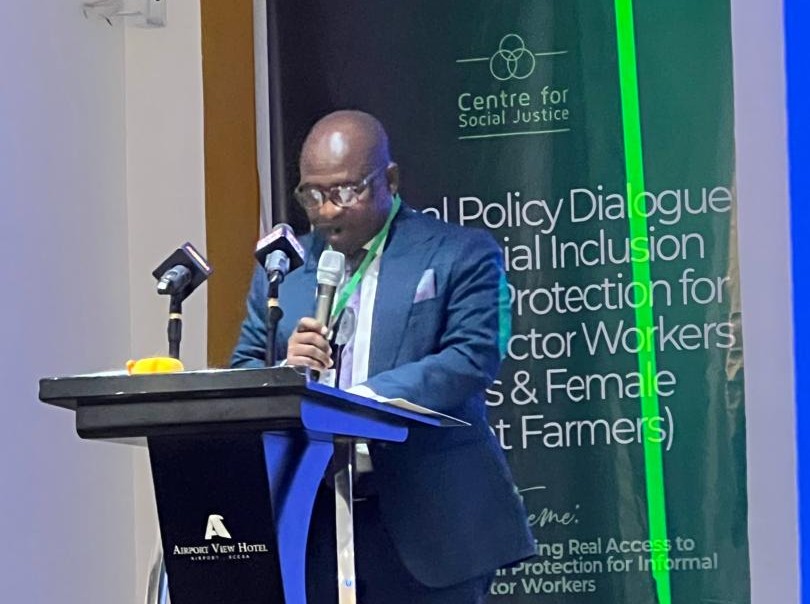
He said about 81 per cent of adults now have access to formal financial services, largely due to mobile money and digital innovations. However, he stressed that access alone is no longer enough.
“The priority now is to ensure that financial inclusion translates into meaningful impact, improving livelihoods, supporting business and promoting economic resilience,” he said.
Mr Impriaim explained that digital tools are helping to remove traditional barriers such as collateral, with financial institutions now using alternative data like mobile money transactions to assess creditworthiness.
Despite this progress, he said that many people are still unaware of these opportunities, pointing to the need for stronger financial education.
At the policy level, the Ministry of Finance also acknowledged the gaps that remain.
Speaking at the event, Head of Financial Innovation, Inclusion and Research at the Ministry, Patience Arko-Boham, said the focus must shift from access to outcomes.
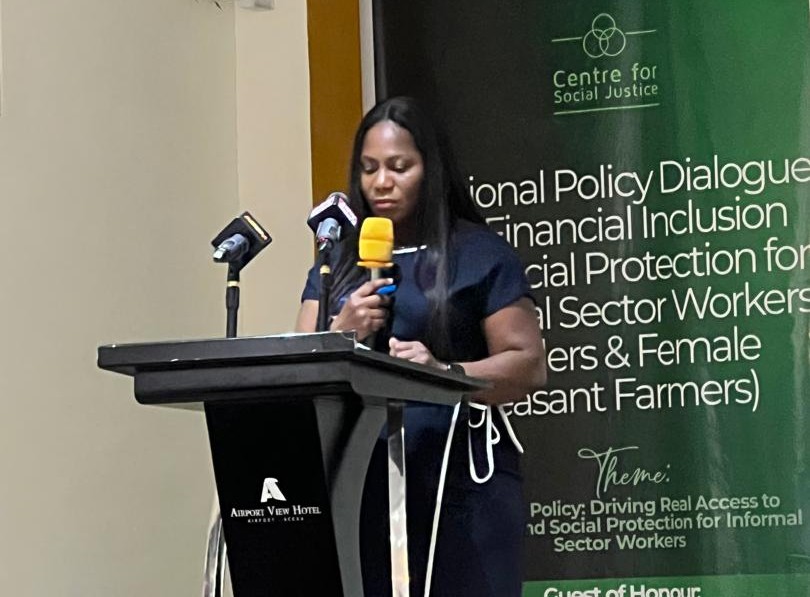
“Financial inclusion must be assessed not only by penetration rates, but outcomes such as income stability… and reduced vulnerability to shocks,” she said.
She said that although the informal sector employs about 80 per cent of Ghana’s workforce, it still faces structural challenges that limit productivity and access to protection.
Mrs Arko-Boham revealed that the Ministry is working on a new national financial inclusion strategy to address these issues.
She said the plan would focus on better coordination, improved data systems and policies that reflect the realities of informal workers.
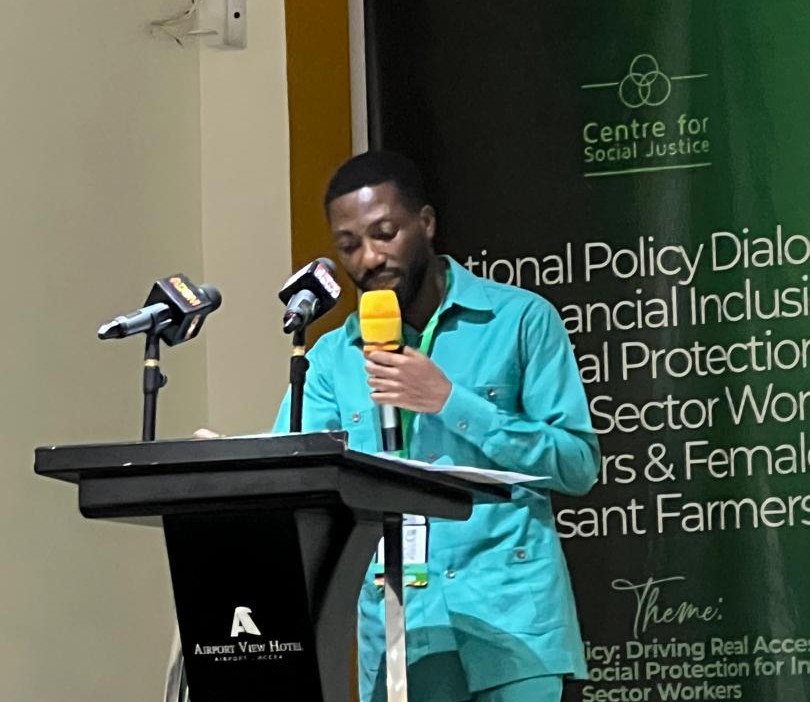
Delivering the keynote address on behalf of the Ministry of Trade, Agribusiness and Industry, Director of General Administration Yaw Sekyi described the informal sector as the backbone of the economy.
“For millions of Ghanaians, the informal sector is not a side story… it is how families survive,” he said.
He said that about 89 per cent of the workforce operates in the informal sector, adding that any gaps in access to finance and protection affect the majority of citizens.
He also highlighted the role of women in business, noting that many still face significant barriers to financing despite high levels of participation.
Mr Sekyi said the ministry remains committed to supporting small businesses through training, market access and digital tools, and expressed hope that the dialogue would lead to practical and coordinated solutions.
Latest Stories
-
Elevate Africa confirms presidents, vice presidents and ministers for 2026 Annual Convening in Accra
15 minutes -
Keta MP commissions 60-seater kindergarten facility to replace unsafe structure
20 minutes -
Salomey Awiti-Baffoe’s lawyers welcome GH¢100,000 bail after earlier rejection
22 minutes -
Domestic tourism and its impact on the local economy
30 minutes -
Top-Up Pharmacy wins Community Pharmacy Chain of the Year at 2026 PSGH Pharma Excellence Awards
30 minutes -
Nigeria military aircraft with 32 on board crashes
33 minutes -
Black Stars need a coach who can inspire players to perform – Ignatius Osei Fosu
34 minutes -
Revenue collector crushed to death on Kasoa-Winneba highway
38 minutes -
GPL Week 5: Stephen Amankona, 8 other outstanding players win NASCO awards
40 minutes -
NPP’s new leadership team has experience to deliver – Dr Asah-Asante
40 minutes -
Mahama committed to developing Volta Region – Chief of Staff
41 minutes -
NPP’s new leadership offers no renewal after ‘micro minority’ defeat – NDC’s Abeiku Hayford
43 minutes -
Blackstar Experience to hold fashion show and summit in November
43 minutes -
Prof Mike Oquaye backs Kojo Bamba’s call for stronger ballot protection
53 minutes -
If police won’t protect you, you’ll protect yourself – Prof Mike Oquaye backs Kojo Bamba’s election
54 minutes