

Audio By Carbonatix
The Leadership and Advocacy for Women in Africa (LAWA) Ghana, in partnership with the University of Oxford Faculty of Law, has called for the enactment of legislation to address Technology-Facilitated Gender-Based Violence (TFGBV) and respond effectively to emerging digital threatsq.
LAWA Ghana, an organisation advocating laws to protect the rights of women and girls, and the University of Oxford, urged the promulgation of a new law or the amendment of existing legislation to specifically address deepfake abuse, online impersonation, and synthetic sexual content.
The group noted that such legal measures were a necessary next step in ensuring that Ghana’s legal system kept pace with rapidly evolving technological threats.
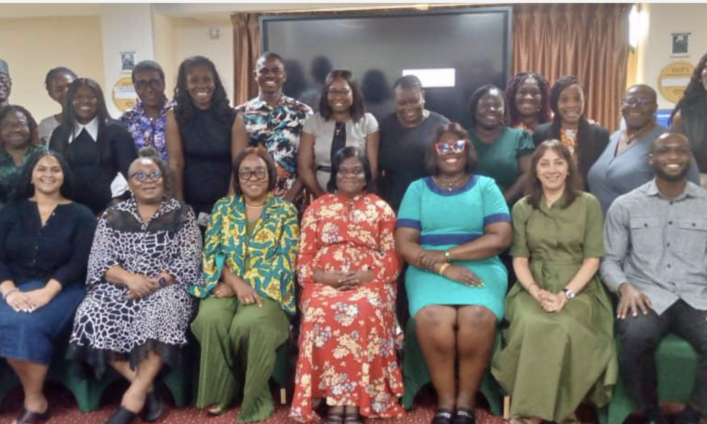
The call was made at a stakeholder engagement held in Accra on Tuesday on the theme: “Technology-Facilitated Gender-Based Violence in the Age of AI: Legal and Policy Pathways for Ghana.”
Professor Shazia Choudhry and Aincre Maame-Fosua Evans of the University of Oxford Faculty of Law presented research on TFGBV, focusing on deepfake and image-based sexual abuse, as well as doxxing, highlighted their harmful effects on women and children.
On deepfakes – the creation, manipulation, and distribution of sexually explicit images or videos by superimposing an individual’s face onto another person’s body using artificial intelligence – Prof Choudhry stated that 98 per cent of such acts were perpetrated against women.
She warned that failure to address the issue could reduce women’s participation in politics, media, and civic spaces due to stigma and social repercussions.
“There are also economic costs for victims and the state, including expenses related to legal action, content removal, mental health support, and loss of productivity,” she said, calling for specialised laws to address the phenomenon.
Speaking on doxxing – the intentional release of a person’s private information online without consent – Maame-Fosua Evans noted that victims often experienced harassment and abuse, adding that Ghanaian women could face similar risks if adequate legal protections were not established.
Madam Fitnat Adjetey, on behalf of LAWA Ghana, said every tool developed by humanity could be weaponised, and that such technologies were increasingly being used against women and girls with impunity.
She acknowledged Ghana’s progress in addressing violence against women and promoting gender equality but noted that existing legal and institutional frameworks did not adequately capture AI-enabled abuses.
Referencing laws such as the Cybersecurity Act, 2020 (Act 1038), the Data Protection Act, 2012 (Act 843), the Domestic Violence Act, 2007 (Act 732), and the Electronic Communications Act, 2008 (Act 775), Madam Adjetey said their provisions did not sufficiently address Technology-Facilitated Gender-Based Violence.
She, therefore, called for amendments to existing legislation or the enactment of a comprehensive law to tackle TFGBV.
“In Ghana today, women, including professionals, students, and community leaders, are facing real harms such as deepfake videos, synthetic sexual images, and online impersonation,” Madam Adjetey said.
“The resulting reputational, emotional, and economic damage is often irreversible. Unfortunately, our current legal framework does not adequately address these emerging harms.”
She stressed the need to address those legal gaps through a participatory and cross-sector approach that reflected Ghana’s constitutional values and social context.
Participants at the workshop recommended the development of clear legal definitions for TFGBV-related offences, strengthened enforcement mechanisms, and increased public awareness to combat the growing threat.
Latest Stories
-
Godfred Dame questions 2-night EOCO detention of Baffour Awuah over GH¢2.2m legal fees
7 minutes -
GH¢1.64bn NHIS claims paid in 2026 as Private Health Facilities welcome improved reimbursements
14 minutes -
Blue Medics champions healthy ageing at Akuapem North older persons commemoration
19 minutes -
NPP elects national executives today in Kumasi ahead of election 2028
25 minutes -
Godfred Dame accuses EOCO, CID, AG of using state power to punish political opponents
36 minutes -
Walter Mosley visits W.E.B. Du Bois Centre in Accra: A New York Secretary’s homecoming story on where Du Bois spent his final years.
3 hours -
MTN set to deploy 5G services after winning spectrum licenses worth US$202m
5 hours -
NPP national elections: 3,000–4,000 police to handle security, traffic in Kumasi – Karbo
7 hours -
Atta Akyea fumes as Manhyia MP is to spend another night in EOCO custody
7 hours -
SSNIT says La Beach clearance was to protect hotel investments, beaches to remain public
8 hours -
APSU congratulates St Augustine’s College after back-to-back National Investment Quiz wins
8 hours -
Renewed flood intervention at Mallam Junction raises hopes among residents, businesses
9 hours -
St Augustine’s College retain National Investment Quiz title after nail-biting grand finale
9 hours -
Education infrastructure investment will drive Banda’s development – Ahmed Ibrahim
9 hours -
Teacher unions strike: Gov’t presents fresh proposals as talks end inconclusively
10 hours