


Audio By Carbonatix
In Leipzig, inside the old headquarters of the Stasi, once one of the most feared secret police systems in the world, the past and the future collided in a stark conversation about freedom, democracy, and technology.
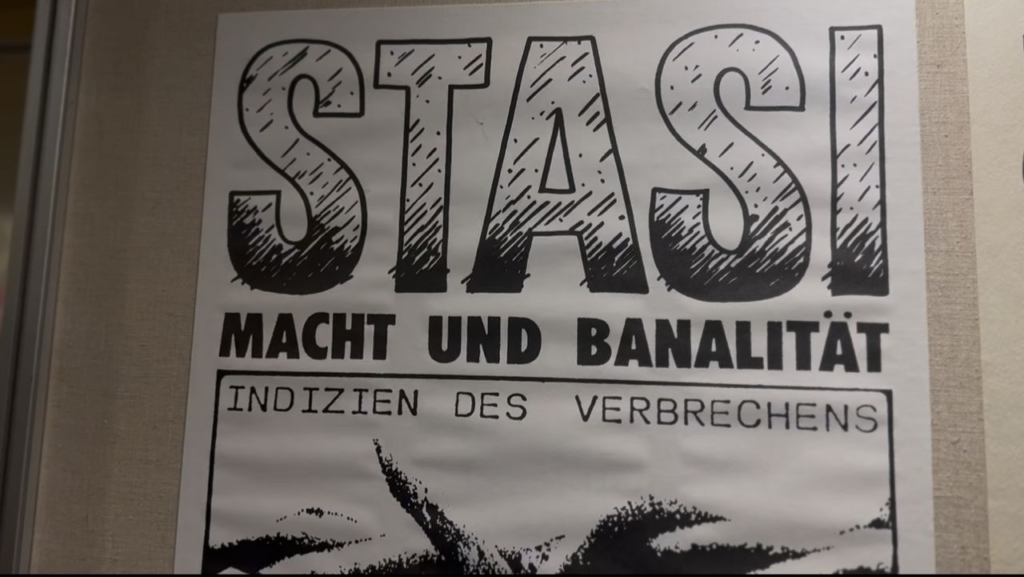
The Round Corner Museum, located in the heart of Leipzig, preserves the operations of the East German Ministry for State Security (Stasi), a regime that built an extensive network of surveillance, informants and fear to control its citizens from 1950 until the fall of the Berlin Wall.
Today, the building is a museum. But the questions raised inside it are anything but historical.
“There is no absolute freedom and no absolute security.”
In discussions with the museum’s director, Tobias Hollitzer, on state surveillance, a central warning emerged: the tools used today by modern societies, from data-tracking systems to AI and facial recognition, are capable of reproducing the same early patterns of the STASI period.
Asked what advice young democracies like Ghana should follow, the museum director offered a sobering reflection:
“Every society must find its own balance. There is no absolute freedom, just as there is no absolute security. The question is: how much are we willing to accept or sacrifice?”
His concern is not the technology itself, but the speed at which societies surrender control over their data without real debate.
“AI is an incredible danger if we become dependent on it. Again, it is a matter of what a society is willing to cope with and how much we give away without noticing.
What the Stasi did and why it matters now
The GDR’s Stasi perfected surveillance long before the digital age existed. They infiltrated families, workplaces, and churches, monitored letters, phone calls, and personal relationships, controlled elections, censored speech, and shaped every part of daily life.
Fear, intimidation, and secrecy were the backbone of governance.
Leipzig has a painful, powerful history. It was here that protestors, through prayer meetings at St. Nicholas Church and the famous Monday Demonstrations, sparked the Peaceful Revolution of 1989, eventually helping bring down the Berlin Wall.
Today, Leipzig calls itself a “City of Heroes” because its people proved that even a deeply monitored society can rise.
The lesson for Ghana: democratic systems must be protected early
Ghana’s democracy is young and evolving. Digital addressing systems, national databases, SIM registration, and new surveillance technologies are expanding rapidly.
And that is precisely where Germany’s history becomes relevant. The Stasi Museum’s experts stressed one key message: freedom erodes slowly, not overnight.
It begins with convenience. Then fear. Then silence.
“The danger is not that technology exists, it is how easily societies hand over their rights without question,” the director said.
Why this matters now
As Ghana builds more digital infrastructure and as global debates grow around AI regulation, cybersecurity, and political interference, Germany’s history offers a strong reminder:
• Transparency must match technological expansion.
• Checks and balances must evolve as fast as the tools do.
• Citizens must understand what data is collected, who holds it, and how it is used.
The story of Leipzig’s Stasi headquarters is not just a European memory.
It is a warning and a guide for countries working to protect democracy in a digital age.
Latest Stories
-
At least 153 dead after reported strike on school, Iran says
34 seconds -
President Mahama arrives in Tanzania to address African Court on human and peoples’ rights
12 minutes -
Ghana’s current surplus to average 3% of GDP in 2026 – Databank Research
27 minutes -
Cedi to depreciate by 7.20% in 2026
32 minutes -
Banks record GH¢15.0bn profit in 2025, a 43.5% growth
32 minutes -
The Africa Editors Forum honours Ghana’s Kwame Karikari with Lifetime Service to Journalism Award
33 minutes -
Weak revenue performance, pressures from compensation pose fiscal risks to economic outlook – BoG
34 minutes -
2025/26 GPL: Bechem United held to goalless draw by Karela United
40 minutes -
Specialised courts to fast-track justice on galamsey, corruption and financial crimes – Judicial Secretary
41 minutes -
Ghanaians urged to embrace specialised courts for effective justice delivery
1 hour -
Sextortion offenders face up to 25 years in jail – Judicial Secretary warns
1 hour -
Air Pollution responsible for a third of stroke, lung cancer and neonatal deaths in Ghana — 2025 SoGA Report
2 hours -
Air pollution may directly contribute to Alzheimer’s disease – new study
2 hours -
Tinubu overhauls Police leadership as River Park case, financial scandal trail Egbetokun’s exit
2 hours -
SONA: Mahama’s macro economic claims don’t reflect reality – Bekwai MP
2 hours