

Audio By Carbonatix
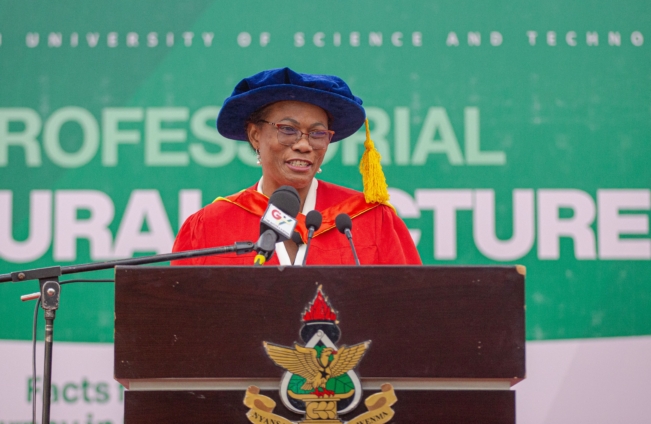
A statistician at the Kwame Nkrumah University of Science and Technology, Prof. Atunike Olusola Adebanji is charging policy makers to actively use statistical analysis for reliable decision-making.
“In the policy-making process to ensure that decisions are evidence-based and grounded in reliable data, Statistical analysis should be considered a fundamental component in the policy-making process to ensure that decisions are evidence-based and grounded in reliable data,” she stated.
Prof. Adebanji was speaking at her professorial inaugural lecture at KNUST.
He lecture was on the topic: “Facts from Artefacts: A Journey in Statistical Inquisition.”
The inaugural lecture highlighted the role of statisticians in the pursuit of truth amidst the intricate interplay between facts and the artifacts that often obscure them.
To shed light on maternal and child healthcare in Ghana, the lecture delved into the quantitative assessment of the impact of key healthcare policies, such as the Exemption Fee Delivery Policy, the Free Maternal Healthcare Policy, and the accelerated MDG5 framework.
The lecture extended to broader health-related research topics, encompassing studies on overweight and obesity prevalence among women, anaemia in pregnancy and sensitivity analysis of pregnancy outcome predictive models.
Others were the proposed model for postpartum hospital length of stay, and the existing knowledge-practice gaps in newborn umbilical cord care.

The lecture further touched on the substantial contributions made to promoting statistical literacy.
Prof. Adebanji again called on the Ghana Health Service to pay close attention to building capacity of personnel for improved healthcare.
“The Ghana Health Service should invest in capacity-building programmes for healthcare professionals, focusing on skills enhancement in areas of data collection and analysis for real-time evaluation of healthcare interventions and their impact on maternal and child health outcomes for data-driven decision-making.
She again underscored the importance of media collaboration for wide dissemination of healthcare activities.
“Interacting with journalists makes it possible to accurately and thoroughly cover the effects of interventions, raising public awareness and comprehension.
“Again, maintaining the credibility of intervention results depends on accurate reporting. Collaborations between the media make it possible to disseminate accurate and objective information, stopping the spread of false information and guaranteeing that the public is kept informed,” she explained.
Latest Stories
-
Betway delivers solar-powered solution in Ayensuano District
34 minutes -
CMS-UG to mark 20 years of leadership in migration scholarship and partnerships in 2026
45 minutes -
Misconception on survey sponsorship by respondents likely to affect research credibility — Richard Adjadeh
55 minutes -
The challenges of embracing new energy: Rural Ahafo women on Ghana’s clean energy transition
1 hour -
Joy FM Festival of Nine Lessons and Carols ends with music, worship and thanksgiving
2 hours -
GRA locks up Osu’s Cloud 9 Pub over non-payment of taxes
3 hours -
GPL 25/26: Hearts pip Nations to return to winning ways
3 hours -
GES dismisses claims of ‘secret recruitment’ and bribery allegations
3 hours -
UTNMG condemns alleged financial exploitation at Bolgatanga Nurses’ Training College
3 hours -
Ghana Prisons Service launches ‘Think Prison 360 Degrees’ initiative in Eastern Region
3 hours -
He was a legend – NPP pays tribute to Daddy Lumba
4 hours -
President Mahama arrives in Nigeria for 68th ECOWAS Heads of State Summit
4 hours -
One dead, 3 injured in Juaboso-Bonsu Nkwanta road accident
4 hours -
Awerco Construction denies claims World Bank cancelled Weija Paediatric hospital contract
4 hours -
Photos: Ghana Prisons Service launches “Think Prison 360 Degrees” initiative
4 hours