

Audio By Carbonatix
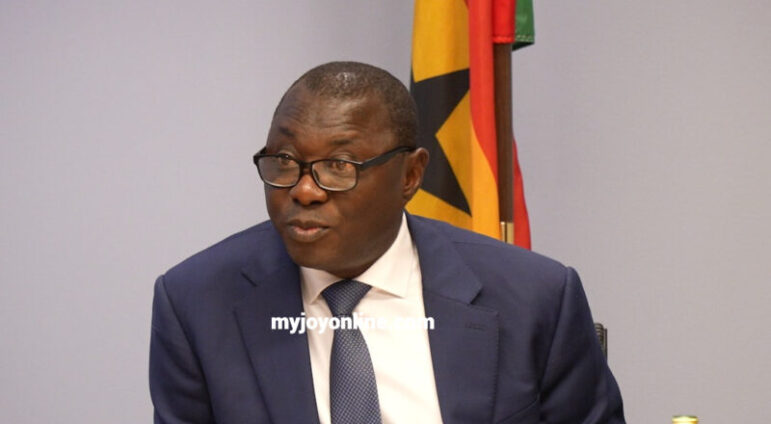
The Finance Minister has criticised Sunon Asogli Power for what he described as “bad faith” in the company’s decision to halt operations over a $259 million debt owed by the Electricity Company of Ghana (ECG).
Dr Mohammed Amin Adam explained that government was in the process of negotiating an agreement to clear the debts when Sunon Asogli changed its stance on the payment terms, complicating the process.
“We were working on an agreement to address the debt, but Sunon Asogli later revised their demands on payment terms, making it difficult for us to proceed,” the Finance Minister stated.
Difficult Negotiations with Sunon Asogli
Dr Mohammed Amin Adam shared that during an initial payment round to independent power producers, the Ministry of Finance allocated $30 million to Sunon Asogli.
Later, the company requested an additional $30 million, but the ministry did not agree to this request at the time.
During further negotiations, ECG proposed adding the additional $30 million as part of the settlement, but Sunon Asogli refused to sign the agreement until payment was made.
“They insisted we pay first before they would sign,” Dr. Amin explained.
“Later, they demanded $60 million, threatening to shut down if this amount wasn’t paid.”
The Finance Minister described the move as unfair and urged caution, stating, “We shouldn’t feel pressured just because it’s an election year.
"People sometimes act as if Ghana doesn’t know its rights, especially as we approach elections.”
Debt Restructuring for Independent Power Producers
The Finance Minister announced that Sunon Asogli Power has now agreed to sign a settlement agreement concerning debt restructuring for independent power producers (IPPs). He highlighted the government’s significant progress in restructuring debts owed to IPPs, including Karpower, CENIT Energy, Sunon Asogli, and Aksa, adding that two IPPs—CENIT and Aksa—have already reached agreements on debt restructuring.
Background on Sunon Asogli’s Shutdown
On October 16, Sunon Asogli Power announced a shutdown due to ECG’s outstanding debt of $259 million. The company stated that it had not invoiced ECG for idle capacity charges like other IPPs, but its debt had grown by 23% between January and September 2024, with only 22.6% of invoices paid during this period.
Impact on Ghana’s Power Supply
The Finance Minister assured the public that the shutdown did not impact Ghana’s power supply due to the country’s strong reserve position.
“Ghana has multiple power plants generating electricity, and despite the shutdown, we didn’t face a crisis,” Dr Amin noted, adding that the country maintains a surplus in power supply.
Latest Stories
-
GPL 2025/26: Dreams FC stage stunning comeback to hammer Eleven Wonders
2 hours -
Livestream: The Probe examines Kumasi’s looming water crisis
2 hours -
MTN Ghana gears up to lead Africa’s AI revolution
2 hours -
Philanthropist Alhaji FuZak donates Da’wah bus to Ambariya Sunni community
2 hours -
GUTA calls for suspension of Publican AI system over trade disruptions
2 hours -
TTAG raises alarm over proposed recruitment of 7,000 teachers, demands national posting roadmap
2 hours -
Civilians feared killed after reports of air strike on Nigerian market
2 hours -
Bishop Simon Kofi Appiah installed as new Jasikan Diocese Bishop
2 hours -
Trump’s Strait of Hormuz blockade threat raises risks and leaves predicaments unchanged
3 hours -
US Court backs extradition of former MASLOC CEO Sedina Tamakloe-Attionu to Ghana
3 hours -
Seven arrested as NAIMOS dismantles illegal mining camp, seizes firearms at Boin River
3 hours -
Fire erupts at Madina Ritz Junction, destroys multiple wooden structures and containers
3 hours -
Daniel-Kofi Kyereh returns from long-term injury, registers assist for Freiburg U23
3 hours -
Knifeman calling himself ‘Lucifer’ slashes three at NYC’s Grand Central
4 hours -
Brands are built from within to without
4 hours