

Audio By Carbonatix
A national survey conducted by Professor Justice Tankebe and Dr. Emmanuel Sowatey of the University of Cambridge, UK, has unveiled alarming threats to the safety of media personnel in Ghana.
The findings reveal that journalists and media workers face a broad spectrum of risks, ranging from physical violence to threats targeting their families, creating a climate of fear and uncertainty.
What is grim yet, there is a growing lack of confidence in the police, employers and the Ghana Journalists Association to protect media practitioners.
Key Findings: Widespread threats and low confidence
The survey highlights the multidimensional threats confronting media professionals:
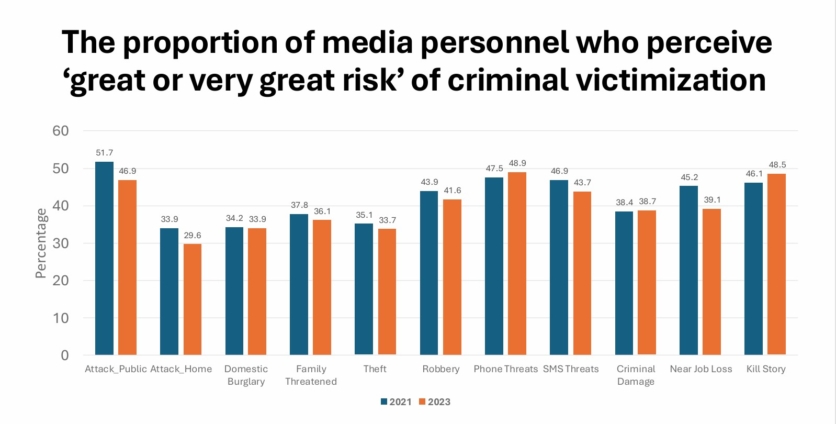
- Prevalence of Threats: Half of the respondents reported receiving threats through phone calls and messages.
- Fear of Victimization: Media workers expressed concerns about physical attacks, unfair dismissals, robberies, and threats while carrying out their duties.
- Unsafe Coverage Topics: Election campaigns, state violence, political corruption, and issues involving traditional authorities are perceived as the riskiest subjects to report on.
- Low Institutional Confidence: Many journalists lack trust in key institutions, such as law enforcement and the judiciary, to safeguard them from attacks or threats.
Policy Recommendations: A Call to Action
To address these challenges, the survey outlines several recommendations aimed at bolstering the safety and security of media personnel:
- Police Protection Measures: The Ghana Police Service should establish a dedicated media safety unit to specifically handle threats against journalists and improve their confidence in law enforcement.
- Legislative Action: The government should enact laws explicitly addressing crimes against media personnel, ensuring their protection is enshrined in the legal framework.
- Judicial Commitment: The judiciary and Attorney General’s Department must demonstrate a firm commitment to prosecuting offences against journalists to deter potential offenders.
- Media Ownership Responsibility: Media owners are urged to foster safer workplaces where journalists can report concerns and demand better working conditions without fear of retaliation.
- Support from the Ghana Journalists Association (GJA): The GJA should provide safety training and legal support to equip media workers with the tools to protect themselves and their rights.
An Urgent Need for Action
The findings underscore the precarious environment in which Ghanaian media personnel operate, particularly during politically sensitive periods or when reporting on controversial topics.
Without swift and decisive action, the fundamental role of the press in promoting democracy and accountability may be further jeopardised.
Professor Tankebe and Dr. Sowatey have called on stakeholders—including the government, police, judiciary, and media organisations—to prioritise the safety of journalists to preserve press freedom and democracy in Ghana.
Below is the survey findings in full.
Latest Stories
-
12 arrested in Tamale anti-drug operation, abandoned baby rescued
21 minutes -
Severe flooding kills 62 in Kenya, as heavy rains continue
50 minutes -
Gov’t must apologise for changing 24-Hour Economy formula from ‘1-3-3’ to ‘4-1-9’ – Okyere Baafi
2 hours -
WiFT Ghana launched to empower 100 women through film and creative industry training
2 hours -
Ghanaian peacekeeper injured in Lebanon missile attack recovering – UN
2 hours -
2026 IWD: Underground Mining Alliance engages women entrepreneurs on rights, justice and economic empowerment
3 hours -
You can raise GHC300m for sanitary pads but can’t settle land compensation for Petroleum Hub project? – NPP MP slams gov’t
4 hours -
Arsenal’s Max Dowman becomes youngest Premier League goal scorer
5 hours -
Ghana and Russia strengthen 68-year ties
5 hours -
Explosion rocks Amsterdam Jewish school in what mayor says is ‘targeted attack’ against Jewish community
5 hours -
Rocky Dawuni sounds alarm on Africa’s wars and youth exodus to Europe
5 hours -
Head-on collision at Tuobodom leaves two dead
6 hours -
Police officer found dead in suspected suicide at Akweteyman
6 hours -
McDan-GACL dispute could undermine investor confidence – GaDangme Coalition
7 hours -
Why Ghana must make SSNIT registration mandatory for all registered businesses
7 hours