


Audio By Carbonatix
For years, many residents of Tafo Zongo and surrounding communities have relied on makeshift slaughter points to prepare animals for weddings, funerals, naming ceremonies and religious festivals.
Some of these sites, community members admit, are far from ideal.
"Most people are slaughtering somewhere around the corners and by the gutters," says Abdul Hamid Kabore, a businessman.
Standing on a vast piece of land on the outskirts of the community on Monday, he watched as elders, residents and guests gathered for a sod-cutting ceremony for what residents hope will become a solution to that problem.
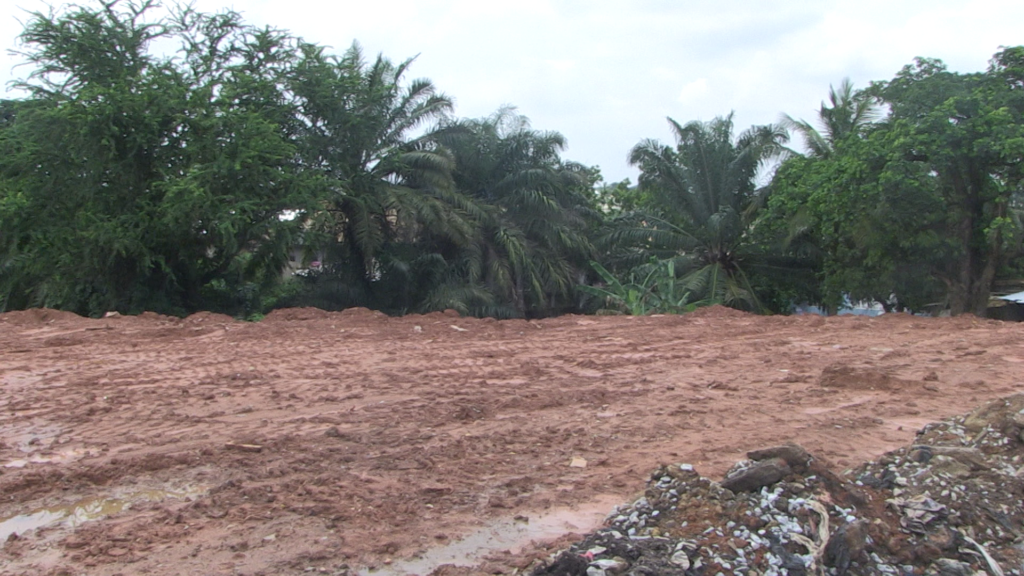
The project is being financed by Mr Kabore himself, who says he is investing his own resources to establish the facility at an estimated to cost about GH¢1m. It will house an abattoir for cattle, sheep and goats, alongside a poultry processing centre.
For residents at the ceremony, the project is about jobs, sanitation and creating opportunities in a community where young people often struggle to find work.
"There is no job," Mr Kabore says. "That is one of the reasons we decided to start this project."
Developers expect the facility to employ close to 200 people when completed.
According to Mr Kabore, the abattoir section will provide opportunities for men, while the poultry processing centre is expected to create jobs largely for women.
"We want to balance everything," he says.
The project is expected to serve not only Tafo Zongo but also neighbouring communities including Mamponteng, Pankrono, Aboaso, Jamasi among others areas.
Apart from Kumasi and Kaase, residents say there are few large-scale meat processing facilities serving the area. That gap has often left households, butchers and livestock owners with limited options.
For Abdul-Basit Mohamed, who was born and raised in Tafo Zongo, the project could bring changes beyond employment.
Around him are cattle kraals that have long supported the livelihoods of many young people in the community. He believes the facility could strengthen that local economy.
"A lot of people will benefit," he says. "People who rear cattle, people who sell food and drinks, and many others."
The timing is particularly significant for a community where livestock plays a central role in social and religious life.
From naming ceremonies and marriages to funerals and Eid celebrations, animals are routinely slaughtered for communal gatherings. During Eid festivals alone, residents say thousands of animals can be slaughtered within the Zongo community.
"We have always needed a proper place for this," Mr Mohamed says.
Others see the project as an opportunity to improve food safety. One resident says meat prepared at the proposed facility would be handled under more controlled and hygienic conditions than is often possible at home.
"When people bring their animals here, they will be slaughtered properly and prepared neatly for consumption," he says.
Not everyone expects the project to be easy. A large drainage channel cuts across part of the site, presenting a major engineering challenge.
Mr Kabore says contractors have estimated that dealing with the drain alone could cost about GH¢800,000. He is hoping for support to overcome that obstacle and keep construction on track.
Developers estimate the project could be completed within a year. For now, the land remains largely bare.
But among residents gathered for the sod-cutting ceremony, there is optimism that the open space could eventually become a centre for meat processing, livestock trade and employment.
Latest Stories
-
Conflicts among care providers linked to maternal, neonatal deaths – Expert
52 minutes -
GIS marks 10th TIME conference, champions improved teaching practices
60 minutes -
BRICS Or Balance? What Ghana’s bid really means
1 hour -
GPRTU wants full TRAFFITECH-GH implementation to start in 2027
2 hours -
Mahama announces plans to import electric wheelchairs for PWDs
2 hours -
KGL U17 Colts 2026: Western beat Prempeh Elite Academy to set up final final with Greater Accra Region
2 hours -
Late Solanke strike salvages 10-man Spurs draw at Man United
2 hours -
Gender Ministry to monitor welfare of Nana Akua Addo’s children amid domestic violence case
2 hours -
Benedict Okyere Yeboah: Ghana’s football problem goes beyond sacking a coach
3 hours -
GPL 2026/27: Darkwah Wiafe’s winner sees All Blacks beat Kotoko
3 hours -
ITF World Tour : Patel Wins Boys’ Singles Final at J100 Accra
3 hours -
Ghana must pursue BRICS partnership if it brings economic benefits – Kpebu
3 hours -
Success and Wright Claims J100 Accra Girls’ Doubles Championship
3 hours -
ITF J100: America’s Wright wins J100 Accra Girls’ Singles Title
3 hours -
Expedition hopes to find aviator Amelia Earhart’s plane on remote island
3 hours