

Audio By Carbonatix
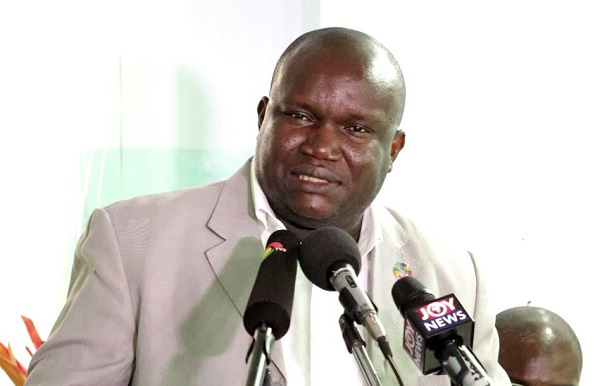
The Chief Executive Officer (CEO) of the Ghana Chamber of Telecommunications, Kenneth Ashigbey, has asked government to increase the electronic transaction levy's exemption threshold to ¢200 per day.
He said that will enable many micro and small companies that use mobile money to continue using the service.
"From the way they want to implement it [the e-levy], it is going to be between your mobile money if you’re transferring money in the same network to another person if you had done a debit card payment at a point of sale if you transfer money from your mobile money to another bank account or from a bank account to another person’s mobile money."
"Our suggestion is that even this particular levy may be increased to ¢200 per day, but it should be on a wallet," he said on Joy FM's Super Morning Show on Monday.
In announcing the levy in the 2022 budget, the Finance Minister, Ken Ofori-Atta, indicated that the ¢100 limit for the e-levy is meant to protect the poor and vulnerable in society.
Deputy Finance Minister, Dr John Kumah, also explained that “we noticed that about 30 per cent of people who use Momo in Ghana do not do more than ¢100 a day and that covers the poor category of Momo users.
"This policy exempted any Momo transaction that is up to ¢100 and below ¢100," he spoke on Joy FM’s Super Morning Show on Thursday, November 18.
Mr Ashigbey bemoaned the labelling of the levy as 'MoMo' tax, saying it is discriminatory and unfair because it is meant for all electronic transactions and transfers.
He said efforts being made to push QR code payment in the country might not yield the desired results due to the introduction of the electronic levy.
"So all of these conversations are things that we need to look at, and we should ensure that we can generate the revenue that government needs without killing the digitisation agenda of government [and] without impacting on financial inclusion.
"More importantly, it should be equitable. This should be an electronic transaction tax, not a mobile money tax," he added.
Meanwhile, Policy Risk Analyst, Dr Theo Acheampong, has also proposed that the ¢100 limit “should also be increased. I think [it] could possibly go up to about ¢175 a day and that, cumulatively, is around ¢5,000 a month.”
Latest Stories
-
US, Iran fail to reach peace agreement after marathon talks in Pakistan
9 minutes -
ECG kicks off Phase Two of transformer upgrades at Lashibi; brief outages expected
43 minutes -
Port crises loom as 11,000 drivers threaten four-day strike
2 hours -
A source of excellence across generations – Vice President Opoku-Agyemang lauds Mfantsipim
2 hours -
(Photos) Mfantsipim School launches historic 150th anniversary
3 hours -
Knights and Ladies of Marshall group backs Catholic Bishops’ stance on anti-LGBTQ+
4 hours -
Bright Simons writes: All the Filla in the Ibrahim Mahama/E&P – Gold Fields Saga
4 hours -
Monetise Idiocy In Ghana
4 hours -
The Ghanaian prophet and the mysterious death of his scottish wife Charmain Speirs
5 hours -
Nearly 400 sentenced in Nigeria for links to militant Islamists
5 hours -
Ghana’s recovery supported by gold strength despite global oil price pressures – Standard Bank Research
5 hours -
Methodist Church hails Mfantsipim@150; calls for “fresh consecration” to excellence
6 hours -
‘Excellence is our inheritance’ – Nana Sam Brew-Butler hails Mfantsipim’s 150-year reign in leadership
6 hours -
Kwaku Azar writes: A-G vs OSP
6 hours -
Mfantsipim–Adisadel rivalry built excellence, not division – Sam Jonah
6 hours