

Audio By Carbonatix
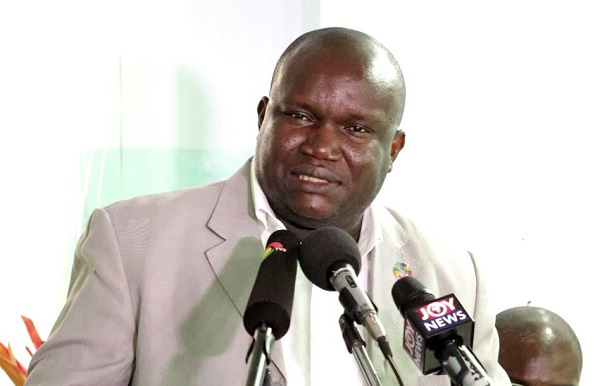
The Chief Executive Officer (CEO) of the Ghana Chamber of Telecommunications, Kenneth Ashigbey, has asked government to increase the electronic transaction levy's exemption threshold to ¢200 per day.
He said that will enable many micro and small companies that use mobile money to continue using the service.
"From the way they want to implement it [the e-levy], it is going to be between your mobile money if you’re transferring money in the same network to another person if you had done a debit card payment at a point of sale if you transfer money from your mobile money to another bank account or from a bank account to another person’s mobile money."
"Our suggestion is that even this particular levy may be increased to ¢200 per day, but it should be on a wallet," he said on Joy FM's Super Morning Show on Monday.
In announcing the levy in the 2022 budget, the Finance Minister, Ken Ofori-Atta, indicated that the ¢100 limit for the e-levy is meant to protect the poor and vulnerable in society.
Deputy Finance Minister, Dr John Kumah, also explained that “we noticed that about 30 per cent of people who use Momo in Ghana do not do more than ¢100 a day and that covers the poor category of Momo users.
"This policy exempted any Momo transaction that is up to ¢100 and below ¢100," he spoke on Joy FM’s Super Morning Show on Thursday, November 18.
Mr Ashigbey bemoaned the labelling of the levy as 'MoMo' tax, saying it is discriminatory and unfair because it is meant for all electronic transactions and transfers.
He said efforts being made to push QR code payment in the country might not yield the desired results due to the introduction of the electronic levy.
"So all of these conversations are things that we need to look at, and we should ensure that we can generate the revenue that government needs without killing the digitisation agenda of government [and] without impacting on financial inclusion.
"More importantly, it should be equitable. This should be an electronic transaction tax, not a mobile money tax," he added.
Meanwhile, Policy Risk Analyst, Dr Theo Acheampong, has also proposed that the ¢100 limit “should also be increased. I think [it] could possibly go up to about ¢175 a day and that, cumulatively, is around ¢5,000 a month.”
Latest Stories
-
David Selassie Anthony declares bid for NDC Deputy National Organiser
52 minutes -
Amin Adam proposes 13 measures to strengthen Ghana’s debt transparency and market confidence
1 hour -
Mahama announces $2bn annual investment to accelerate industrialisation
1 hour -
Amin Adam urges monthly disclosure of Sinking Fund as Ghana prepares for DDEP repayments
1 hour -
Stronger banks will fuel business growth and jobs – ADB MD
1 hour -
Galamsey: ‘Rivers that fed our grandparents now run the colour of chocolate milk’ – Sam Jonah
2 hours -
We have been scammed by NDC, government is only doing PR – Abanga Fuseini
2 hours -
Republic Bank–JoyNews Habitat Fair opens in Ho today
2 hours -
BoG pledges stability to attract investment, urges stronger Africa–Asia partnerships
2 hours -
Amin Adam warns treasury bill dependence could expose Ghana to refinancing risks
2 hours -
Ghana better placed to withstand commodity price shocks – IMF
2 hours -
GAPTE intensifies efforts to increase bus availability for Aayalolo contra-flow
2 hours -
Amin Adam warns cedi depreciation could reverse Ghana’s debt relief gains
2 hours -
Fiscal discipline crucial for pension fund investments – Finance Minister
2 hours -
BoG Governor rallies IMF to back Africa’s digital sovereignty
2 hours