

Audio By Carbonatix
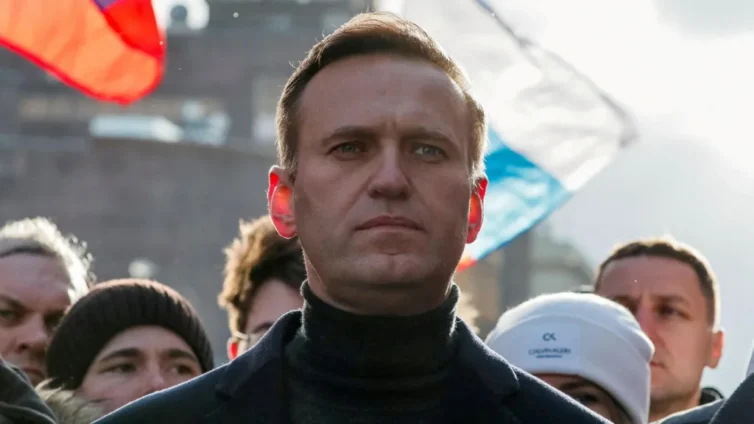
The mother of the late Russian opposition figure Alexei Navalny says the assessment that her son died of poisoning has validated her belief that he was murdered.
On Saturday, the UK and European allies put out a statement saying Navalny, who died in 2024, was killed using a poison developed from a dart frog toxin, and that "only the Russian state had the means, motive and opportunity to deploy this lethal toxin".
"This confirms what we knew from the very beginning," Lyudmila Navalnaya said while visiting her son's grave in Moscow on Monday - the second anniversary of his death. "We knew that our son did not simply die in prison, he was murdered."
Russia has firmly rejected the accusations.
"Of course, we do not accept such accusations. We disagree with them, we consider them biased and unfounded. And, in fact, we resolutely reject them," Kremlin spokesman Dmitry Peskov said on Monday.
Navalny's widow Yulia has also marked the two-year anniversary of his death, writing in a social media post: "We have achieved truth and we will achieve justice one day too."
She previously said that analysis of smuggled biological samples carried out by laboratories in two countries showed that her husband had been "murdered", and challenged the facilities to publish their results.
The Kremlin did not comment on her statements at the time.
Dozens of Muscovites, as well as several foreign diplomats, visited Borisovskoye cemetery on Monday, heaping flowers on Navalny's grave.
A note left on the grave read: "Alexei, we remember you every day".
Navalny was 47 when he died in the Siberian penal colony where he was serving a 19-year sentence for "extremism".
A fierce and charismatic critic of President Vladimir Putin, he mounted campaigns highlighting high-level corruption in government, bringing hundreds of thousands onto the streets and becoming known abroad as Russia's only opposition leader.
He survived a suspected poisoning with the Novichok nerve agent in 2020, for which he received treatment in a German hospital. He returned to Russia the following year, saying he did not want to "give up either my country or my beliefs".
Police arrested him on arrival. Just over a year later, he died in the Polar Wolf penal colony above the Arctic Circle.
At the time, the Kremlin said Navalny had died of natural causes. Although the authorities initially refused to release his body, he was eventually buried in Moscow in March 2024.
His funeral, which was attended by thousands of mourners who defied fears of a police crackdown, was the last time like-minded Russians gathered publicly.
Repression in Russia has steadily intensified over the years, ramping up following Moscow's invasion of Ukraine in February 2022. Punitive new laws have been introduced and displays of anti-government stance – whether in the form of street protests or online posts – are routinely met with long prison sentences.
Many associates of Navalny have been jailed or have fled Russia.
His widow Yulia – who has since taken the helm of Navalny's Anti-Corruption Foundation – also faces arrest, and lives abroad alongside their two children.
The Russian opposition in exile is politically fragmented and has struggled to present a united front, with different factions publicly falling out.
Latest Stories
-
A source of excellence across generations – Vice President Opoku-Agyemang lauds Mfantsipim
41 minutes -
(Photos) Mfantsipim School launches historic 150th anniversary
1 hour -
Knights and Ladies of Marshall group backs Catholic Bishops’ stance on anti-LGBTQ+
2 hours -
Bright Simons writes: All the Filla in the Ibrahim Mahama/E&P – Gold Fields Saga
2 hours -
Monetise Idiocy In Ghana
3 hours -
The Ghanaian prophet and the mysterious death of his scottish wife Charmain Speirs
3 hours -
Nearly 400 sentenced in Nigeria for links to militant Islamists
4 hours -
Ghana’s recovery supported by gold strength despite global oil price pressures – Standard Bank Research
4 hours -
Methodist Church hails Mfantsipim@150; calls for “fresh consecration” to excellence
4 hours -
‘Excellence is our inheritance’ – Nana Sam Brew-Butler hails Mfantsipim’s 150-year reign in leadership
4 hours