

Audio By Carbonatix
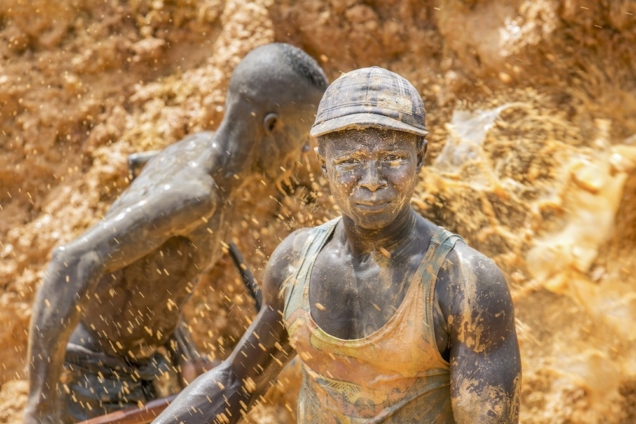
Research Fellow on Environmental Degradation, Charles Sedem, has stressed the urgent need for alternative livelihood programmes for illegal miners, commonly referred to as galamseyers, as efforts to curb illegal mining continue across the country.
Speaking on Joy FM’s Top Story on Thursday, April 3, Mr Sedem said that the failure to provide sustainable alternatives for people engaged in illegal mining has been a major gap in the government’s efforts to combat the menace.
“People have not been consulted enough. The stakeholders were not engaged enough. If my life depends on something illegal, but that is what feeds me and my family, it will be very difficult for you to tell me to stop without an alternative,” he explained.
According to him, the lack of alternative livelihoods creates resistance among those involved in illegal mining, making enforcement efforts ineffective.
He likened the situation to disarmament efforts in war-torn countries, where combatants are often provided with alternative means of survival in exchange for laying down their weapons.
“If you take a look at the Democratic Republic of Congo, for instance, the prolonged war has been fueled by diamonds. People were asked to exchange their weapons for something meaningful.
"If I get a job to do or capital to start something else, I wouldn’t go back there. But if you don’t provide that, it could escalate into a full-blown combative activity, which is not good for this country,” he warned.
Mr Sedem also highlighted the ripple effects of illegal mining on entire communities, where businesses and livelihoods revolve around the galamsey economy.
He called for a more inclusive approach, urging policymakers to involve the miners and community members who indirectly benefit from illegal mining.
Additionally, he urged the government to rethink its strategy and develop a comprehensive alternative livelihood programme to ensure lasting solutions to the galamsey crisis.
“In some of these galamsey areas, entire villages depend on selling food, renting houses, and providing services to illegal miners. If that is their only source of income, how do you expect them to support efforts to reclaim the land?” he questioned.
“This has been missing all this while, and now people have taken the law into their own hands. Unfortunately, we have reached this point,” he lamented.
Latest Stories
-
GRA interdicts 5 Customs Officers over transit cargo irregularities
37 minutes -
Trump to address a changed America at vital moment for his presidency
3 hours -
Prudential Bank, Mastercard discuss support for SMEs and corporates
3 hours -
Mahama appoints Aaron Kanor as Acting GRA Commissioner for Customs Division
3 hours -
Threat of further violence looms after Mexican cartel rampage
3 hours -
Abesim murder case: Footballer sentenced to life imprisonment
4 hours -
Third force not the answer – Yaw Nsarkoh questions Ghana’s political fix
4 hours -
Prudential Bank champions tree crop investment at TCDA anniversary dialogue
4 hours -
Roc Nation Sports International kicks off inaugural youth football tournament in Ghana
4 hours -
‘Ghanaians are not genetically disorderly’ – Yaw Nsarkoh says consequences create order
4 hours -
Electoral Cost Efficiency in Emerging Democracies: A Comparative Analysis of Cost per Voter in Ghana’s 2020 and 2024 General Elections
5 hours -
BBC edited a second racial slur out of Bafta ceremony
5 hours -
Nigeria denies report it paid ‘huge’ ransom to free pupils in mass abduction
5 hours -
Gender Minister oversees safe discharge of rescued baby, settles bills and engages police on probe
5 hours -
Bawumia receives Christian Council goodwill visit after NPP flagbearer win
6 hours