

Audio By Carbonatix
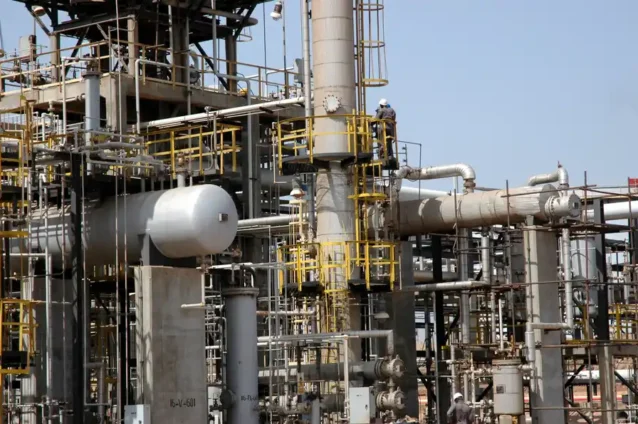
Ghana is at a pivotal moment in its industrial and energy history. After years of careful rehabilitation, the Tema Oil Refinery (TOR) is reportedly 98% technically ready, representing the closest the nation has been in decades to restoring domestic refining capacity.
Currently, Ghana meets its petroleum demand largely through imports, ensuring an uninterrupted supply while TOR is finalised.
Yet this presents a historic opportunity: by operationalising TOR, Ghana could retain over $400 million in domestic economic activity each month, strengthening the industrial base, creating jobs, and enhancing energy security.
From an economic perspective, this is fundamentally about opportunity cost. Every dollar spent abroad on imported fuel is a dollar not circulating in domestic industries, not generating local employment, and not contributing to national income. By shifting production to TOR, Ghana can harness the Keynesian multiplier effect. Even a conservative multiplier of 1.5–2 suggests that $400 million per month could stimulate $600–$800 million of domestic economic activity, translating to roughly $7–$9.6 billion annually—a significant boost to GDP and industrial growth.
Ghana also enjoys a comparative advantage in refining. With access to domestic crude from Jubilee, TEN, and Sankofa, coupled with nearly-ready refinery infrastructure, the nation is well-positioned to produce what it currently imports. According to the Ricardian principle of comparative advantage, maximising domestic production where efficiency is higher allows Ghana to retain value internally, reduce foreign dependency, and strengthen local supply chains.
Operationalising TOR thus aligns perfectly with the government’s ongoing industrialisation and local content strategies.
The implications for national income and fiscal stability are equally compelling. Domestic refining increases value-added, expands the tax base, and generates employment across technical, operational, and logistics sectors. Even partial operation of TOR—say, at 50% capacity—could save $200 million monthly in imports. Applying standard fiscal multipliers, this represents an additional $340 million monthly contribution to GDP, directly supporting government initiatives in infrastructure, health, and education.
Energy security is another critical benefit. A reliable domestic refinery reduces vulnerability to global price fluctuations and supply shocks.
From a macroeconomic standpoint, this stability decreases transaction costs, stabilises the cedi, lowers inflationary pressures, and encourages private investment. In essence, a functioning TOR strengthens the foundations of economic growth and investor confidence.
Beyond direct economic effects, TOR generates forward and backward industrial linkages, as described by Hirschman’s linkage theory.
Backward linkages include crude procurement, pipeline maintenance, and domestic engineering services, while forward linkages extend to distribution networks, downstream petrochemicals, and industrial fuels.
These linkages multiply the economic impact of TOR, fostering local entrepreneurship and industrial diversification.
To fully realise this opportunity, technocratic, evidence-based governance is key. A dedicated technical task force can oversee final commissioning, optimise operations, and design a strategic crude supply and pricing framework.
Public-private technical partnerships can bring international expertise without compromising national ownership, while integrating TOR into Ghana’s broader industrial strategy ensures long-term sustainability and maximum economic impact.
The current administration has demonstrated vision, pragmatism, and a willingness to listen to expert advice. TOR is 98% ready, and the remaining steps represent a once-in-a-generation opportunity.
By operationalising this refinery, Ghana can retain over $400 million monthly in the domestic economy, create thousands of skilled jobs, strengthen energy security, boost GDP, and accelerate industrial transformation.
This is not a critique. It is a constructive appeal, rooted in economic theory, industrial strategy, and national development, urging the government to seize a remarkable opportunity to convert TOR into a cornerstone of Ghana’s economic future
Latest Stories
-
A source of excellence across generations – Vice President Opoku-Agyemang lauds Mfantsipim
1 hour -
(Photos) Mfantsipim School launches historic 150th anniversary
1 hour -
Knights and Ladies of Marshall group backs Catholic Bishops’ stance on anti-LGBTQ+
2 hours -
Bright Simons writes: All the Filla in the Ibrahim Mahama/E&P – Gold Fields Saga
3 hours -
Monetise Idiocy In Ghana
3 hours -
The Ghanaian prophet and the mysterious death of his scottish wife Charmain Speirs
4 hours -
Nearly 400 sentenced in Nigeria for links to militant Islamists
4 hours -
Ghana’s recovery supported by gold strength despite global oil price pressures – Standard Bank Research
4 hours -
Methodist Church hails Mfantsipim@150; calls for “fresh consecration” to excellence
4 hours -
‘Excellence is our inheritance’ – Nana Sam Brew-Butler hails Mfantsipim’s 150-year reign in leadership
5 hours -
Kwaku Azar writes: A-G vs OSP
5 hours -
Mfantsipim–Adisadel rivalry built excellence, not division – Sam Jonah
5 hours -
Vice President launches Mfantsipim’s 150 years of shaping Ghana’s greatest mind
5 hours -
I assure Otumfuo, Mahama will join him to commission KNUST Teaching Hospital by end of this year – Haruna Iddrisu
6 hours -
Barcelona dominate derby to extend La Liga lead
6 hours