

Audio By Carbonatix
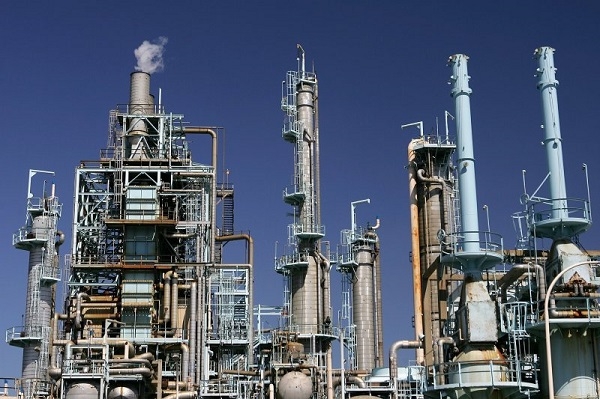
The Executive Secretary of the Chamber of Petroleum Consumers (COPEC), Duncan Amoah, has said the resumption of operations at the Tema Oil Refinery (TOR), while commendable, represents only the first of three critical phases required to make the refinery economically viable and environmentally compliant.
Acknowledging that the successful turnaround maintenance (TAM) had helped dispel a long-standing perception that the refinery was too old to function effectively, Mr Amoah cautioned that the current phase alone was insufficient to sustain operations or meet Ghana’s modern fuel standards.
“The integrity of the plant has been proven. TOR is not as obsolete as some had suggested,” he said, noting that the refinery could still play a vital role in Ghana’s energy security if the right investments are made.
Speaking on TV3's morning programme on Monday, December 29, 2025, monitored by Graphic Online, Mr Amoah explained that Ghana has, since 2015–2016, most vehicles in Ghana have transitioned away from high-sulphur “dirty fuels” and now require cleaner fuels, which burn more efficiently and significantly reduce environmental pollution to help meet Euro IV and Euro V specifications, with a sulphur content ranging between 10 and 50 parts per million (ppm).
He said TOR’s existing Crude Distillation Unit (CDU) and Residual Fluid Catalytic Cracking (RFCC) units were only capable of producing fuels with sulphur levels of about 1,500 ppm at best.
This, according to COPEC, falls far below Ghana’s current fuel standards and poses serious environmental and public health risks.
Whenever TOR resumed operations, he said a large portion of its output had to be exported to neighbouring Sahelian countries because the local automotive fleet could not safely consume such high-sulphur products.
In addition, he stated that a reformer unit, costing between US$25 million and US$50 million, would be required to improve petrol quality and meet Ghana’s minimum 91-octane requirement.
To address this challenge, Mr Amoah said TOR would require major upgrades, including the installation of a desulphurisation unit, estimated to cost about US$150 million, to reduce sulphur content in refined products.
In addition, he stated that a reformer unit, costing between US$25 million and US$50 million, would be required to improve petrol quality and meet Ghana’s minimum 91-octane requirement.
He warned that without these investments, TOR would struggle to compete with newer and more advanced refineries such as Nigeria’s Dangote Refinery and other regional facilities.
Mr Amoah also stressed the need for TOR to be run strictly as an economic entity, free from political interference.
He argued that political decisions, rather than economic considerations, have historically undermined the refinery’s performance.
“For sustainability, private sector participation is critical,” he said, advocating for a public-private partnership (PPP) model.
He said private investors would ensure efficiency, control operational costs, and make decisions based on commercial viability rather than politics.
On the broader economic impact, Mr Amoah said Ghana currently spends about US$400 million every month in foreign exchange to import finished petroleum products.
Investing in TOR, he argued, would help reduce this burden while retaining skilled labour and strengthening the local economy.
He recalled that at its peak in the late 1990s, TOR contributed about five per cent of Ghana’s Gross Domestic Product (GDP), demonstrating the refinery’s potential if properly retooled and managed.
Mr Amoah said TOR was currently doing about 28,000 barrels per stream day, with a plan to scale up the capacity to 45,000 barrels. It has a historical peak of 60,000 barrels per day and Ghana’s daily petroleum demand, he said, is about 100,000 barrels.
“If TOR can supply even half of national demand, supported by other local refineries, Ghana can significantly reduce its dependence on imported fuel,” he said.
While commending TOR’s management for restarting operations, Mr Amoah maintained that sustained investment and long-term planning are essential if the refinery was to fully support Ghana’s energy security and economic development.
Latest Stories
-
Mahama endorses ADB at Kwahu Business Summit
1 hour -
Every gram will be tracked – Gold Board unveils traceability push to deal with illegally-mined gold
1 hour -
Analysis: Why the Bank of Ghana sold half its gold reserves
1 hour -
Buy wrong gold, face prosecution – Gold Board CEO cracks down on rogue dealers
1 hour -
Africa pushes integrated health agenda ahead of One Health Summit in Lyon
2 hours -
We own the strategy, its not head office decision – GCB MD positions bank as engine of Ghana’s economy
2 hours -
No more waiting for head office – GCB boss pushes Ghana-first banking
2 hours -
Mahama lauds Julius Debrah for shaping Kwahu Business Forum
3 hours -
Why actors beg in difficulty – Patience Ozokwor on Nollywood financial struggles
3 hours -
Any man who apologises to woman deserves to suffer – Brymo
3 hours -
Nigerian artistes no longer put effort into making music – Omah Lay claims
3 hours -
‘I’m now skeptical about going into politics’ – Davido
3 hours -
Nigeria’s Seplat Energy resumes operations as oil workers halt strike action
4 hours -
Nigeria launches manhunt after abductions by bandits in northwest Zamfara
4 hours -
Kenya fuel executives resign as state probes supply chain irregularities
4 hours