

Audio By Carbonatix
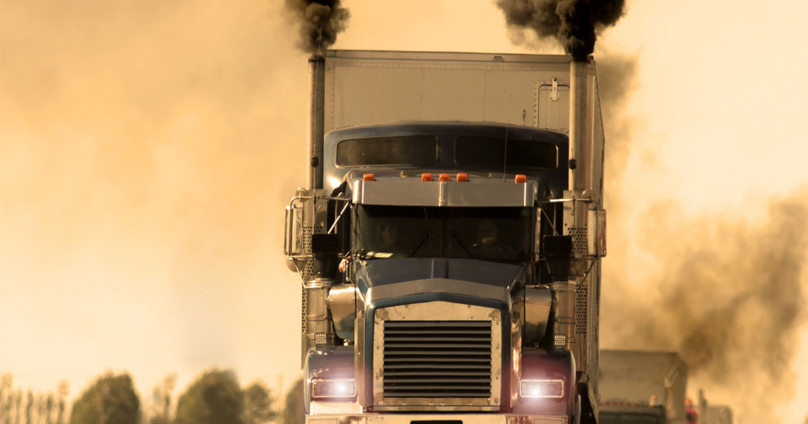
A recent report from the UN Environment Programme (UNEP) reveals a startling 30 per cent increase in CO2 emissions from heavy-duty vehicles (HDVs) since 2000, with trucks being responsible for 80 per cent of this rise.
Additionally, HDVs contribute over 40 per cent of on-road nitrogen oxides (NOx) emissions, more than 60 per cent of on-road particulate matter (PM 2.5), and over 20 per cent of black carbon emissions.
The report, titled "Used Heavy Duty Vehicles and the Environment - A Global Overview of Used Heavy-Duty Vehicles: Flow, Scale and Regulation," was jointly launched today, February 22 by UNEP and the Climate and Clean Air Coalition (CCAC) in Nairobi, Kenya.
It offers the first global assessment by the UN of the scale and regulation of used HDVs and their impact on global air pollution, road safety, fuel consumption, and climate emissions.
Despite representing only 3.6 per cent of the total value of the global automotive trade, HDV exports are projected to continue growing significantly due to increasing economic activities and the growing demand for transportation of people and goods, following past trends where global sales of trucks and buses doubled in 15 years (2000-2015).
Many developing nations rely on the importation of secondhand heavy-duty vehicles (HDVs) to expand their vehicle fleets.
While this facilitates more cost-effective solutions to meet increasing mobility demands in these regions, the report reveals that regulations and enforcement regarding the quality of imported used HDVs are often lacking or nonexistent. This exacerbates their impact, particularly when dealing with old, polluting, and unsafe used HDVs.
Currently, no country has established minimum requirements for exporting used HDVs. The report indicates that regulations in more than half of the countries importing used HDVs are categorised as either 'weak' or 'very weak,' with inadequate enforcement.
For instance, although 25 African nations have implemented standards for used HDVs to address air pollution control, climate mitigation, and enhanced road safety, only four have fully enforced these regulations. Globally, only two countries have integrated used vehicles into their national climate action plans (NDCs).
Rob de Jong, head of UNEP's Sustainable Mobility Unit, emphasised the significant economic contributions of trucks and buses worldwide.
However, he stressed the necessity of ambitious regulations to mitigate their emissions, which have profound environmental and health repercussions. De Jong also highlighted the potential of cleaner bus technologies to drive a global shift towards low-emission and ultimately zero-emission transportation.
“Trucks and buses contribute to economic growth just about anywhere in the world, but ambitious regulations are needed to curb their emissions causing major environmental and health impacts. Introduction of cleaner bus technologies can be a major driver for the global revolution to low and, ultimately, zero emissions transport.”
The report underscores the joint responsibility of both importing and exporting nations to ensure the presence of cleaner and safer used vehicles on the roads of developing countries.
It highlights the necessity for regional collaboration to establish and enforce minimum standards, such as emission regulations and age limits, while also advocating for increased public awareness and further research to reap environmental and road safety benefits.
For instance, adopting Euro VI equivalent vehicle emission standards and cleaner fuels could prevent up to 700 thousand premature deaths by 2030.
Currently, diesel fuels power 97 per cent of newly-registered trucks and 73 per cent of buses in the EU. Enhanced regulations on used HDVs could also facilitate a technological leapfrog, promoting greater adoption of advanced technologies like electric buses and trucks in developing nations.
The report marks the initial endeavor to quantify and characterise used heavy-duty vehicle flows, drawing on export data from Japan, the European Union, and the Republic of Korea, which collectively represent approximately 60 per cent of the total new and used HDVs export market.
This data was extended to 146 predominantly low- and middle-income countries. Nonetheless, the report acknowledges limitations, including discrepancies in statistics and the absence of publicly available data from the USA, which does not differentiate between exports of new and used vehicles, and China, an emerging exporter.
UNEP leads efforts to promote environmental stewardship and foster partnerships aimed at improving the well-being of present and future generations without compromising the health of the planet.
Latest Stories
-
Richmond Quarcoo appointed Ghana’s Chef de Mission for 2028 Olympics
29 minutes -
‘Our missing players are more important’ – Gambia coach fires shot at Ghana
2 hours -
Today’s front pages: Tuesday, September 29, 2026
2 hours -
Ghana ‘showing up differently’ on global stage – Joyce Bawah Mogtari
2 hours -
Ghana’s tuna industry in crisis as 20 hook-and-line vessels collapse
3 hours -
South Tongu MP launches apprenticeship programme for 159 young people
3 hours -
The Pusiga connection behind Gertrude Atongi’s work in New York
4 hours -
Teachers took promotion exams in December to beat government clearance deadline – GNAT
4 hours -
NPA launches 2026 staff welfare week with focus on teamwork and employee wellbeing
4 hours -
Ghana, Saint Kitts and Nevis sign labour deal to strengthen protections for Ghanaian nurses
4 hours -
Delayed promotions put teachers’ retirement benefits at risk – GNAT
4 hours -
No ‘Bawumia candidates’ in NPP executive elections – Anthony Karbo
4 hours -
Over 3,000 displaced as flooding overwhelms Hohoe communities
4 hours -
Sunyani East NPP executives begin reconciliation drive ahead of 2028 polls
4 hours -
Agric Minister engages Ga Mantse on agriculture transformation agenda
4 hours