

Audio By Carbonatix
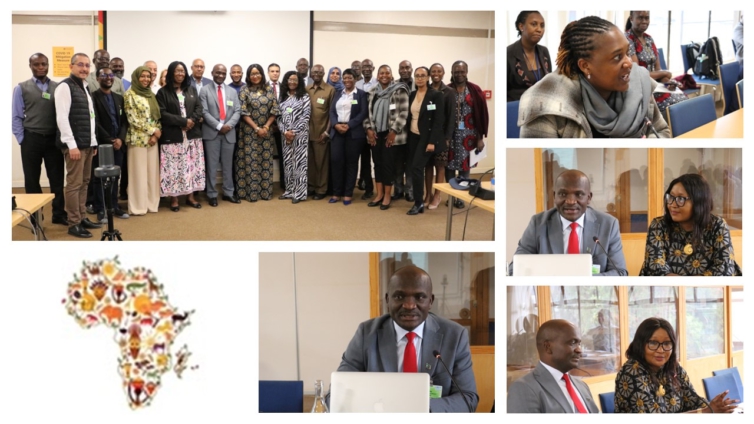
Lead Coordinators of the African Group of Negotiators on Climate Change (AGN) are meeting in Nairobi ahead of the African Climate Summit (ACS) to deliberate on key issues in relation to the continent’s interests and expectations for COP28.
In addition to the African common position on the various climate thematic negotiating streams, the AGN Lead Coordinators are also deliberating on the Nairobi Declaration, a key outcome document expected at the end of the Summit.
Speaking during the opening session of the meeting, AGN Chair, Ephraim Mwepya Shitima, urged the Lead Coordinators to continue playing their “critical role as technical advisors to policy makers on Africa’s effective participation in the global climate negotiations in relation to the continent’s development realities and aspirations.”
The inaugural Summit, held from September 4 to 6 2023, is under the theme: “Green Growth and Climate finance for Africa and the World”. It is envisaged to ensure Africa’s voice is elevated globally and integrated into existing international fora such as the United Nations General Assembly (UNGA), G7/G20 processes and COP 28 among others.
Gracing the AGN Lead Coordinators meeting, United Nations Environment Programme (UNEP) Regional Office Director for Africa, Rose Mwebaza appreciated the AGN’s role over the years, to Africa’s effective participation in the climate processes and urged the group to remain focused.
“I am particularly delighted to be with you not only in my new capacity here at UNEP, heading the Africa regional office but also as one of you, having been an active participant in the climate change negotiation processes for the past 20 years,” said Mwebaza.
“I believe these are exciting times as the continent prepares to host the inaugural Africa Climate Summit. As technical negotiators, I urge you to remain focused and provide the necessary guidance in relation to the continent’s development needs.”
The Summit will be held concurrently with the Africa Climate Week – 4-8 September – an annual United Nations Framework Convention on Climate Change (UNFCCC)-led event to promote actions that allow to course-correct and achieve the Paris Agreement goals and objectives.
The meeting is expected to bring together leaders from Africa and beyond; development partners, intergovernmental organisations, the private sector, academia, civil society organisations, women and youth to design and catalyse actions and solutions for climate change in Africa by providing a platform to deliberate on the nexus between climate change, Africa’s development reality, and the need to push for increased investment in climate action globally, and specifically in Africa.
Opportunity for Africa
As the youngest and fastest urbanizing continent with a population set to double to 2.5 billion by 2050, Africa has immense potential in clean energy, arable land, critical minerals, and natural resources.
While the continent is already demonstrating strong momentum in driving green growth, it needs to capitalise on this existing momentum by (a) driving a holistic Green Growth Agenda that takes advantage of its vast resources, and (b) securing Climate Finance tailored to Africa’s needs to achieve its growth ambitions.
Africa’s renewables potential will be fifty times the global anticipated electricity demand in 2040. However, renewable energy accounts for 10% of the electricity generation mix and only 20% of the total installed electricity generation capacity in Africa.
Whereas Africa is home to 30-40% of the world's minerals - including those needed for green energy transition/batteries – over 40% of global reserves of cobalt, manganese, and platinum – the continent has little to show for in terms of clean energy and mobility.
Similarly, while Africa has 60% of the world’s remaining uncultivated arable land, that, when sustainably exploited can help the world attain food security, the continent is a net importer of food.
The summit is thus looking to address the need to change Africa’s narrative on climate change to be a growth agenda by harnessing opportunities that exist for economic transformation.
This Agenda of ACS will focus on 5 core growth thrusts: energy transition/renewable energy, green minerals and manufacturing, sustainable agriculture, land and water/ ocean use, sustainable infrastructure and urbanization, and natural capital supported by two important cross-cutting levers – Adaptation and resilience to climate risk and Climate finance and Carbon Credits.
The outputs from the Summit will also aim to provide important input and direction to the ongoing work on global financial institution reforms to support such a growth agenda with corresponding shifts in their own pathways.
Latest Stories
-
Nana B passport claims a diversionary tactic — Abu Jinapor
25 minutes -
Pope Leo diagnosed with cancer as doctors remove lobe of lung, Vatican says
25 minutes -
Legal Aid Commission takes free legal services to Techiman main lorry terminal
29 minutes -
Nana B denies seeking passport favour, accuses Ablakwa of failing to account for GH¢16.4m
34 minutes -
Young girls demand climate action, stronger protection against child marriage
46 minutes -
Ex-gang boss sentenced to 40 years for orchestrating Tupac Shakur’s murder
46 minutes -
From near-deferral to three awards: UMaT graduate’s academic journey
49 minutes -
Atta Akyea denies seeking presidential pardon for Wontumi in galamsey case
1 hour -
Photos: Mahama commissions 85-bed Police Hospital ward, donates two ambulances
2 hours -
GTEC directs Ghana’s public universities to reopen by October 16 and begin lectures on October 19
2 hours -
Star Oil donates GH¢1million towards construction of new CID facility
2 hours -
Court hands Adjetey Sowah, two others lifetime bans after Amputee Football legal dispute
2 hours -
NDC appoints Julius Kwame Anthony as a Deputy Communications Director
2 hours -
Ghana repatriates 120 Nigerians rescued from suspected cybercrime centres
2 hours -
NPP rejects Emelia Agbenyo’s appointment as Deputy EC Chair, demands withdrawal
2 hours