

Audio By Carbonatix
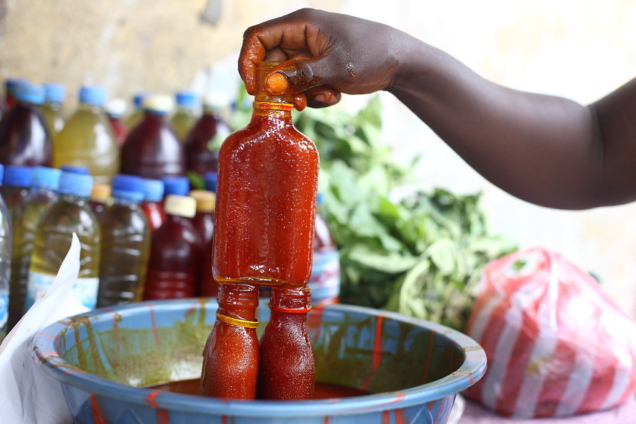
Government is set to arrest and prosecute unlicensed and illegal artisanal palm oil producers and processors in the Country by next year.
The move is to drive away bad operators from producing unclean and unhealthy palm oil for consumption, which is causing a lot of illnesses, such as cancer.
The effort is expected to enhance market access for workers in the palm oil value chain in the producing districts and ensure that finished products meet both local and international market standards to generate income and taxes for development.
Paul Amaning, the National President of the Artisanal Palm Oil Millers and Outgrowers Association of Ghana, gave the hint during a product packaging training for palm oil producers at Twifo Hemang.
He noted, that a substantial part of Ghana's palm oil imports could be sourced locally from artisanal palm oil producers if they met the quality requirements of both industrial users and palm oil exporters.
Mr Amaning said the government was ready to support the millers with portable machines for palm oil processing at a convenient process within a shorter period of time.
He urged the artisanal mill owners to adapt to change and also work together as a team in advancing and digitalising the Palm oil business.
Mr Amaning, further charged the participants to register their businesses to meet the requisite standards to enhance trading and also provide jobs to reduce unemployment and increase the living standards in the Country.
John Odai Tettey, the Regional Manager of the Food and Drugs Authority (FDA) schooled participants on the requirements of business registration for them to be able to operate without interference.
He added that food hygiene and safety should be the core element of all food preparation processes, including palm oil, hence the need for processors to obtain and regularly update their knowledge in food safety and good manufacturing practices.
Mr Tettey advised consumers to stop demanding palm oil with a redder hue, explaining that such market preferences made some unscrupulous palm oil producers add substances to the product to change its natural colour, which could compromise food safety.
He urged the participants to be committed to ensuring the safety of their products to safeguard public health.
The Regional Manager advised the mill owners to follow the right procedures and measures to produce the best and quality product for the market.
Latest Stories
-
Today’s Front pages : Friday, April 10, 2026
7 minutes -
‘We don’t have time’ – Fianoo calls for Schäfer to lead Black Stars temporarily
50 minutes -
CAF will not favour any country – President Motsepe
55 minutes -
Otto Addo was appointed through the backdoor – Kudjoe Fianoo slams GFA
56 minutes -
UG Corporate Football League back from the Easter break
60 minutes -
CGI orders motorbike training at tactical school in Kyebi
2 hours -
Sachet water producers in Berekum defy gov’t directives, increase prices
2 hours -
Critical commodities stuck at port, CSOs warn of family planning crisis
2 hours -
Gender Ministry mourns victims of Volta Lake boat tragedy, deploys support for affected families
2 hours -
MPs undergo training on human trafficking and gender dimensions
2 hours -
Don’t expect instant relief – COMAC CEO warns fuel price drops will be gradual
2 hours -
GIS to unveil comprehensive plans to enhance officers’ welfare and infrastructure
2 hours -
Right move, wrong timing? – COMAC CEO questions govt’s delay on fuel price relief
2 hours -
IMF urges Central Banks to keep inflation in check
3 hours -
NRSA stands firm on Toyota Voxy ban despite transport operators’ opposition
3 hours