

Audio By Carbonatix
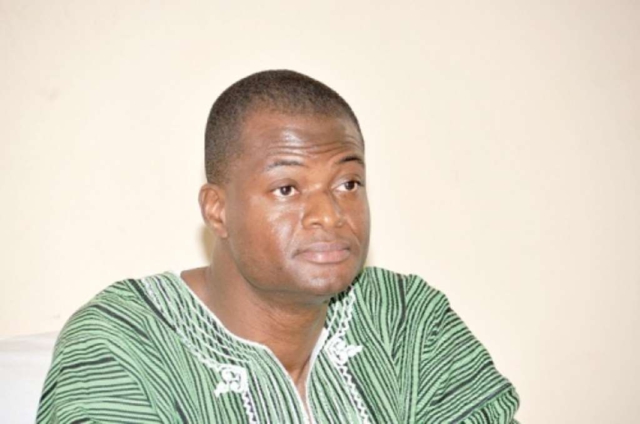
The Dean of the University of Ghana School of Law, Professor Raymond Atuguba, says until government puts in place measures to empower the citizenry in legal affairs, the law will only continue to serve the rich and privileged.
According to him, due to a general lack of legal empowerment in the country, “those who have less money, less privilege, fewer connections cannot access the best of legal services to make the law serve them.”
“It’s been a big problem in many third world countries,” he told Samson Lardy Anyenini, the host of JoyNews’ The Law, Sunday.
He explained that through legal empowerment, “ordinary people who ordinarily don’t have those resources for legal intervention by themselves, with the help of cheaper or even volunteer paralegals, will be able to make the law work for them.”
“That unless we empower the bulk of Ghanaians legally, we can’t solve that problem where the law seems to be working just for the privileged and not for the underprivileged,” he reiterated.
Speaking on the topic 'Is the law an ass?' he added that, Ghana would need to revise its implementation of the legal aid mechanism.
According to him, the current legal aid is ineffective because it does not respond to the country’s economy, society and politics.
“I give you one example, in most countries in the developed world, the percentage of people who can’t pay for legal services is limited.
"In other words, most of the society earn an income that makes them capable of accessing and paying for legal services and then a smaller percentage in that country do not have access to legal aid and then the state provides.
“So, for example, 90% can pay and then the state provides for the 10%. The mistake we’ve often made is to pick that model and then apply it to a place like Ghana, where the table is turned.
"The table is turned because 10% can pay for effective super-legal services in Ghana, and 90% cannot pay. That is a recipe for failure. It just will not work,” he said.
“It has not worked since independence, and it will not work. For communities and societies such as ours, you have to implement strategies for legal empowerment in order to get out of the conundrum.
"Because there is no way the state can pay for legal services for lawyers for 90% of the population,” he concluded.
Latest Stories
-
A source of excellence across generations – Vice President Opoku-Agyemang lauds Mfantsipim
14 minutes -
(Photos) Mfantsipim School launches historic 150th anniversary
37 minutes -
Knights and Ladies of Marshall group backs Catholic Bishops’ stance on anti-LGBTQ+
2 hours -
Bright Simons writes: All the Filla in the Ibrahim Mahama/E&P – Gold Fields Saga
2 hours -
Monetise Idiocy In Ghana
2 hours -
The Ghanaian prophet and the mysterious death of his scottish wife Charmain Speirs
3 hours -
Nearly 400 sentenced in Nigeria for links to militant Islamists
3 hours -
Ghana’s recovery supported by gold strength despite global oil price pressures – Standard Bank Research
3 hours -
Methodist Church hails Mfantsipim@150; calls for “fresh consecration” to excellence
4 hours -
‘Excellence is our inheritance’ – Nana Sam Brew-Butler hails Mfantsipim’s 150-year reign in leadership
4 hours -
Kwaku Azar writes: A-G vs OSP
4 hours -
Mfantsipim–Adisadel rivalry built excellence, not division – Sam Jonah
4 hours -
Vice President launches Mfantsipim’s 150 years of shaping Ghana’s greatest mind
5 hours -
I assure Otumfuo, Mahama will join him to commission KNUST Teaching Hospital by end of this year – Haruna Iddrisu
5 hours -
Barcelona dominate derby to extend La Liga lead
5 hours