


Audio By Carbonatix
The US economy added 242,000 jobs in February, far better than the 190,000 expected by economists.
The Labor Department numbers underlined the strength of the US economy and may allow the Federal Reserve to gradually raise interest rates this year.
Another 30,000 jobs were also added to the previous estimates for December and January.
The unemployment rate was unchanged from January at 4.9% - an eight-year low.
Luke Bartholomew, investment manager at Aberdeen Asset Management, said: "This should scotch suggestions that the US is about to tip into recession. It's yet more evidence that the labour market is in good shape, although wage growth was more disappointing."
The year-on-year growth in average hourly earnings slowed to 2.2% last month from 2.5% in January.
Last week, official figures indicated that the US economy expanded at an annualised pace of 1% in the quarter, compared with an initial estimate of 0.7%.
The strong jobs market and improved growth outlook, together with signs that inflation is creeping up, could prompt the Fed to raise rates in the summer.
It did so in December for the first time in nearly a decade - a decision that had been criticised by some for holding back the economic recovery.
Services growth
However, Chris Williamson, chief economist at Markit, questioned whether the Fed would act anytime soon.
"Current signs of rising inflationary pressures and a tightening labour market need to be viewed alongside indications that the pace of economic growth may be slowing, and possibly sharply, amid growing concerns about the outlook," he said.
"The big question will be the extent to which the Fed heeds the warning lights flashing in the background."
The services sector created 245,000 jobs last month after adding 153,000 jobs in January, while construction added 19,000 positions and government added 12,000.
However, mining lost a further 18,000 jobs after shedding 9,000 positions the previous month, and the manufacturing sector shed 16,000 jobs, reversing some of January's surprise increase.
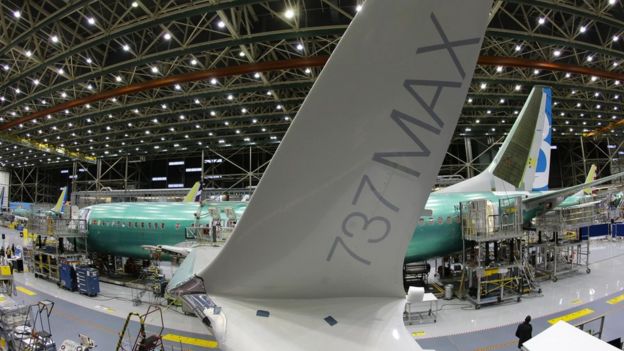
Meanwhile, the US trade deficit rose in January as exports fell for a fourth consecutive month.
The Commerce Department said the gap between exports and imports climbed to $45.7bn in January from a revised $44.7bn in December.
Exports of goods and services fell 2.1% in January to $176.5bn - the lowest since June 2011. US exporters have been hurt by a global economic slowdown and by a strong dollar that makes US products more expensive overseas.
Imports fell 1.3% to $222.1bn - the lowest since April 2011.
Latest Stories
-
The Ghanaian prophet and the mysterious death of his scottish wife Charmain Speirs
18 minutes -
Nearly 400 sentenced in Nigeria for links to militant Islamists
40 minutes -
Ghana’s recovery supported by gold strength despite global oil price pressures – Standard Bank Research
47 minutes -
Kwaku Azar writes: A-G vs OSP
1 hour -
Mfantsipim–Adisadel rivalry built excellence, not division – Sam Jonah
2 hours -
Vice President launches Mfantsipim’s 150 years of shaping Ghana’s greatest mind
2 hours -
I assure Otumfuo, Mahama will join him to commission KNUST Teaching Hospital by end of this year – Haruna Iddrisu
3 hours -
Barcelona dominate derby to extend La Liga lead
3 hours -
Gov’t to roll out free special education for persons with disabilities from July 1 – Education Minister
3 hours -
Importers and Exporters Association declares full support for Publican AI port system
3 hours -
“We used it to test our officiating officials’ readiness” – Bawah Fuseini after CAA Athletics event
4 hours -
Volleyball emerges as Ghana’s fastest rising sport
4 hours -
National Sports Fund needs strong leadership from the top – Administrator David Wuaku
4 hours -
JoySports Exclusive: Steve McLaren in talks with GFA after expressing interest in Black Stars job
4 hours -
Fire guts auto parts warehouse at Bubuashie, one fire officer injured
4 hours