

Audio By Carbonatix
The legal fate of the Ghana-US deportee arrangement, currently under challenge at the Supreme Court by the pressure group Democracy Hub, will ultimately be determined by Ghana's adherence to its international law obligations, according to a leading expert.
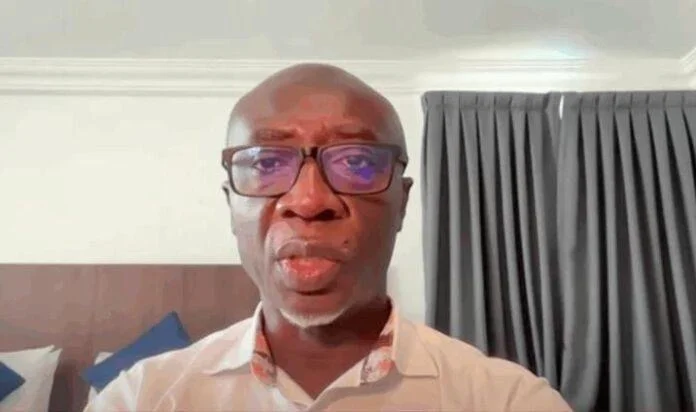
International Law at the University of Ghana, Prof Kwadwo Appiagyei Atua has stressed that Ghana's commitments to global bodies and treaties, particularly those protecting against forced returns, must guide the Parliament and the Executive on the controversial agreement.
The lecturer emphasised that domestic legal processes, including the ratification of the Memorandum of Understanding (MOU) by Parliament, cannot ignore Ghana’s binding status as a member of international organisations like the UN, AU, and ECOWAS.
He specifically cited the principle of non-refoulement as the critical legal yardstick.
This principle is a cornerstone of international refugee and human rights law and is explicitly contained in agreements such as the UN Refugee Convention and the Convention Against Torture (CAT), to which Ghana is a State Party.
"Parliament is bound by certain international agreements, such as the Convention Against Torture, which Ghana is a party, and certain agreements which, including the Refugee Convention, which includes the principle of non-refoulement, which says that you cannot deport somebody to a country where the person might have already suffered torture," Professor Atua stated.
He elaborated that the government's action must prevent any return where:
- The individual has already suffered torture.
- Taking the person back "would lead to a continuation of that torture."
- "There's reasonable grounds to conclude that torture has been taking place in that place, so taking the person there will result in the person being tortured."
The expert stressed that the government and Parliament "will have to take into account all these obligations that Ghana has" as a member of the international community.
International Law Must Inform Local Policy
Professor Atua noted the hierarchy of legal obligations in this context, suggesting that international law might hold precedence over local statutes in matters of fundamental human rights protection.
"There are certain laws which, as international laws, may override the local laws, or we have to make our laws reflect and conform to those international obligations," he explained.
"So that would be the final determinant, or the basis for Parliament to rule, or to make a decision as to whether the MOU should be should be ratified, or made domesticated, and made part of Ghana's laws."
The comments come as the Supreme Court prepares to hear arguments on October 22, following the Democracy Hub lawsuit challenging the government's deal that has seen at least 42 West African nationals, none of whom are Ghanaian, deported from the US and rerouted through Ghana.
The civil society group argues that holding and re-deporting these individuals, particularly those who have US court orders protecting them from return to their home countries due to fear of persecution, violates these exact non-refoulement principles.
Latest Stories
-
I assure Otumfuo, Mahama will join him to commission KNUST Teaching Hospital by end of this year – Haruna Iddrisu
25 minutes -
Gov’t to roll out free special education for persons with disabilities from July 1 – Education Minister
47 minutes -
“We used it to test our officiating officials’ readiness” – Bawah Fuseini after CAA Athletics event
1 hour -
Volleyball emerges as Ghana’s fastest rising sport
1 hour -
National Sports Fund needs strong leadership from the top – Administrator David Wuaku
2 hours -
JoySports Exclusive: Steve McLaren in talks with GFA after expressing interest in Black Stars job
2 hours -
Fire guts auto parts warehouse at Bubuashie, one fire officer injured
2 hours -
I owe my victory to coach Ofori Asare – Allotey after winning WBA Africa Gold Super Flyweight belt
2 hours -
Church of Pentecost supports over 2,000 BECE candidates in Obuasi with career guidance seminar
4 hours -
Brandon Asante and Coventry all but promoted to Premier League despite Sheffield Wednesday draw
4 hours -
GPL 2025/26: Late Kwartemaa strike downs Hearts in Tema
4 hours -
Ghana Faces Sierra Leone Moment as Prosecutorial Powers come under strain
4 hours -
Don’t consume fish or seafood from Tema Shipyard until further notice – FDA warns
4 hours -
Why volunteering might be Africa’s most underrated career accelerator
4 hours -
ActionAid Ghana raises concern over gender gaps in Feed Ghana Programme
4 hours