

Audio By Carbonatix
Usibras Ghana Limited, one of the country’s largest cashew processing companies, has announced plans to relocate its operations to the Ivory Coast, citing persistent challenges that have crippled its ability to sustain production.
The company, which has run a 24-hour production cycle for more than a decade, says Ghana’s cashew supply can no longer sustain industrial-scale processing.
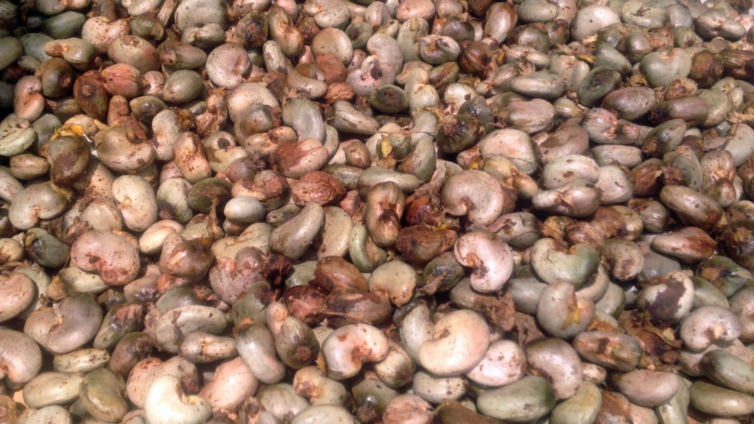
With a plant capacity of 35,000 metric tonnes per year, Usibras managed to secure only 7,000 MT of raw cashew nuts in 2025.
Management also pointed to the rising cost of electricity and other utilities, unfavourable export tariffs—particularly the 15% duty on products exported to the United States—and the difficulty of keeping operations continuous as reasons for the move.
Economic and Social Fallout
The relocation of Usibras could have far-reaching consequences for Ghana’s economy and social structure.
Already, the company has begun cutting back its 700-strong workforce after exhausting the limited volumes of raw nuts available. A complete shutdown would leave hundreds of households without income.
Cashew farmers also stand to lose a key buyer, raising fears of market disruptions and discouraged production.
Ghana’s export earnings could take a hit as well, with Usibras being one of the few processors generating significant foreign exchange inflows through its banking operations.
Industry watchers warn that the exit of Usibras could weaken the Association of Cashew Processors in Ghana, of which the company is a major player, and harm service providers who depend on the processor for business.
Contributions to SSNIT and PAYE tax revenues would also decline, reducing government income.
Call for Government Action
Usibras’ looming departure underscores systemic problems in Ghana’s cashew industry.
A factory with the capacity to process 35,000 MT, securing only 7,000 MT this year, signals a supply crisis, the company warned.
It has urged government to act swiftly by enforcing rules to protect local processors, adopting tax policies similar to Ivory Coast to make the sector more competitive, and establishing a task force to regularise operations in the cashew industry.
Without urgent intervention, Ghana risks not only losing Usibras but also damaging investor confidence in its agribusiness sector.
Latest Stories
-
At least 30 feared dead in crush at Haitian tourist site
51 minutes -
Four arrested over murder of Scottish businessman in Kenya
1 hour -
New Mainoo deal closer, says Man Utd boss Carrick
1 hour -
Sinner beats Alcaraz to return to world top spot
1 hour -
An inappropriate joke nearly ended his career. Now he’s back with more humour
2 hours -
GPL 2025/26: Dreams FC stage stunning comeback to hammer Eleven Wonders
3 hours -
Livestream: The Probe examines Kumasi’s looming water crisis
3 hours -
MTN Ghana gears up to lead Africa’s AI revolution
3 hours -
Philanthropist Alhaji FuZak donates Da’wah bus to Ambariya Sunni community
3 hours -
GUTA calls for suspension of Publican AI system over trade disruptions
3 hours -
TTAG raises alarm over proposed recruitment of 7,000 teachers, demands national posting roadmap
3 hours -
Civilians feared killed after reports of air strike on Nigerian market
4 hours -
Bishop Simon Kofi Appiah installed as new Jasikan Diocese Bishop
4 hours -
Trump’s Strait of Hormuz blockade threat raises risks and leaves predicaments unchanged
4 hours -
US Court backs extradition of former MASLOC CEO Sedina Tamakloe-Attionu to Ghana
4 hours