

Audio By Carbonatix
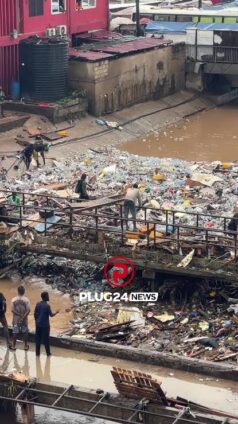
An economist and Research Fellow at the Institute of Statistical, Social and Economic Research (ISSER), Dr Kwame Adjei-Mantey, has called for a comprehensive overhaul of Ghana's waste management governance framework, arguing that meaningful reforms in the sector are essential to tackling Accra's perennial flooding problem.
According to him, the country's current waste management system is beset by structural and governance deficiencies that continue to undermine efforts to prevent flooding, particularly during periods of heavy rainfall.
Dr Adjei-Mantey said that while investments in drainage infrastructure remain important, policymakers must also focus on improving waste management governance, which he described as a major contributor to the annual flooding experienced in the capital.
He noted that the existing institutional framework for waste management requires significant reforms to eliminate inefficiencies and improve coordination among agencies responsible for sanitation and waste disposal.
"Currently, there is a governance structure around waste management that needs an overhaul or improvement. There are overlapping responsibilities and, if you look at the structure of waste management, we do not have a regulator in the space. That is a gap that restructuring could address," he told Citi FM.
He added that waste collection services across the country remain largely inconsistent and inequitable.
"We have seen that waste collection across the nation is largely inconsistent, and it is not equitable," he said.
Dr Adjei-Mantey stressed that the absence of a dedicated regulator has created accountability gaps within the waste management sector, making it difficult to effectively coordinate sanitation efforts nationwide.
He further observed that waste collection services remain uneven, with some communities enjoying regular collection while others lack adequate services. According to him, this disparity often leads to indiscriminate dumping of refuse into drains and waterways, worsening flooding during heavy rains.
The ISSER economist argued that addressing Accra's flooding challenge will require not only improved drainage infrastructure but also far-reaching reforms that strengthen waste management governance, enhance regulatory oversight and ensure equitable waste collection services across all communities.
Latest Stories
-
GSA postpones auction of unserviceable vehicles
1 minute -
Man charged with attempted murder after stabbing
4 minutes -
World Cup visa scandal: Senyo Hosi says issue goes beyond calls for Sports Minister’s resignation
6 minutes -
Yaw Ampofo Ankrah hasn’t taken or received any money to facilitate visas – Lawyer insists
24 minutes -
World Cup visa scandal: Senyo Hosi urges focus on constitutional accountability
24 minutes -
La Beach demolition: Senyo Hosi condemns lack of consultation
35 minutes -
Russian glide bomb attack on Zaporizhzhia kills at least 15 people
50 minutes -
Jinapor warns underperforming energy sector CEOs of consequences, says no protection for failure
52 minutes -
Fire destroys head of tipper truck on Lower Volta Bridge
56 minutes -
Palmer signs new Chelsea contract until 2034
57 minutes -
World Cup visa scandal: Mahama will act on corruption allegations – Abass Nurudeen
59 minutes -
Abass Nurudeen accuses Minority of ‘scandal scavenging’ over World Cup visa controversy
1 hour -
US Embassy recognised NSA, GFA and GTA as separate entities for visa applications – Sports Minister’s aide
1 hour -
Only 30% of Ghanaian teachers satisfied with their jobs – CAPCOE data reveals
1 hour -
Communities affected by construction of Akosombo Dam urge government to speed up compensation process
2 hours