

Audio By Carbonatix
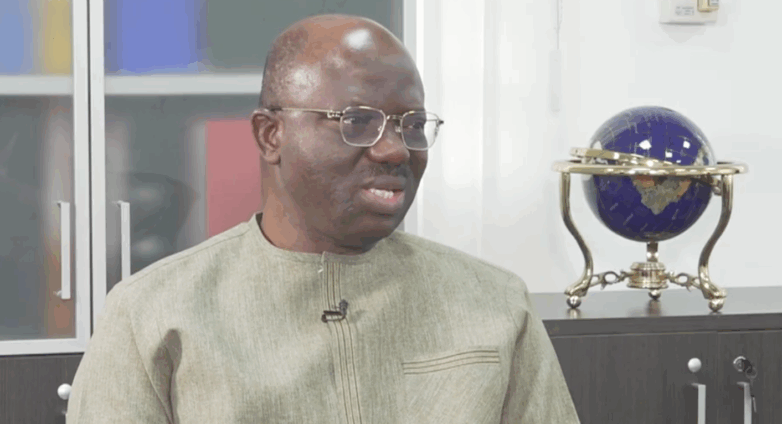
President of the Association of Ghana Industries (AGI), Dr Kofi Nsiah-Poku, says worsening water shortages are severely disrupting production and threatening Ghana’s industrialisation drive.
Speaking on Joy News’ PM Express Business Edition on Thursday, he described the situation as critical, especially for beverage manufacturers that depend heavily on water as a primary input.
“It is so bad in the sense that for about two weeks, water wasn’t running,” he said.
According to him, even when supply resumed, it has been unreliable and limited.
“When it started, they rationed it twice a week, and it ran for about only six hours,” he explained.
Dr Nsiah-Poku revealed that his own fruit juice production facility has been directly affected.
“I also have an industry there producing fruit juice, and they work only twice, and we have to buy water from outside to put in the water tanks before you can do production,” he said.
The added cost of sourcing water externally, he indicated, places additional strain on businesses already battling high operating expenses.
He warned that such conditions undermine Ghana’s ambition to industrialise.
“As a nation, we cannot industrialise with this kind of situation,” he stressed.
Beyond the water crisis, Dr Nsiah-Poku pointed to the broader financial environment that has constrained industry growth in recent years.
He said high interest rates previously made borrowing unattractive for businesses.
“Even before, the interest rate was so high that, you know, it was not worth borrowing money to do business,” he stated.
Instead of investing in production, he suggested that capital flowed into safer government instruments.
“It was rather more interesting to really change your money, your asset, into cash, and just go and buy treasury bills,” he said.
The result, he noted, has been declining industrial activity and rising unemployment.
“So unemployment has become very high because the industry is not growing, it’s rather falling,” he said.
Dr Nsiah-Poku, however, believes the country has reached a turning point.
“We’ve come to a point where we have to reverse it, and that is what I’ve come to do,” he declared.
His comments highlight mounting concerns within the manufacturing sector that unreliable water supply, combined with past financial pressures, is stalling growth and limiting job creation.
For industries that rely on water daily, the crisis is no longer an inconvenience. It is a production threat.
Latest Stories
-
‘At the age of 12, I was teaching people and collecting money from them’ – Forty Under 40 Awards
36 minutes -
I broke my virginity at the age of 26 after university – Richard Abbey Jnr.
1 hour -
Sacked for fees, saved by faith: The untold story of Forty Under 40 Awards founder Richard Abbey Jnr
2 hours -
GCB Bank surges GH¢0.45, ETI gains GH¢0.06 as GSE ends week higher
2 hours -
Two teens jailed 55 years for robbery
3 hours -
UDS demands apology for MPhil student wrongly branded as Tamale robber
3 hours -
“We don’t sell fish!” – Tema Shipyard CEO hits back over dead fish discovery
4 hours -
Sam George defends anti-LGBTQ+ Bill as ‘national priority’ amid debate over gov’t focus
4 hours -
Artemis II astronauts safely back on Earth after trip around moon
5 hours -
Sam George unveils massive 1,150-cell site rollout to end network woes
5 hours -
This Saturday on Prime Insight: Fuel levy suspension, LGBTQ+ legislation, and Damang Mine controversy
5 hours -
Struggling Real suffer title blow with Girona draw
6 hours -
Mahama nominates Pamela Graham as Auditor-General
6 hours -
The five big sticking points in US-Iran talks
7 hours -
Melania Trump’s speech propels Epstein crisis back to forefront
8 hours