

Audio By Carbonatix
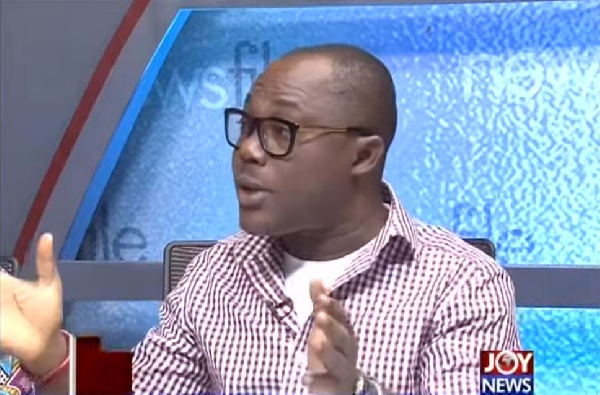
Political Science Lecturer at the University of Ghana, Prof Ransford Gyampo, has called for urgent steps to be taken to cut down on the huge political funding and election financing in the country.
He has noted that until practical solutions are prescribed to confront the menace, corruption will continue to be the country's major setback.
The monetisation of politics in Ghana has always been an issue of discussion, especially after general elections when candidates spend huge sums of money to secure victory.
This usually affect the chances of smaller parties and individuals who may have interest in contesting for certain portfolios during the elections.
While some have blamed the phenomenon on the demands of Ghanaians during elections, others think political parties should adopt different strategies to generate funds.
"I keep asking myself; if it’s the idea of going to serve, who pays to go serve? Isn’t it rather the other way round that you go serve and get paid by the people that you are serving?"
"So many monies go into campaigning and people pay a lot of money just to serve and it should raise eyebrows if people are paying the kind of monies that the CDD has recently come up with," Prof. Gyampo said on Prime Morning.
He said because politicians spend so much to get power, they mostly tend to use illegitimate means to replenish monies they parted with before being elected.
"When they get to power, they must recoup the money they spent in the electioneering campaigns at all cost and so it means they would have to dip their hands into state coffers to replenish what they spent, and to dip their hands small into the coffers to get more money to prepare for the next elections."
"If they are going on retirement, they must pay more to be able to keep and to take care of themselves when they are on retirement," he told Benjamin Akakpo on Thursday.
CDD Research
A new research by the Center for Democratic Development (CDD-Ghana) has found that presidential candidates will need at least $100 million to win an election in Ghana.
The report also indicated that parliamentary candidates have to cough up nearly ¢4 million to win a constituency seat.
The study sought to assess some illicit and illegal moves in local politics and to get a fair idea of how much investment goes into politics.
Latest Stories
-
Gender Ministry supports Harriet Amuzu in ongoing abuse case
4 minutes -
AG joins plaintiff to scrap OSP ?: We should be mindful of the mischief in this – Bobby Banson
10 minutes -
Samson Lardy Anyenini questions willingness of Attorneys-General to prosecute political colleagues
12 minutes -
It is only fair the OSP is heard in Supreme Court case – Bobby Banson
18 minutes -
Asiedu Nketia resumes Ashanti tour, second leg kicks off on Sunday
26 minutes -
NLA denies salary cut claims, threatens legal action over reports
30 minutes -
BoG Governor honoured for stabilising cedi, improve inflation
33 minutes -
Kyebi Easter Homecoming 2026: A resounding success!
1 hour -
Trade Minister applauds GUTA as a pillar of economic growth; Prez Mahama honoured
2 hours -
President’s brother’s takeover of Damang Mines is ‘untidy’ – Alhassan Tampuli
2 hours -
It’s not true that gov’t decided not to renew the lease for Gold Fields – Bobby Banson
2 hours -
Ghana to boost tomato production with 60-hectare irrigated farms and processing initiatives
2 hours -
E&P’s takeover process of Damang Mines was very clean – Inusah Fuseini
2 hours -
Damang takeover: There is not going to be any job loss; it is a lease change – Bobby Banson
3 hours -
Gold Fields didn’t stop mining at Damang mines; such claims are untrue – Bobby Banson
3 hours