

Audio By Carbonatix
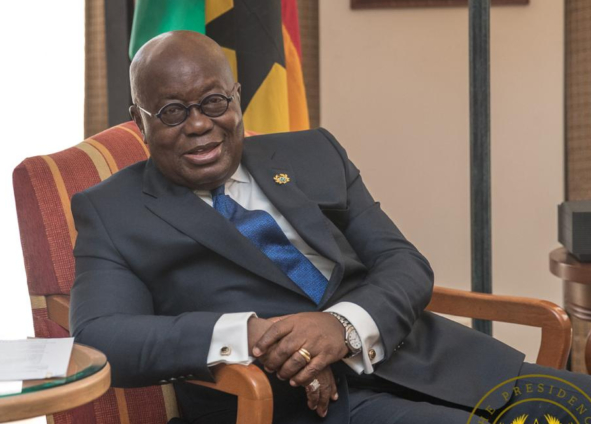
President Nana Akufo-Addo has urged African leaders to guard against the continuing consequential power of rating agencies on African economies.
Speaking at the African Union meeting in Ethiopia on Sunday, February 6, he observed that credit ratings by these rating agencies have affected the cost of borrowing and access to the international capital markets.
His comment comes at a time rating agencies, Fitch and Moody’s, have both downgraded Ghana’s capacity to borrow, a situation that is affecting the country’s finances.
“We need to guard against the continuing consequential stranglehold of the rating agencies, which has affected the cost and access to capital markets for African countries, and has, during this Covid-19 period, resulted in the downgrading of many African countries, exacerbating, even more, their funding challenges.”
“Furthermore, it is of the utmost importance that the G20 leaders stick to their commitment to reallocate to Africa, SDR $100 billion agreed to at the Paris Summit,” he said.
On Friday, February 4, Moody’s Investors Service (Moody’s) downgraded Ghana’s long-term issuer and senior unsecured debt ratings to Caa1 from B3 and changed the outlook to negative.
It also downgraded the senior unsecured MTN programme ratings to (P)Caa1 from (P)B3 and the backed senior unsecured debt rating to B3 from B1.
“The downgrade to Caa1 reflects the increasingly difficult task the government faces addressing its intertwined liquidity and debt challenges”.
“Weak revenue generation constrains government’s budget flexibility, and tight funding conditions on international markets have forced the government to rely on costly debt with shorter maturity”, Moody’s noted.
Meanwhile, the Finance Ministry has appealed against the downgrade of the country’s credit rating to Caa1, from B3 by rating agency Moody’s.
In a statement, it said the government of Ghana is completely puzzled by the decision to downgrade Ghana’s credit rating to Caa1, despite the series of progressive engagements it had with the team from Moody’s, the quality of the data supplied, as well as the medium-term economic and fiscal focus of the government, underpinned by key fiscal consolidation reforms such as the policy decision to cut expenditure by 20%, as recently announced by the Minister for Finance, Ken Ofori-Atta.
Latest Stories
-
I do not see myself as better than anyone – NPP’s 1st Vice Chair Kojo Bamba
12 minutes -
Police blur the line between invitations and arrests – Reindorf Twumasi Ankrah
47 minutes -
Turning invitations into arrests is making citizens reluctant to assist police – Twumasi Ankrah
1 hour -
The Traffitech-GH SMS spot-fine system: The good, the sad, and the funny – Bright Simons writes
2 hours -
Hawa Koomson pledges experienced and mature leadership of NPP women’s wing
3 hours -
Young woman found dead at Kasoa Peace Town
3 hours -
Playback: The Law examined lawful arrest in Ghana
4 hours -
Mahama urges African governments to treat healthcare as an investment, not budget cost
4 hours -
Bawumia congratulates John Boadu and new NPP executives, pledges support ahead of 2028
4 hours -
Aksa Energy delegation pays courtesy call on GRA Commissioner-General
4 hours -
‘No talent should be left out’ – Bawumia pledges inclusive NPP campaign for 2028
4 hours -
Prof. Mike Oquaye recounts how he blocked the Special Prosecutor’s attempt to arrest Bawku Central MP
5 hours -
Make health sovereignty a priority for Africa – Mahama
5 hours -
Dorimon Naa, Wa West DCE lead massive clean-up exercise; threaten sanctions against recalcitrant residents
5 hours -
Photos from Adom FM Y2K Jam
5 hours