

Audio By Carbonatix
The Governor of the Bank of Ghana, Dr. Ernest Addison, has warned that Ghana does not have a choice but to manage a tight fiscal consolidation in an election year.
According to him, the lessons of the economic crisis are fresh on everybody’s mind, and therefore there is the need to keep the currency stable going into the election
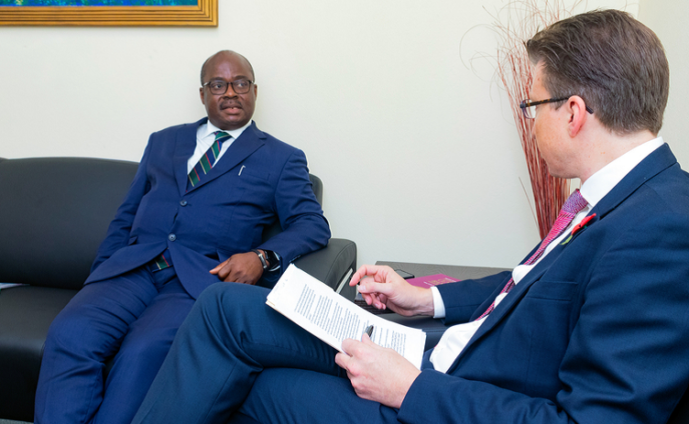
Speaking in an interview with Christopher Jeffery of centralbanking.com at the ECCB 40th anniversary and Central Banking Autumn meetings in Saint Kitts and Nevis, he said the central banking financing of the government will remain zero unless otherwise.
“Ghana doesn’t have a choice but to do so, because we have all seen what an economic crisis can do. The lessons are fresh on everybody’s mind. And the need to keep the currency stable is paramount going into the election”.
On independence of the central bank, he said central bank independence is relative, noting, “We have acted independently for most of the time that I have been in office”.
He added “I have not had to consult anybody to set interest rates. The Bank of Ghana is relatively independent. We have an inflation-targeting framework. We have a Monetary Policy Committee that sets interest rates. Independence is all about operational independence. Once you have the structures and the tools to do that, you are there”.
Domestic Debt Exchange Programme
Regarding the Domestic Debt Exchange Programme, the Governor was unhappy the Bank of Ghana took 50% of the haircut, saying, it raise the matter with the International Monetary Fund.
“We were not. We did raise the matter with the IMF. The IMF brought in central bank balance sheet experts to look at our accounts who, by the time they were done, were of the view that despite the haircut, we were policy solvent and we could still operate”.
He said the issue of reviewing the central bank’s accounts would have to be revisited in another three years, adding, “Obviously, this was a time we needed to make progress to ensure the Fund’s board meeting took place. The central bank had become almost the last obstacle to getting Ghana’s programme approved by the IMF. Therefore, it was difficult to spend too much time on further discussions”.
He mentioned that the other parties – pensions funds – were not much affected, adding, “I think they got off relatively easier than they would have if the initial permutations had been followed. We had to take an additional haircut because of that – from 35% to 50%”.
Latest Stories
-
Church of Pentecost supports over 2,000 BECE candidates in Obuasi with career guidance seminar
40 minutes -
Brandon Asante and Coventry all but promoted to Premier League despite Sheffield Wednesday draw
1 hour -
GPL 2025/26: Late Kwartemaa strike downs Hearts in Tema
1 hour -
Ghana Faces Sierra Leone Moment as Prosecutorial Powers come under strain
1 hour -
Don’t consume fish or seafood from Tema Shipyard until further notice – FDA warns
1 hour -
Why volunteering might be Africa’s most underrated career accelerator
1 hour -
ActionAid Ghana raises concern over gender gaps in Feed Ghana Programme
2 hours -
Windstorm wreaks havoc in Gushegu, displacing nearly 2,000 residents and damaging schools
2 hours -
Friends of Bridget Bonnie Marks her 35th birthday with donation to Kasseh Model Health Centre
2 hours -
From Ekumfi Kokodo to the Pulpit Stage: Essi Donkor’s gospel journey takes shape
3 hours -
Landfilling waste management creates no value, it’s an economic waste
3 hours -
Photos: Speaker Bagbin Commissions MPs constituency office under parliamentary decentralisation programme
3 hours -
Black Stars technical advisor Winfried Schäfer sacked as GFA shakes up backroom staff
3 hours -
Wenchi water project almost complete, critical to gov’t agenda – GWL MD
3 hours -
Anti-LGBTQ+ bill not part of government’s legislative agenda – Inusah Fuseini
3 hours