

Audio By Carbonatix
The International Monetary Fund (IMF) has stated that it stands by its assessment that the Bank of Ghana will record a US$ 214 million loss through its Gold for Reserves programme implemented via the Ghana Gold Board.
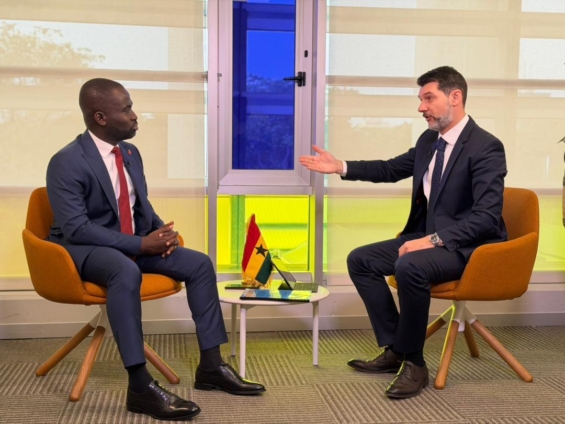
The IMF’s Country Representative for Ghana, Dr Adrian Alter, disclosed this to host George Wiafe on PM Express Business Edition on January 16, 2026.
Dr Alter explained that the assessment contained in the staff report was not intended to classify the Domestic Gold Purchase Programme as a loss-making operation, but rather to highlight the operational and financial risks, particularly in relation to Goldbod dealings.
The country representative noted that “we understand that the numbers are still being audited as we speak, and there is the likelihood that numbers could go down marginally or go up.”
Dr Alter acknowledged that the Bank of Ghana had described the IMF’s assessment as speculative because audited figures are still being prepared.
However, he stressed that the Fund stands by its assessment, which was meant to highlight expected challenges and not to cast doubt on the programme.

“But we still stand by our assessment. When you go into our staff report, our assessment was to bring some transparency to the programme and make sure that these challenges are resolved,” the IMF country representative added in the interview on PM Express Business Edition.
He further noted that the IMF’s intention was not to place blame on the Bank of Ghana, Goldbod, or the Ministry of Finance, but to highlight the international monetary risks associated with the programme and the need to enhance transparency around the Domestic Gold Purchase Programme.
Background
The International Monetary Fund, in its staff report, confirmed that the Bank of Ghana has incurred losses through the Gold for Reserves programme implemented via the Ghana Gold Board.
In its fifth review of Ghana’s ongoing IMF programme, the Fund disclosed that losses from the artisanal and small-scale doré gold transactions under the programme had reached US$214 million by the end of September 2025.
At current exchange rates, this amounts to about ₵2.43 billion.
As the IMF noted, “From 2025 through the end of Q3, losses from the artisanal and small scale doré gold transactions component of G4R have reached US$214 million (0.2 percent of GDP), mostly on trading losses but also on GoldBod off takers’ fees.”
While Goldbod itself has recorded profits, the IMF noted that those gains have come at the expense of the central bank, which has absorbed the bulk of the losses generated by the programme.
The Fund warned that this arrangement poses risks to the Bank of Ghana’s financial position, stating that “the domestic gold purchase programme poses risks to the financial sustainability of the BoG.”
According to the IMF, understanding how these losses emerged requires a closer look at Goldbod’s operations.
When the Gold Board was established, its initial business model was to act as the sole buyer and exporter of gold from Ghana’s small-scale mining sector.
The model was to be funded by a US$279 million revolving fund provided in the 2025 budget, although this structure has since changed.
Bank of Ghana on reported loss
The Bank of Ghana, in a statement issued on December 25, 2025, maintained that figures reported in relation to losses from gold operations in 2025 should be described as speculative.
The Bank argued that since its audited financial statements, including all relevant disclosures, will be published next year in accordance with statutory requirements, it would not be right to give credence to these reports.
The Bank of Ghana further noted that although the IMF review flagged financial risks associated with the Domestic Gold Purchase Programme, these concerns should be viewed within the broader context of the programme’s significant macroeconomic contribution.
It stated that the Domestic Gold Purchase Programme has helped to boost Ghana’s international reserves, support currency stability, and enable access to large volumes of foreign exchange without incurring new debt.
“The operational role of GOLDBOD as an aggregator has been important in channelling gold-based inflows from the small-scale mining sector into the official market,” the document from the Bank of Ghana seen by JOY BUSINESS stated.
Latest Stories
-
US seeks changes to rejected $109m health compact with Ghana – Mahama
3 minutes -
Nine dead in mass shooting at Pennsylvania home
20 minutes -
‘Time for Ukraine to get new president,’ says Trump after Zelensky condemns diesel deal
23 minutes -
Hincapie injury adds to Arsenal issues after Guimaraes rescue act
32 minutes -
Henderson scores twice as Chelsea thumb Bournemouth
41 minutes -
Photos: Mentapulse Africa convenes health and labour summit to address talent retention
53 minutes -
Mahama inspects Nkokɔ Nketenkete plant, eyes Bechem as chicken capital
60 minutes -
Ghana not seeking full BRICS membership, applying as Partner Country – Ablakwa
1 hour -
Woman injures three people in third Poland school knife attack in a week
1 hour -
Ghana should join BRICS as partner, not member – NPP Bono East Regional Secretary
1 hour -
Ghana High Commission warns nationals in South Africa over protests in Johannesburg, Durban
1 hour -
Mahama praises Roads Minister for keeping Big Push contractors on their toes
1 hour -
World Cup Visa Scandal: ‘My client has not collected money for visas’ – Ampofo Ankrah’s lawyer
1 hour -
US immigration officials defend ICE agents who shot man in same car as child
2 hours -
Commentator Katie Zacharia picked as new White House press secretary
2 hours