

Audio By Carbonatix
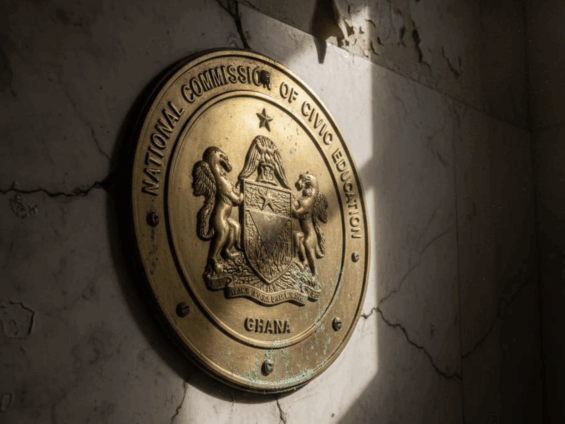
The health of a nation is not gauged merely by its GDP, but by the moral temperature of its populace. For Ghana, the tragic abandonment of the National Commission for Civic Education (NCCE) is not a simple administrative oversight; it is a betrayal of the Republic's soul.
This deliberate starvation of the very institution mandated to forge national character is an indictment of the ruling class. They lament the citizens' poor attitude, yet strategically dismantle the factory to promote civic virtue.
The NCCE, now a mere skeleton, stands as a devastating national metaphor. It mirrors the Ghanaian citizen currently in circulation: a figure defined by blind partisan devotion and a crippling tolerance for corruption.
This prevailing citizen, who prioritises party colour over the national collective, is not the solution to Ghana's problems. He is, in a profound and tragic paradox, the cause of the national stagnation. The crisis is not solely political; it is fundamentally an issue of citizenship failure.
To extract Ghana from this mire, we do not simply need new leaders; we need a New Ghanaian, the Conscientious Citizen, to take the nation out of here.
The Conscientious Citizen is a figure of intellectual autonomy, the antithesis of the passive subject. This transformation is rooted in four pillars of character:
First, Critical Patriotism: This is a loyalty not to the ephemeral whims of a politician, but to the enduring principles of the Constitution. Like a good shepherd, the New Ghanaian serves the flock (the nation) above the voice of the owner (the party). This stance dismantles blind partisanship, making merit, not manipulation, the currency of governance.
Second, the Accountability Zealot: This citizen views public property as a sacred trust, a communal inheritance that must be defended fiercely. Their motto, rooted in Article 41, is simple: they are an active, everyday whistleblower. When corruption walks in the light, the Zealot ensures it cannot hide in the shadows of apathy.
Third, the Reciprocity Demander: This Ghanaian understands that duty is leverage. The moment they fulfil their tax obligations, they earn a non-negotiable right to demand justice, integrity, and service delivery from the State. They have shed the mentality of the supplicant seeking favours and adopted the posture of the stakeholder demanding an owed return.
Fourth, Informed Autonomy: This citizen rejects the propaganda and misinformation that fragment the national spirit. They cultivate a discerning mind, ensuring their vote is cast for policy and substance, not personality or tribal allegiance. This is the intellectual insurance policy against the manipulation that often poisons the democratic well.
The path to cultivating this Conscientious Citizen begins with a radical commitment to the very institutions that were allowed to fail.
The NCCE must be immediately and massively resourced, not as a charity, but as the primary strategic asset for long-term democratic stability. Starving it is an act of democratic self-sabotage. Funding must be guaranteed, transforming the Commission from a beggar into a fully empowered public service.
Furthermore, civic education must be overhauled. It must move beyond rote learning to teaching critical thinking, training students not just to know the rules, but to possess the courage and wisdom to challenge power responsibly.
Crucially, the political class must cease its hypocrisy. A citizen will not build a house if they see the architects stealing the cement. The State's own performance is the most potent civic lesson. The ruling class must visibly demonstrate, through the aggressive prosecution of corruption and adherence to the rule of law, that the era of impunity is over.
This requires structural change. The advocacy of Civil Society Organisations (CSOs) for Constitutional review to reduce Executive dominance and strengthen independent bodies is vital. When the system itself is structurally resistant to corruption, the citizens' inclination to trust and participate is restored.
The prevailing state of Ghanaian citizenship reflects the tragic state of the NCCE. But the New Ghanaian is not a utopian fantasy. They are the critical necessity for a prosperous, accountable, and resilient republic.
The time has come for the ruling class to prove its commitment to the nation, not just to power, by investing in the conscience of its people.
********
Raymond Ablorh is a Policy, Research, Government Relations, Media Relations, and Strategic Communication Consultant. raymondablorh25@gmail.com 233-244 040 803
Latest Stories
-
Ghana, 3 others face large financing needs, debt servicing costs – World Bank warns
11 minutes -
Eurobond repayment: Ghana faces US$6.4bn repayment burden between 2027 and 2030 – World Bank
34 minutes -
Government to add 100 new ambulances to national fleet in 2027
48 minutes -
Ex-Spurs player Vega set to run for FIFA president
1 hour -
Arteta signs new contract with champions Arsenal
1 hour -
Former Man City player Silva comes out of retirement
1 hour -
‘I have a screen in my office’ – Akandoh on real-time emergency bed tracking
2 hours -
Government begins pilot of national emergency bed management system
2 hours -
GRA forms 9-member committee to probe alleged missing containers at Tema Port
2 hours -
Foreign Minister inspects VFS Global Visa Centre, highlights commitment to service quality standards
2 hours -
Declan Rice close to agreeing new Arsenal deal
3 hours -
‘Draining’ few days for Gauff after online racist abuse
3 hours -
Media worker, journalist remanded over alleged GH¢800,000 fraud
3 hours -
PAC sends Ghana Water hearing back, demands Minister and MD appear over financial status
3 hours -
Foreign Affairs Minister inspects 20+ visa centres, demands better conditions for Ghanaian applicants
4 hours