

Audio By Carbonatix
The Centre for Policy Scrutiny (CPS) has warned that government’s flagship 24-Hour Economy and Accelerated Export Development Programme (24H+) could face serious implementation and fiscal challenges unless it is backed by realistic financial planning and stronger institutional coordination.
In its latest review released in Accra, CPS said while the 24H+ represents an ambitious and comprehensive strategy to transform Ghana’s economy, the financial assumptions and governance framework underpinning it are weak and risk undermining its success.
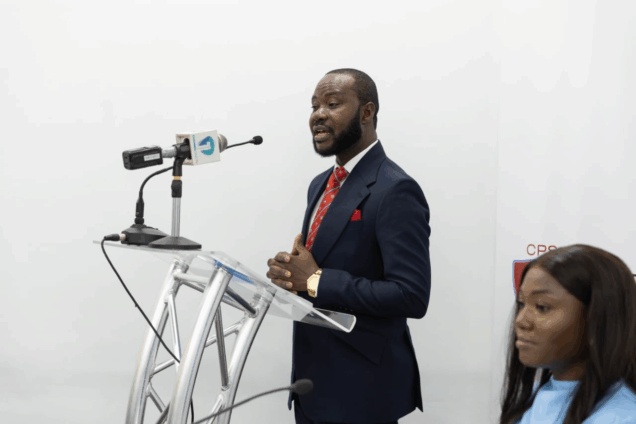
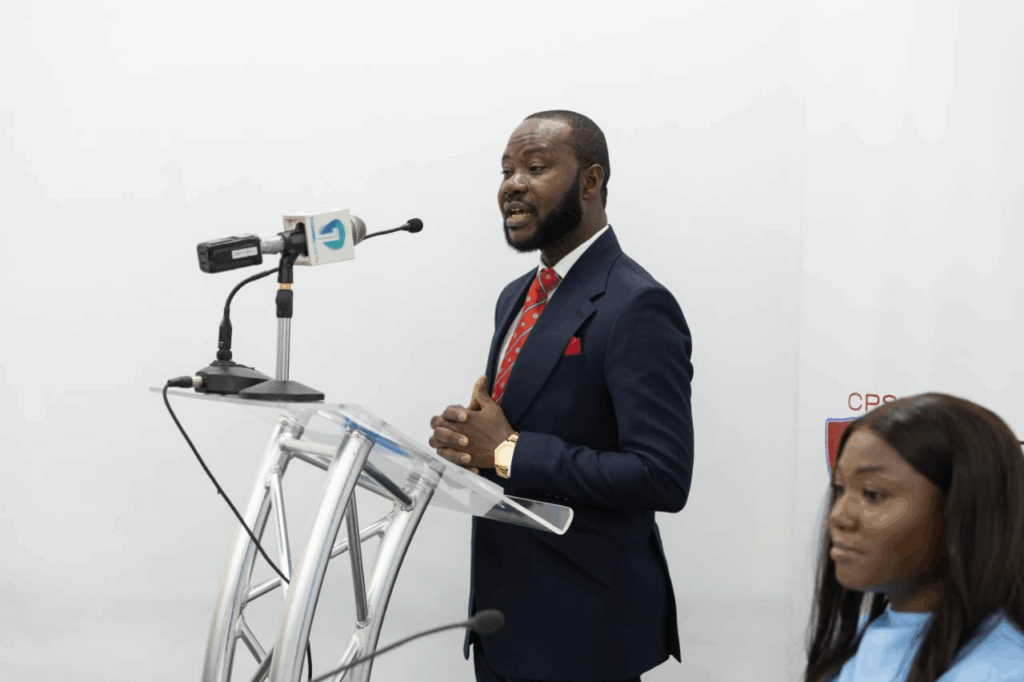
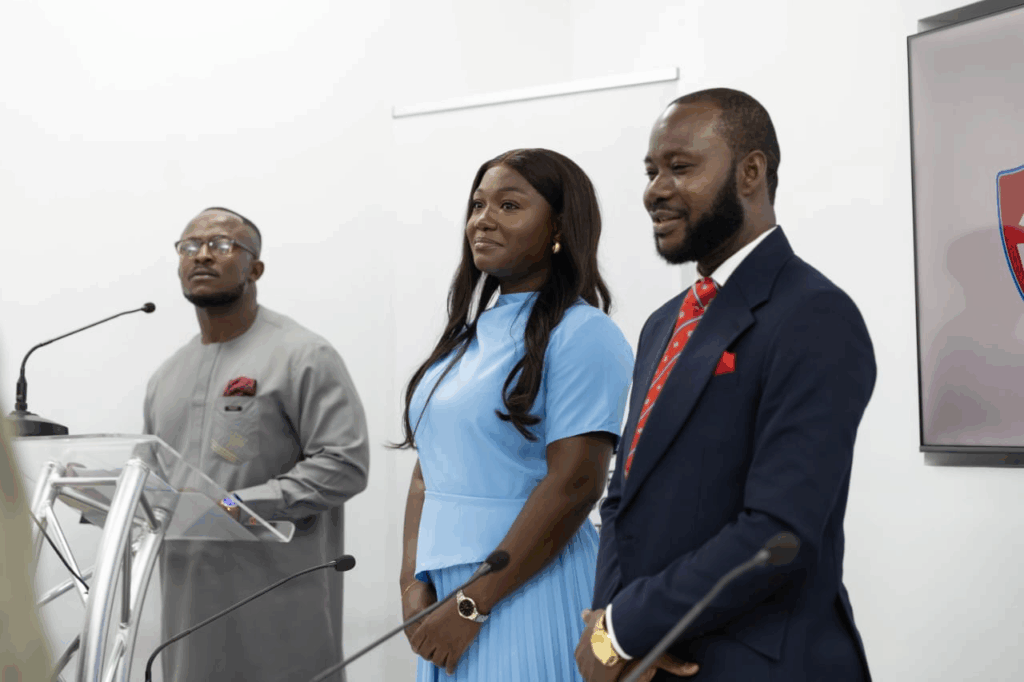
The report, titled “The 24-Hour Economy and Accelerated Export Development Programme: A Critical Review”, was prepared by a team led by Executive Director and economist Dr Adu Owusu Sarkodie and researcher Stephanie Anokyewa Tawia.
It examines the coherence, fiscal credibility and feasibility of the government’s proposed transformation plan, which aims to create five million jobs by 2034 and sustain an annual GDP growth rate of six per cent.
According to the think tank, the 24H+ suffers from poor fiscal realism and a lack of ex-ante project appraisals, both of which threaten to derail implementation.
The report notes that the initiative’s estimated cost of $4 billion is likely understated and does not account for the full range of commitments, including tax incentives, infrastructure subsidies and indirect costs that could weigh heavily on public finances.
It said that Ghana’s public investment levels, which have averaged only 2.8 per cent of GDP over the past decade, are “insufficient to deliver the scale of infrastructure and industrial expansion the programme envisions.”
This gap, CPS noted, could force the government to depend heavily on private sector participation, which may not materialise without credible guarantees and a clear investment framework.
“The scale of the 24H+ ambition contrasts sharply with current fiscal realities,” the report observed, warning that without transparent costing and phased implementation, the programme could “mirror the fate of past transformation efforts that stalled after an enthusiastic start.”
CPS further highlighted weak institutional anchoring as a major concern. It said the 24H+ is not formally integrated into the National Development Planning Commission’s (NDPC) medium-term framework, raising the risk of duplication and fragmented delivery across ministries and agencies.
“For the 24H+ to succeed, it must be embedded within the national planning and fiscal framework,” said Dr. Adu Owusu Sarkodie, lead author of the report. “Otherwise, coordination problems, resource waste and policy overlaps will continue to undermine implementation.”
The review also questioned the merit of some proposed fiscal incentives, such as corporate income tax rebates for firms operating multiple shifts. It said shift patterns alone are not reliable indicators of productivity or employment impact, and that the incentives should instead be tied to measurable outcomes in job creation, export performance and value addition.
Another challenge identified is the lack of clear implementation metrics and performance indicators. CPS said that while the 24H+ outlines ambitious targets across agriculture, manufacturing, tourism and logistics, it fails to provide measurable timelines, benchmarks or accountability mechanisms to track progress.
“There is a need for more detailed project appraisals, costing and sequencing to guide realistic implementation,” noted Dr Sarkodie. “Without that, the programme risks being a statement of intent rather than a deliverable plan.”
Despite these concerns, CPS acknowledged that the 24H+ offers a well-structured vision for Ghana’s industrial future. It praised the programme’s emphasis on agro-processing, manufacturing and regional development, particularly its plan to transform the Volta Basin into an agro-industrial corridor linking production zones to domestic and export markets.
However, the think tank cautioned that the government must learn from previous development frameworks that suffered from over-ambition, poor coordination and limited fiscal space.
“The 24H+ presents an opportunity to reset Ghana’s economic model, but it must be grounded in fiscal discipline, realistic costing and institutional learning,” Dr Sarkodie stressed.
CPS concluded that the success of the 24-Hour Economy initiative will depend less on political enthusiasm and more on pragmatic planning, credible financing strategies and effective delivery systems.
It recommended that the government integrate the programme into Ghana’s medium-term development plan, publish detailed cost estimates and prioritise high-impact projects based on feasibility and resource availability.
The 24H+, launched by President John Dramani Mahama in July 2025, is billed as a national agenda for productivity, competitiveness and inclusive growth.
But as the CPS review indicates, without stronger financing and clearer implementation metrics, the country’s most ambitious economic reset could risk falling short of its own promise.
Latest Stories
-
Domestic borrowing resumption will not lead to reckless spending – Kwakye Ofosu
14 minutes -
IMANI-Africa questions credibility of UNIFIL contingent after attack on Ghanaian peacekeepers
32 minutes -
Dialogue is the best path forward – Kwakye Ofosu on attack on Ghanaian UN peacekeepers
37 minutes -
Preparing African children for the AI future – Why robotics is no longer optional in African schools
44 minutes -
Gov’t defends scaled-down Independence Day celebration, cites cost and safety concerns
1 hour -
Peacekeepers attack: ‘No country should attack non-combatants with impunity’ – Kwakye Ofosu
1 hour -
Government condemns attack on Ghanaian peacekeepers in Lebanon, calls for UN investigation
2 hours -
Livestream: Newsfile discusses mass dismissals saga, bikes for MPs, Iran war and bond market
2 hours -
Oil price at two-year high after Qatar warns all Gulf production could stop within days
5 hours -
Ireland condemns missile attack that injured Ghanaian soldiers in Lebanon
5 hours -
‘Massive’ numbers killed by gunmen in latest Nigeria attack, senator tells BBC
5 hours -
Ghana@69 feels different: Jerseys, songs, and digital culture celebration takeover
5 hours -
EX WO1 Josiah Stephenson Kingful aka Old Soldier
5 hours -
State of the Nation at 69: The Ghana we have vs. The Ghana we want
5 hours -
Ghana@69: Ghana’s High Commissioner to Canada urges Ghanaians in the diaspora to drive development
5 hours