

Audio By Carbonatix
As part of their efforts to fight unemployment in the country, 38 youth from across the country have benefited from ECOWAS youth training on biofertilizer production and business development at the Soil Research Institute of the Council for Scientific and Industrial Research (CSIR-SRI).
The training focuses on building capabilities that will enable the youth to manufacture biofertilizers that will contribute to the agricultural sector of Ghana.
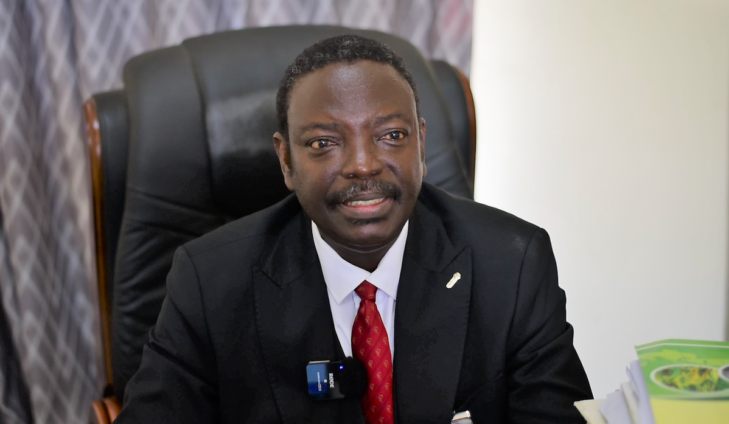
Director of the Soil Research Institute of the Council for Scientific and Industrial Research (CSIR-SRI) explained that this training is going to create jobs for young people in the country.
“So, at the African Union youth commission, they decided what we can do to solve youth unemployment in Africa and realised that agriculture forming a greater proportion of our GDP can be used to solve our problem.
“And if we do that, how do we approach it, the research institutions have over the years done quality research and they have come out with products which are underutilized.
“But we have realized that if these products are put to good use, it will help transform economies in Africa and provide opportunities for the youth to have employment,” he said.
He also observed how Ghanaians have developed taste for foreign agricultural products.
“We have looked at many fertilizers on the Ghanaian market and when you analyse them and look at the nutrient composition, our farm yard manure, the ones that come from our own environment are higher in terms of nutrients than the ones that we import from foreign countries
And we rather spend money to buy foreign fertilizers. They might look good but our farm manure are better in terms of nutrients,” he said.
Research scientist at the Soil Research Institute, Dr. Fuseini Issaka mentioned that the biofertilizers are going to contribute to the increase in rice production.
“Bio fertilizers have the ability to enhance rice production, especially Azola. Azola is a bio fertilizer that can be found in the whole country and it has been tested and proven that it can enhance the production of rice
“So we are equipping these youths with these technologies so that they can go into mass production,” he said.
Dr. Emmanuel Dugan is also a research scientist at the Soil Research Institute.
“Government can support the training of the youth so that they can go into mass production so that it can be used in rice and maize production. This will solve our food problems,” he said.
The training is an initiative of the Soil Research Institute of the Council for Scientific and Industrial Research (CSIR) funded by ECOWAS.
Latest Stories
-
Gender Ministry supports Harriet Amuzu in ongoing abuse case
12 minutes -
AG joins plaintiff to scrap OSP ?: We should be mindful of the mischief in this – Bobby Banson
18 minutes -
Samson Lardy Anyenini questions willingness of Attorneys-General to prosecute political colleagues
20 minutes -
It is only fair the OSP is heard in Supreme Court case – Bobby Banson
26 minutes -
Asiedu Nketia resumes Ashanti tour, second leg kicks off on Sunday
35 minutes -
NLA denies salary cut claims, threatens legal action over reports
39 minutes -
BoG Governor honoured for stabilising cedi, improve inflation
41 minutes -
Kyebi Easter Homecoming 2026: A resounding success!
1 hour -
Trade Minister applauds GUTA as a pillar of economic growth; Prez Mahama honoured
2 hours -
President’s brother’s takeover of Damang Mines is ‘untidy’ – Alhassan Tampuli
2 hours -
It’s not true that gov’t decided not to renew the lease for Gold Fields – Bobby Banson
2 hours -
Ghana to boost tomato production with 60-hectare irrigated farms and processing initiatives
2 hours -
E&P’s takeover process of Damang Mines was very clean – Inusah Fuseini
2 hours -
Damang takeover: There is not going to be any job loss; it is a lease change – Bobby Banson
3 hours -
Gold Fields didn’t stop mining at Damang mines; such claims are untrue – Bobby Banson
3 hours