

Audio By Carbonatix
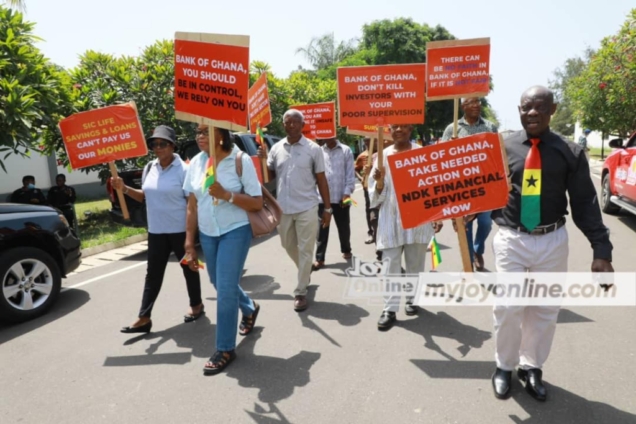
The promise of a healthier financial sector has become a prolonged nightmare for countless Ghanaians, eight years after the government initiated a massive clean-up that saw over 400 financial institutions collapse.
The anguish of victims, their savings locked and lives derailed, was laid bare on the JoyFM Super Morning Show today (Monday, November 10), painting a heartbreaking picture of a crisis that continues to claim lives, cripple businesses, and deny children their education.
For many, the financial shock of losing their life savings has morphed into a deadly public health crisis of depression, mental instability and hopelessness, proving that the economic downturn was only the beginning of their suffering.
The most devastating truth shared by callers was the staggering human toll.
Depositors and investors who relied on their investments for their livelihood have succumbed to stress-induced illnesses, with their deaths directly linked to the emotional and financial strain of the crisis.
For some retirees, they have to live the rest of their lives like paupers as huge sums meant for their pension remain locked up.
“I'm happy you are discussing this topic today. I'm 69 years old, a pensioner, and the worst financial decision I made was investing my hard-earned money. As it stands now, I have about 400,000 Ghana cedis locked up with an investment firm whose licence has not been revoked. I really need help or assistance to retrieve my locked-up funds. The sad aspect is that some of my colleagues have passed on,” One listener sadly narrated.
“I worked for nine years at a rural bank. Our third-tier funds were invested with an SDI. After the cleanup, the government converted the funds into a zero-coupon bond. As I write this, over 18 to 20,000 of my nine years' work is locked up,” another followed up.
Perhaps the most tragic impact is the intergenerational trauma affecting the nation's youth. The stories of parents unable to afford their children’s education resonated deeply across the airwaves.
Yaw, a middle-aged businessman who lost the working capital for his construction firm, confessed to pulling his two children out of a private secondary school.
GH₵ Billions Still Locked
The financial clean-up started in 2017 with the Bank of Ghana (BoG) targeting nine commercial banks, 23 savings and loans companies, and 347 microfinance institutions.
The Securities and Exchange Commission (SEC) followed up, revoking the operating licences of 53 investment companies.
The government's total fiscal cost for the exercise was estimated at over GH₵ 21.6 billion, largely used for paying some depositors and issuing bonds.
While a significant portion of funds has been disbursed, major concerns persist regarding the final tranches for certain categories of depositors, particularly those with Microfinance and Savings & Loans institutions, and the full settlement of investors in fund management companies.
Eight years on, the delayed payments and the lack of a clear, final timeline for all affected depositors mean that billions of Ghana Cedis remain inaccessible, suffocating small businesses and shattering the faith in financial institutions.
The depositors called on the Ministry of Finance and the Bank of Ghana to immediately expedite the final payments and ensure that the criminals whose actions led to the collapse of these institutions are prosecuted to the fullest extent of the law, arguing that only true accountability can bring closure to this national tragedy.
For others, they have laid their plight before President John Dramani Mahama to take action.
For some, the action of the regulators was unfair, suggesting some firms could have been saved to prevent job losses and the dire ripple effect.
An example, cited by many, is Groupe Nduom and its financial subsidiaries dotted in nearly every district in Ghana.
Nearly a decade after the incidents, some victims are still hopeful that the government will intervene to ensure justice and bring a proper closure to their plight.
Latest Stories
-
Environment Minister calls for transparency in Ghana’s GMO adoption
22 minutes -
Ghana risks 10% to 100% tariffs on exports to US under Trump’s threats as it moves to join BRICS
37 minutes -
South Africa withdraws asylum directive after anti-migrant violence
2 hours -
Moroccan king says migration cooperation model with Spain hit limit
2 hours -
Libya’s military seizes narcotics after firefight with smugglers
2 hours -
At least 139 migrants dead, including some children, after boat from Djibouti to Yemen capsizes, UN agency says
3 hours -
“US Embassy introduced TRIBE Culture Fest to NSA, GTA” – Kofi Adams
3 hours -
“NSA did not tell us of any embassy arrangement” – Kofi Adams
3 hours -
Kumasi records third commercial fire in three days
4 hours -
Trump faces growing backlash over plans to import diesel from Russia
4 hours -
AI is less regulated than milk, says Microsoft president
5 hours -
Boots sold in £7bn deal to Canadian billionaire family
5 hours -
Glasner suffers loss on Selhurst return as Palace beat Forest
5 hours -
WAFU B U17: ‘We won but I expected more from my boys’ – Kassim Ocansey
5 hours -
Royal Mail plans to cut 2,500 jobs
5 hours