


Audio By Carbonatix
Certain wedding traditions, such as the diamond on the ring, are well-known for being commercial inventions. Most wedding traditions, though, come from a colorful and ancient history. If you’ve ever wondered why many people do certain wedding traditions, here are ten incredibly interesting wedding traditions and their origins.

1. The bridal bouquet
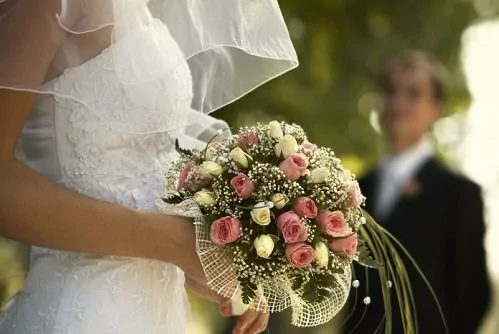
Brides carried bouquets close to their chest as they walked down the aisle, as far back as the medieval times, but the bouquets contained no flowers. They were bundles of dill and garlic. In a time when The Black Death was rampant, these medicinal herbs were considered far more useful than flowers. Over time, though, as the specter of disease receded, brides took to carrying bouquets that smelled better.
2. Elaborate dresses for the bridesmaids

In many countries, presidential motorcades have three or four identical cars. The idea is to make it hard for anyone trying to attack the president to know which car to aim for. The tradition of dressing bridesmaids up in elaborate dresses to rival the bride’s came up in a similar way – people wanted to get any evil spirits in the area mixed up about who the bride was. This tradition has since evolved to make bridesmaids’ dresses appear distinctly different.
3. Throwing rice for fertility
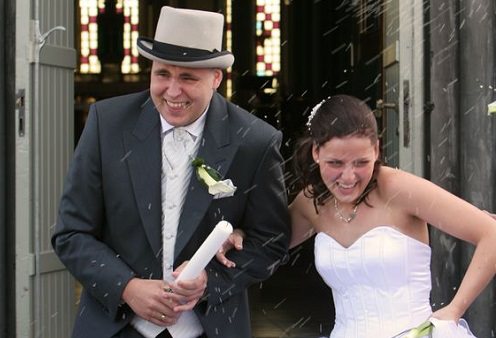
The tradition of showering the bride and groom with handfuls of rice isn’t an exclusively Christian tradition. Among other places, it is practiced in the Far East too. A shower of rice is believed to bring the wedded couple fertility. If you are going to tie the knot, don’t forget about this meaningful wedding tradition.
4. The wedding cake
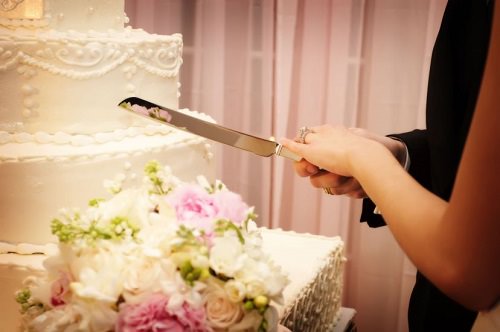
Weddings used to have wedding bread, rather than cake. The groom would cut off of large hunk, take a bite out of it, and then crumble the rest over his bride. The guests would scramble to pick up the crumbs to eat for good luck. Weddings now replace the bread with cake. Sadly, the crumbling tradition has been left behind these days.
5. The throwing of the garter
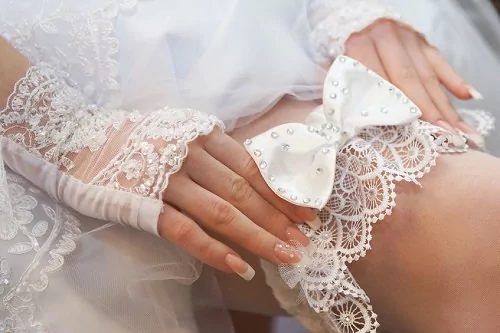
Back in less civilized times in Europe, in the morning after every wedding, important members of the community would enter the couple’s bedroom to check the bride’s garters and stockings for proof that the marriage had been consummated. Over time, though, these practices were seen as unacceptable. Now, it has simply evolved into the current practice where the new husband removes the garter himself and tosses it to the crowd. Even in this form, garter tosses are quickly vanishing. Many weddings don’t include it.
6. The honeymoon

At one time, people never freely married one another, at all. Grooms usually abducted their brides and disappeared with them. Over time, as people began to marry of their own will, they still considered the abduction method fun enough to turn into a ritual. Right after every wedding, the bride and groom would go into seclusion as if the groom had just abducted his bride. They would stay there undisturbed, subsisting on the honey wine that their relatives brought them. Drinking honey wine for one moon (or 30 days) as they did, the entire ritual came to be called the honeymoon.
7. The ring
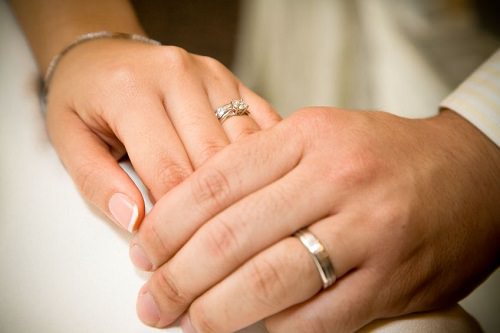
With weddings involving abductions more often than not, a 12th century Pope found it necessary to decree that weddings from that point forward would be held in churches, and that people would be allowed to marry only after a reasonable engagement period. Since people needed an engagement symbol, they chose a ring. These rings weren’t valuable and didn’t have diamonds. The diamond was a 20th century addition, famously engineered by the DeBeers diamond cartel through a prolonged and massive advertising campaign. Their slogan was, ‘A Diamond is Forever.’
8. Jumping the Broom

Among modern African-Americans, the Jumping the Broom ritual is a common one at weddings. It’s a tradition with a sad past, though. On plantations, slaves didn’t have the right to marry. Nevertheless, they formed their own wedding rituals: a man and woman who jumped over a broom together were considered married. While freed slaves didn’t continue the practice for decades, modern African-Americans are beginning to revive the practice as a way to stay in touch with their history. I really like this unique wedding tradition and many of my friends used this tradition on their wedding days.
9. A string of tin cans behind the newlyweds’ car
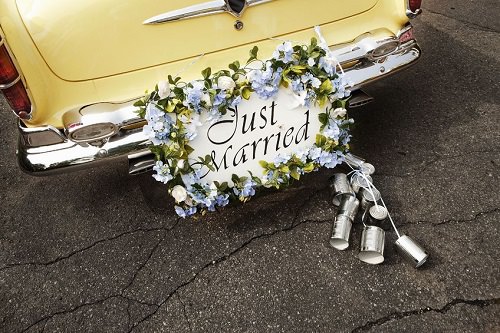
In the early 20th century, after a wedding ended and the bride and groom went back home to rest, their friends would come back outside and make a huge clamor to salute the bride and groom. They would need to come out again and feed the crowd to make them go away. This tradition was called the Shivaree. The tradition originated in France. Called the Charivari, it involved a toll that the groom had to pay any protesting local boys for picking up one of their girls. The modern tin can cacophony is a remnant of these practices.
10. The crushing of the glass

The Jewish tradition, where the groom’s breaks a wine glass under his shoe, is meant to help people in attendance remember the fall of the Temple of Jerusalem. The crushing of the glass at the end of the wedding is also believed to symbolize that marriage isn’t always as happy as the wedding itself.
Whether or not these traditions actually make any sense these days, they certainly do connect the modern society to its past. Do you know some other wedding traditions? What’s your favorite one?
Latest Stories
-
Linking LEAP to productive inclusion could cut extreme poverty by 2030 – UNICEF
11 minutes -
Trade Ministry backs use of creative arts to rehabilitate prison inmates
12 minutes -
Negotiations with government to continue despite strike suspension – GNAT
16 minutes -
‘Ghana cannot afford to waste public resources; every cedi has a job’ – Ato Forson
18 minutes -
Ghana expects economic boost as World Assemblies of God Congress brings 10,000 delegates to Accra
25 minutes -
Joy in Nayilifong as Farouk Aliu Mahama donates 100kVA transformer to improve power supply
53 minutes -
Chief Justice urges employers to tackle mental health stigma in workplaces
2 hours -
Analysis: Ghana’s yellow fever numbers reveal a gap between vaccination and protection
2 hours -
Education Ministry welcomes suspension of teachers’ strike
2 hours -
Vice Chancellors Ghana appeal to striking university administrators to resume work
2 hours -
KNUST postpones 2026/2027 academic year reopening indefinitely amid GAUA strike
3 hours -
Fire destroys mattress factory at Sokoban in Kumasi
3 hours -
ECOM-SMS Ghana launches ‘Agriculture Our Future Clubs’ to address threat of ageing farmer population
3 hours -
Nicholas Atsu Kumi
3 hours -
Cherif Sarr: Economic participation needs more pathways, not one prescribed route
3 hours