

Audio By Carbonatix
Truly, "We are not in normal times". This has been the cliché to calm all fears and to strengthen us as we fight the one enemy known as "coronavirus".
This enemy rose from an outbreak in Wuhan and now has become a devastating pandemic within a period of months. According to figures collated by John Hopkins University, the United States of America (USA) has, by far, the largest number of cases, with more than 85,000 fatalities, and also has the world's highest death toll.
Followed by France, Italy, Spain and the UK - the worst-hit European countries - with all of them recording more than 25,000 deaths. Ghana has recorded over 5,000 cases with few deaths and a good number of recoveries.
With great efforts to curb and eradicate this enemy, analysis and reports from the World Health Organization (WHO) outlined some directive health protocols which could reduce the spread of the virus. Some of these directives were to; practice social distancing, avoid social gathering - in effect, closing schools and other institutions, and placing limits on traveling. Reports have proven that these directives and others are yielding positive results in controlling the spread, but have we thought of its implications on students in rural areas?
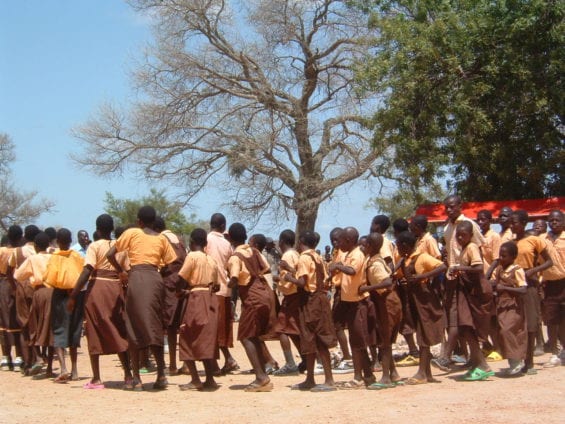
Most students study best on campus than at home. This is because of the availability of reading materials, and other resources. Students, because of the directives by which schools have been closed, are compelled to learn from home. This is a new culture creeping in and it has been very difficult for students especially those in the rural and the peri-urban areas who may not have access to books from a library and assistance of real teachers. This is making studies from such homes a burden for these students.
These same students living in the rural areas became alarmed when there was the introduction of online learning. Without access to electricity, the internet, smartphones and other technological devices, students have become handicapped. This has rather put stress on the students since they have no means of acquiring these devices and accessing the internet to study with their other colleagues.
In attempt to overcome the challenge of eLearning, students who chose to study on their own are gradually becoming independent in studies. The spirit of group work and collective studies is slowing down. If care is not taken, these students may gradually develop the habit of self-centeredness and extreme independence in studies.
As students become restless in prolonged waiting to return to school for studies, they begin to adopt and adapt to new lifestyles that might keep them busy or occupied. Female students who used to spend their vacation learning skills like baking or trading are now idle at home. Male students who used to play around with their other friends have their movements restricted. It is no doubt that in their youthful ages, they have very strong sexual desires. If not checked, these male students, having nothing else to do, might start exercising orgasms.
It could be observed that most students in the rural areas depend on relatives in the urban areas to support them. Such support often comes in the form of clothing, provisions, stationery, food, etc. These benefits have now reduced since there are limits on traveling and doing business. This is making life for the students very difficult.
Also, those families who took loans or sold properties to send their wards to school are living in despair. This is affecting their wards since their families now see them as burdens or the unfortunate ones in the family. These feelings of the students could lead to depression and other emotional, psychological and physical challenges with time.
In as much as the President strives to put these helpful measures in place to control the spread of the coronavirus, there is the need to look beyond and reach out to students in rural areas who are disadvantaged due to these laid-down measures.
Author: Rev. Fr. Stephen Kofi Sakpaku
Email: sonnichristus@yahoo.com
Latest Stories
-
MP status does not place anyone beyond law – EOCO on Manhyia MP’s attempted arrest
26 seconds -
Chief Justice must examine arrests of suspects on court premises – Afenyo-Markin
3 minutes -
Black Stars arrive in Bouake ahead of Cote d’Ivoire clash
7 minutes -
We’ve identified two persons who allegedly helped Manhyia South MP escape arrest – EOCO
12 minutes -
Manhyia South MP declined two invitations in February, attempted arrest was lawful – EOCO
24 minutes -
Bosomtwe Assembly ultilises PWDs fund to empower over 30 PWDs with start-up kits
28 minutes -
Nkrumah’s ideas must be given practical meaning – P.L.O. Lumumba
37 minutes -
Disproportionate arrests over criticism may create ‘undeserving martyrs’ – Mahama
39 minutes -
“This is an abuse of power” – Minority slams EOCO over attempted arrest of Manhyia South MP
40 minutes -
Time to turn Volta Region’s economic potential into action – EXIM Bank CEO
41 minutes -
Bring your appointees to order – Afenyo-Markin urges Mahama to act against alleged EOCO abuses
54 minutes -
Mahama tasks MFWA, GJA to lead national dialogue on hate speech, harmful digital content
55 minutes -
Manhyia South MP recounts alleged attempt to forcibly take him to EOCO
1 hour -
‘I had to drive off to safety’ – Nana Agyei Baffour Awuah on why he fled after High Court clash
1 hour -
Nkrumah was a lonely man because of Pan-African vision – PLO Lumumba
1 hour