

Audio By Carbonatix
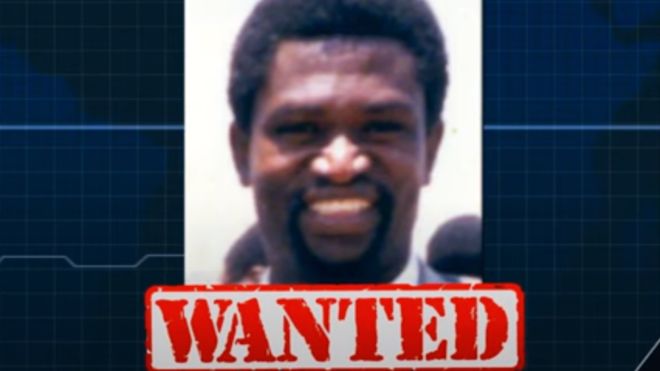
The remains of Augustin Bizimana, one of the most wanted suspects of Rwanda's 1994 genocide, have been found, a UN war crimes prosecutor says.
They were discovered in a grave in Congo-Brazzaville. DNA tests confirmed his identity and that he had been dead for 20 years.
He was defence minister when about 800,000 people were killed in 100 days.
Bizimana was indicted in 1998 by a UN tribunal on 13 charges, including genocide, murder, rape and torture.
The announcement of his death follows the arrest in Paris last weekend of Félicien Kabuga, who is accused of being the major financier of the killers during the genocide.
They were ethnic Hutu extremists targeting members of the minority Tutsi community and their political opponents, irrespective of their ethnic origin.
The search is still on for six other Rwandans accused of genocide, Serge Brammertz, the UN war crimes prosecutor, said in a statement.
Of the six, the most wanted is Protais Mpiranya, a former commander of the presidential guard. Like Kabuga and Bizimana, he is regarded as a "major fugitive".
Ex-PM and peacekeeper murders
Mr Brammertz is chief prosecutor of International Residual Mechanism for Criminal Tribunals (IRMCT) at The Hague, which handles outstanding war crimes cases for Rwanda and the former Yugoslavia.
"Bizimana was alleged to be responsible for the murders of former Prime Minister Agathe Uwilingiyimana and 10 Belgian United Nations peacekeepers, and for the murder of Tutsi civilians" in five Rwandan regions, he said.
6 April 1994President Habyarimana, a Hutu, killed in plane explosion
Over 100 daysHutu extremists kill some 800,000 Tutsis and moderate Hutus
4 July 1994Tutsi-led RPF rebels capture the capital Kigali
Two millionHutus flee to Zaire, now DR Congo, fearing revenge attacks
93ringleaders indicted by a UN tribunal
12,000community courts try more than 1.2 million suspects
Source: BBC/UN
The confirmation of Bizimana's death was the result of an exhaustive investigation into human remains from a gravesite found in Pointe-Noire in Congo, he said.
As well as DNA analysis over several months, the investigators had verified additional evidence concerning the circumstances of Bizimana's death in August 2000, the prosecutor said.
However, Mr Brammertz's statement gave no further details about how the former defence minister had died, when he would have been aged around 46.
Dozens of people were convicted for their role in the killings by the International Criminal Tribunal for Rwanda (ICTR), set up after the genocide, and hundreds of thousands more faced trial in community courts in Rwanda.
Latest Stories
-
Government has improved sanitation in one-and-a-half years — Salaga South MP
4 hours -
Nkwanta North Assembly to appear before Parliament over DACF sanitation spending
4 hours -
Mourinho prints out ‘red card’ incidents after Real lose derby
5 hours -
Atletico beat 10-man Real in feisty Madrid derby
5 hours -
Twelve Tribes of Israel Ghana to mark 40 years with anniversary celebration
5 hours -
GPL 2026/27: Hearts held by Bechem as Kotoko, Samartex share spoils
6 hours -
My Story (Kwaku Antwi-Boasiako)
6 hours -
We expect growth rate to re-accelerate in second-half of 2026 – IC Insights
6 hours -
The ungodliness and unrighteousness underlying the National Cathedral mess!
6 hours -
T-bills auction: Government fails to achieve target; yield on 91-day-bill remains unchanged
6 hours -
It’s Ghana’s shame to denigrate Nkrumah when the whole world honours him as African of the Century – Asiedu Nketiah
6 hours -
No other nationalist can compare to Nkrumah – Asiedu Nketiah
6 hours -
Collateral Registry: Foreign banks accounted for GH¢19.9bn of secured credit in quarter 2, 2026
6 hours -
This government should expect scrutiny – Asiedu Nketiah
7 hours -
Two-year-old girl dies in domestic fire at Cantonments
8 hours