

Audio By Carbonatix
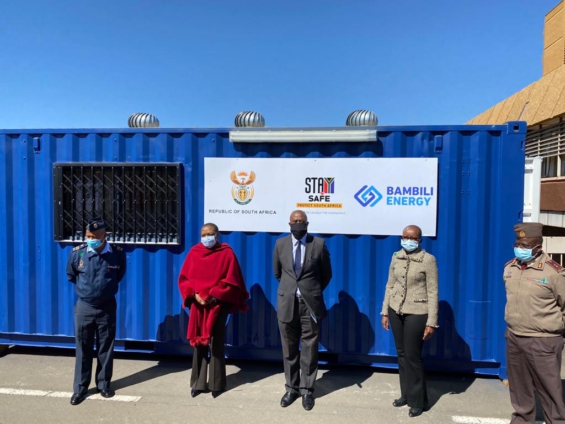
The Department of Science and Innovation (DSI) will on Wednesday, 19 August 2020 unveil seven hydrogen fuel cell systems which are being used as the primary power source for the field hospital established at 1 Military Hospital in Pretoria as part of the government's response to COVID-19.
The project is a public-private partnership between the DSI, the Department of Public Works and Infrastructure (DPWI), the Department of Defence (DoD), local companies Bambili Energy and HyPlat, and international companies PowerCell Sweden.

Horizon Fuel Cell Technologies (Singapore) and Element 1 Corporation (United States). Further contributions, in the form of methanol and hydrogen fuel for the fuel cell units, were also received from Air Products South Africa, Protea Chemicals and Sasol.
Bambili Energy focuses on the hydrogen economy, providing solutions to complement various forms of alternative energy, and is committed to commercialising intellectual property developed through the Hydrogen South Africa (HySA) programme.
The COVID-19 pandemic has highlighted the need to respond with speed and flexibility, particularly in providing high care facilities for those who need them most.
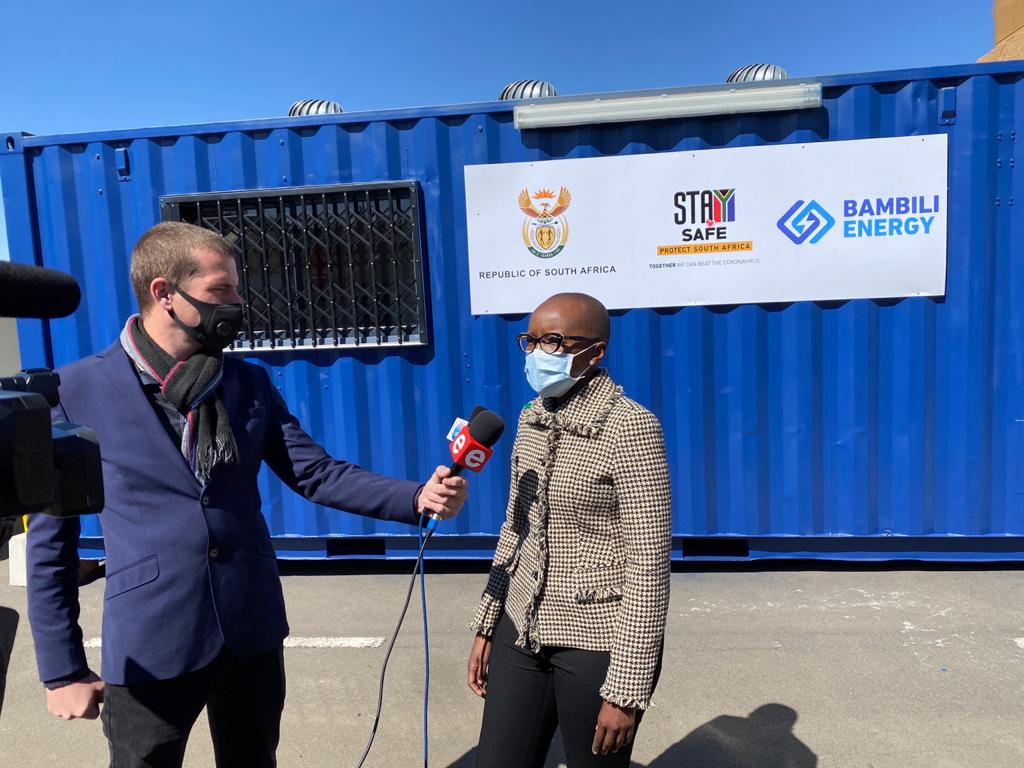
Containerised hydrogen fuel cells can be deployed at short notice to provide a clean source of energy, even when the need is only temporary.
The support provided to 1 Military Hospital will be complemented by hands-on training to ensure that the skills required to operate and manage the fuel cell systems are institutionalised within government.
The first two phases of training will focus on officials from the DoD and DPWI, while the third phase will involve unemployed TVET college graduates with N4 electrical and light and heavy current qualifications.
Hydrogen fuel cell technology is globally recognised for its potential to decarbonise the energy and transport sectors.
Hydrogen fuel cells produce electricity by means of a chemical reaction, using hydrogen as the basic fuel together with platinum-based catalysts.
They are efficient, reliable, safe and quiet, ensuring a non-intrusive standby and primary power solution.
Being modular in nature, they can be deployed rapidly and scaled up easily as the need arises, and their maintenance cost is relatively low.
Latest Stories
-
Ghana’s mining deaths fall sharply, but Chamber insists ‘three deaths are too many’
55 minutes -
Tatale Sanguli officials destroy expired food products, warn traders
1 hour -
Police arrest two watchmen over alleged defilement of 14-year-old student
1 hour -
The woman behind General Mosquito: Could Ghana be meeting its next First Lady?
1 hour -
Court remands man over alleged Labone bank robbery attempt
1 hour -
Supreme Court to rule today on challenge to legal vacation warrants
1 hour -
Tamale Metropolitan Assembly distributes 10,000 bags of fertiliser to farmers
1 hour -
TUSAAG suspends strike, resumes work after renewed talks with government
1 hour -
PIAC marks 15 years of oil revenue accountability and transparency
2 hours -
Adongo calls for non-political interference in $1.46bn Heritage Fund review
2 hours -
FDA records GH¢70m surplus in 2025 amid concerns over ageing lab equipment
2 hours -
Arise Ghana demands stronger commitment to end galamsey
2 hours -
96% of Ghanaian pensioners willing to work beyond retirement age – Study
2 hours -
Ghana gets nuclear power plant simulator
2 hours -
Temporary Akosombo power control facility to be ready by September – Energy Ministry
2 hours