

Audio By Carbonatix
Zoom’s end-to-end encryption (E2EE) has arrived, letting both free and paid users secure their meetings so that only participants, not Zoom or anyone else, can access their content.
Zoom says E2EE is supported across its Mac, PC, iOS, and Android apps, as well as Zoom Rooms, but not its web client or third-party clients that use the Zoom SDK.
E2EE has launched in technical preview, which means Zoom is asking for feedback on the feature for 30 days. However, the company says that E2EE will continue to be available after this period. Instructions on how to enable it can be found in Zoom’s help center.
Zoom has previously offered encryption for its calls, but the data was only encrypted between each meeting participant and Zoom’s servers, rather than being end-to-end encrypted between participants.
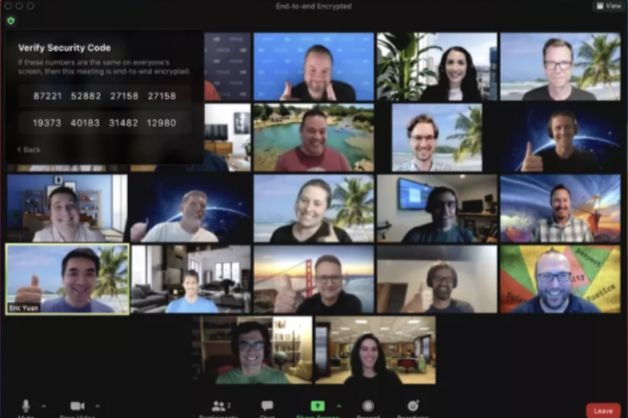
Once E2EE is enabled, you can check Zoom is using the more secure kind of encryption using the green shield at the top left of a meeting window. The shield will show a padlock rather than a checkmark if the meeting is encrypted end-to-end.
Our new end-to-end encryption (E2EE) feature is now available to users globally, free and paid. 🔒https://t.co/ssGanYn4fB
— Zoooooom 👻 (@zoom_us) October 26, 2020
Although E2EE meetings are more secure, they don’t work with a few of Zoom’s features. These include its cloud recording, live transcription, polling, meeting reactions, and join before host features. Participants also won’t be able to join using “telephone, SIP/H.323 devices, on-premise configurations, or Lync/Skype clients,” as Zoom says these can’t be end-to-end encrypted.
Zoom’s E2EE meetings support a maximum of 200 participants. That won’t affect users on Zoom’s Basic or Pro plans, which max out at 100 participants, but it could be a problem for Business or Enterprise subscribers which would otherwise allow for up to 300 or 500 participants.
End-to-end encryption is available for both free and paid users, but Zoom says free accounts will need to verify their phone number using SMS and also need a valid billing option associated with their account. Initially, Zoom said end-to-end encryption wouldn’t be available for free users to prevent the service from being used for unlawful activity, but the company quickly backtracked and announced it would be available for everyone later that month.
This initial launch is just the first of four phases Zoom is planning for its end-to-end encryption offering. The next phase, which is scheduled to include better identity management and support for single sign-on, is currently planned to launch next year.
Latest Stories
-
Christians urged not to hide their gifts for church development
21 minutes -
Deputy AG punches holes in Hannan’s counsels’ letters, medical reports
31 minutes -
Field cashier of Cooperative Credit Union remanded for stealing
42 minutes -
Ghana Armwrestling Federation engages Egyptian Ambassador over sports collaboration
54 minutes -
NSMQ 2026: Augusco declared winners, book quarter-final spot after Anlo, Kumasi High walk off
56 minutes -
Democracy Cup 2026: Winner to play in the United States in May 2027
1 hour -
NSMQ 2026: St. John’s Grammar knocks Mpraeso SHS off seeded spot, advances to quarter-finals
1 hour -
Rashid Pelpuo welcomes new role, thanks Mahama for keeping him in government
2 hours -
Mahama inaugurates committee to oversee GH¢1bn Bawku Revitalisation Fund
2 hours -
Berko’s US conviction does not automatically establish Ghana bribery claims – OSP
2 hours -
Mahama sets GH¢1bn Bawku revitalisation plan in motion
3 hours -
‘I assure the President of my unwavering loyalty’ – Brogya Genfi after new appointment
3 hours -
US-tested evidence could strengthen OSP’s case against persons of interest in Asante Berko case – Kpebu
3 hours -
Luv FM-Kel Charcoal Toothpaste High School Debate; OKESS and SAHUS clinch final semifinals spots
3 hours -
KNUST to get GETFund support to complete Teaching Hospital – Education Minister assures
3 hours