

Audio By Carbonatix
Ghana’s rice sufficiency is receiving a boost as three new varieties by the Crops Research Institute of the Council for Scientific and Industrial Research (CSIR) triumphed on the test field.
The varieties, CRI-Enepa, CRI-Kantinka and CRI-Amakwatia were able to resist the rice blast disease.
Stakeholders in the agriculture sector have been meeting annually to identify key issues in agriculture and present findings to the government for intervention.
In 2019, it came up, rice farmers at Atwima Nwabiagya North, one of the largest producers of rice, have been facing problems with the blast disease and Rice Yellow Mottled virus (RYMV).
“Farmers are not getting good seeds, some go to the milling centre for their seeds and others too use seeds for several seasons,” said District Director of Agriculture, Maxwell Adu Poku.
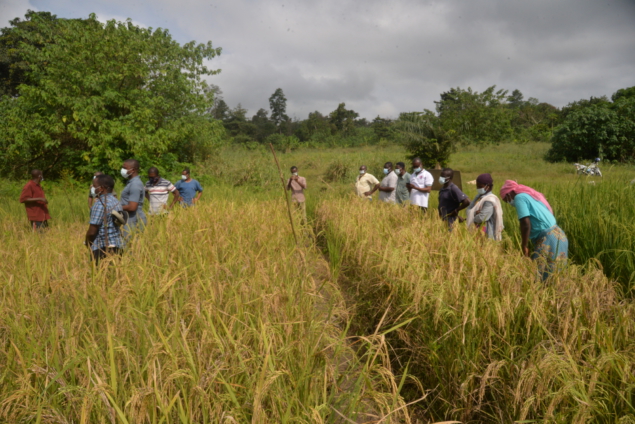
The government through the Modernizing Agriculture in Ghana (MAG) project, with support from the Canadian government, aided CSIR-CRI to set up a rice disease verification trial at Abira meant to help farmers manage the diseases.
The project involved three interventions: The introduction of newly released varieties to farmers, proper land preparation and application of pesticides.
“We’ve raised bans and during the land preparation stage we did paddling and leveling to manage water and weeds in the field and we gave them some fungicides and insecticides to manage the disease.
"The three interventions put together have resulted in the varieties showing up some tolerance to the disease,” said Godfried Ohene-Mensah, a principal technologist with the Crops Research Institute.
For the demonstration farm, the farmers were supplied two seeds in addition to the three supplied by CRI.
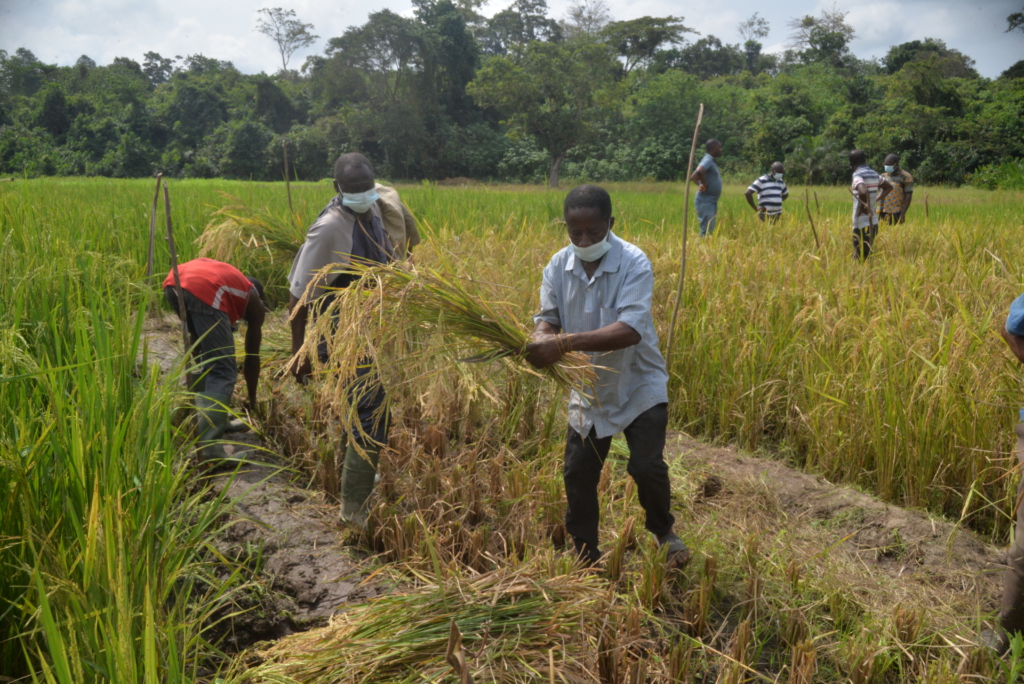
CRI-Enepa came tops followed by CRI-Katinka and finally CRI-Amankwatia.
“It is amazing that the three varieties could withstand the disease,” Nuhu Mumuni a farmer was impressed.
The Ashanti Regional Coordinator for Research-Extension-Linkage Committee (RELC), Dr. Ernest Baafi is however calling on the government to provide the farmers with equipment to ease their burden.
“The government can help the farmers by providing power tillers and mechanical threshers to ease their labour challenges and increase agricultural productivity,” he said.
The intervention will soon be rolled out in other districts.
Dr. Baafi called for support for the Crops Research Institute to make enough seeds available for farmers.
Latest Stories
-
Government has improved sanitation in one-and-a-half years — Zuwera
1 minute -
Nkwanta North Assembly to appear before Parliament over DACF sanitation spending
14 minutes -
Mourinho prints out ‘red card’ incidents after Real lose derby
34 minutes -
Atletico beat 10-man Real in feisty Madrid derby
45 minutes -
Twelve Tribes of Israel Ghana to mark 40 years with anniversary celebration
1 hour -
GPL 2026/27: Hearts held by Bechem as Kotoko, Samartex share spoils
2 hours -
My Story (Kwaku Antwi-Boasiako)
2 hours -
We expect growth rate to re-accelerate in second-half of 2026 – IC Insights
2 hours -
The ungodliness and unrighteousness underlying the National Cathedral mess!
2 hours -
T-bills auction: Government fails to achieve target; yield on 91-day-bill remains unchanged
2 hours -
It’s Ghana’s shame to denigrate Nkrumah when the whole world honours him as African of the Century – Asiedu Nketiah
2 hours -
No other nationalist can compare to Nkrumah – Asiedu Nketiah
2 hours -
Collateral Registry: Foreign banks accounted for GH¢19.9bn of secured credit in quarter 2, 2026
2 hours -
This government should expect scrutiny – Asiedu Nketiah
3 hours -
Two-year-old girl dies in domestic fire at Cantonments
4 hours