

Audio By Carbonatix
Pharmacist and Fellow of the Ghana Centre for Democratic Development (CDD-Ghana), Kwame Sarpong Asiedu says the issue with Ghana’s use of intermediaries to procure Covid-19 vaccines is not about the quality of vaccines but the legality of the procurement process.
"The issue is not about quality; it is about legality, " Dr Asiedu said.
Explaining his point on Joy News' Newsfile Saturday, he said, “The issue with the middle man, not about the FDA not doing their job, it is about that middleman not having a contract with the local holder of the Emergency Use Authorization, that’s where the issue is.
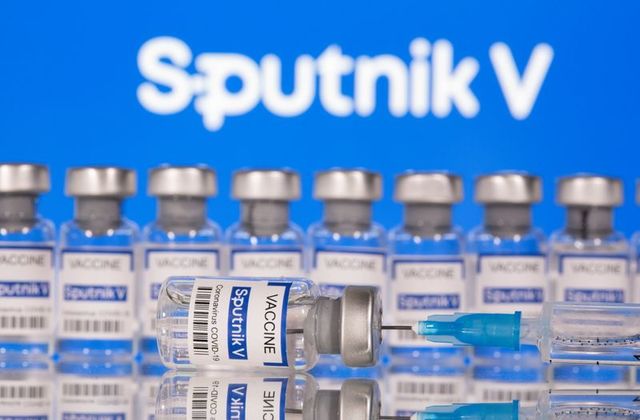
“So if I register a product in Ghana and it’s within patent, if you want to bring it into Ghana, I either bring it myself, or I can franchise someone to bring it, or the manufacturer, in this case, it is Sputnik, the Russian development fund can bring it on behalf of somebody.
Speaking on quality, he said the Food and Drugs Authority (FDA) has, over the years, proven to be a robust institution ensuring the quality of products on the Ghanaian market; thus, there should not be any cause for alarm concerning the quality of the vaccines.
"Ghana has one of the most robust regulatory authorities when it comes to medicines in Africa," he said.
However, he was concerned about how go-betweens were being employed to bring the vaccines into the country, a situation he says could create some legal bottlenecks for the country in the future.
“If a 3rd person is bringing it because the regulation doesn’t allow you to register the product, twice in the same country, then there are regulatory issues and legality issues there.”
He stated that without a legal contract between the Emergency Use Authorisation holder and the middleman, any adverse event post-immunization, would have to be borne solely by the Ministry of Health.
He further advised the FDA to collate the adverse events post immunisation.
“What I will say is that yes, the FDA will do all that, but another thing that the FDA would have to ensure is the collation of the adverse events, post-immunisation, which is the responsibility of the person who holds the emergency use authorization that is where the real issue will be.
“When the middleman brings it and issues that disclaimer, albeit, the disclaimer is issued by all manufacturers; however, when it comes to the adverse effects post-immunisation, it is the responsibility of the local procurer of the emergency use authorisation.
“The question I ask consistently is if we use a middleman, will the Ministry of Health take over that responsibility and any liability that comes with it? We don’t have answers, and that is where the problem is, so I don’t have an issue at all with the FDA’s robustness,” he said.
Latest Stories
-
T-bills: Government exceeds target by 139%, interest rates tumble
24 seconds -
Why Chelsea need more than a new goalkeeper to be title challengers
5 minutes -
Outlook of Ghana’s external sector remains positive for second-half of 2026 – BoG
7 minutes -
Prisoners freed early are returning to jail at rapid rate, governors tell BBC
9 minutes -
Two charged after €2.3 million worth of drugs seized in Dublin
15 minutes -
Head teacher evacuated 900 children minutes before Nepal floods hit school
16 minutes -
Chelsea beat Brithon in seven-goal thriller to maintain perfect start
22 minutes -
Fernandes hat-trick helps Man Utd recover to beat Ipswich
27 minutes -
Former Agriculture Minister Ibrahim Adam passes on
28 minutes -
“A giant leap forward”: Nasa launches powerful new space telescope to explore mysteries of the Universe
32 minutes -
Eight killed and others missing after ferry capsizes off northern Cyprus
37 minutes -
Education Ministry reschedules 2026/27 CSSPS results to September 4
51 minutes -
Trump says US will refill Strategic Petroleum Reserve using Venezuelan oil
58 minutes -
ASWAJ reaffirms Sheikh Mohammad Kamil as First National Deputy Imam, urges constitutional compliance
1 hour -
10 arrested in illegal mining operations at Kpali
2 hours