

Audio By Carbonatix
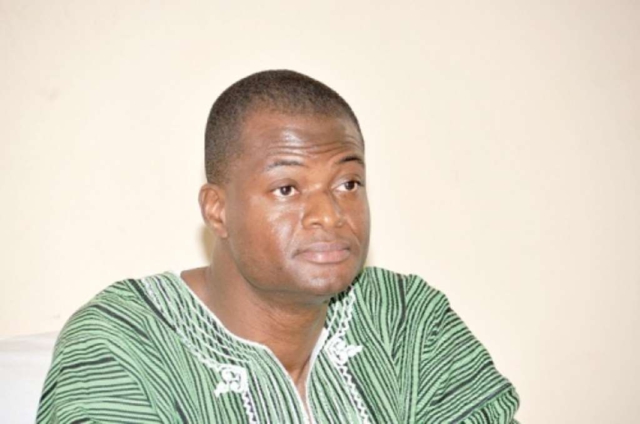
The Dean of the University of Ghana School of Law, Professor Raymond Atuguba, says until government puts in place measures to empower the citizenry in legal affairs, the law will only continue to serve the rich and privileged.
According to him, due to a general lack of legal empowerment in the country, “those who have less money, less privilege, fewer connections cannot access the best of legal services to make the law serve them.”
“It’s been a big problem in many third world countries,” he told Samson Lardy Anyenini, the host of JoyNews’ The Law, Sunday.
He explained that through legal empowerment, “ordinary people who ordinarily don’t have those resources for legal intervention by themselves, with the help of cheaper or even volunteer paralegals, will be able to make the law work for them.”
“That unless we empower the bulk of Ghanaians legally, we can’t solve that problem where the law seems to be working just for the privileged and not for the underprivileged,” he reiterated.
Speaking on the topic 'Is the law an ass?' he added that, Ghana would need to revise its implementation of the legal aid mechanism.
According to him, the current legal aid is ineffective because it does not respond to the country’s economy, society and politics.
“I give you one example, in most countries in the developed world, the percentage of people who can’t pay for legal services is limited.
"In other words, most of the society earn an income that makes them capable of accessing and paying for legal services and then a smaller percentage in that country do not have access to legal aid and then the state provides.
“So, for example, 90% can pay and then the state provides for the 10%. The mistake we’ve often made is to pick that model and then apply it to a place like Ghana, where the table is turned.
"The table is turned because 10% can pay for effective super-legal services in Ghana, and 90% cannot pay. That is a recipe for failure. It just will not work,” he said.
“It has not worked since independence, and it will not work. For communities and societies such as ours, you have to implement strategies for legal empowerment in order to get out of the conundrum.
"Because there is no way the state can pay for legal services for lawyers for 90% of the population,” he concluded.
Latest Stories
-
JoyNews’ Jacqueline Ansomah Yeboah selected for UK Media Excellence for Emerging Technology Fellowship
10 minutes -
Mental Health Alliance urges government to operationalise Mental Health Fund
24 minutes -
Ghana–Holy See agreement heads to Parliament after Cabinet approval
29 minutes -
Luv FM Corporate Games 2026: Kumasi Central Prisons, Amanfiman Bank win big amid fun
40 minutes -
WAFU B U17: Ghana top Group A after win over Togo
1 hour -
Ho Central Mosque reopens amid unresolved leadership dispute that led to closure
2 hours -
Minority caucus questions GH¢16.4m in Ablakwa’s SA evacuation spending, demands independent audit
3 hours -
Gender Ministry meets Nana Akua Addo’s husband over domestic violence after hospital discharge
3 hours -
UG Vice-Chancellor urges swift operationalisation of National Research Fund
4 hours -
Pope Leo to have surgery after lump found in lung
4 hours -
Joseph Cudjoe writes: Ghana must break free from the dangerous mindset that natural resources are the foundation for wealth
4 hours -
Children among 109 dead after boat capsizes off Djibouti, UN says
4 hours -
OmniBSIC Bank’s 11th health walk promotes fitness and business growth
4 hours -
2026 World Maritime Day: Danish Embassy organises “The Gulf of Guinea Speaks”
5 hours -
New Economy will tackle unemployment and restore hope – Ato Forson
5 hours