

Audio By Carbonatix
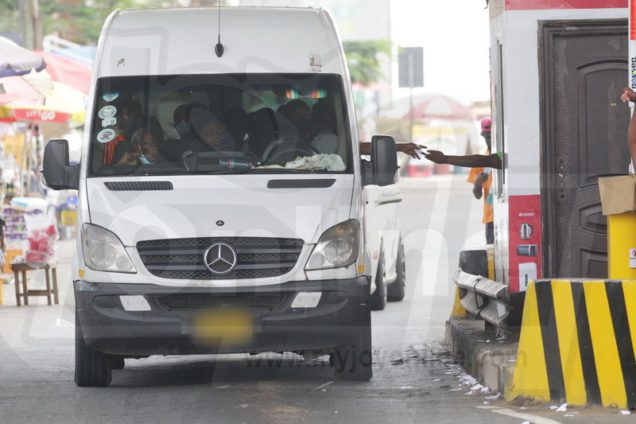
In Ghana, road transportation accounts for nearly 95% of all passenger and freight traffic, with commercial buses providing intra and intercity services accounting for an estimated 48.2% of all motorized trips.
Apart from the limited participation by the state-funded Metro Mass Transit (MMT) and inter-city STC Coaches Limited, the sector is predominantly privately owned, informal and unregulated.
The commercial road transport sector is characterized by easy entry and exit protocols, sub-standard and unsafe vehicle fleet, informally trained drivers and a lack of internal control systems that prioritizes profit over safety and convenience.
These conditions, among others, conspire to negatively impact the general safety profile of the industry. To address these gaps, the National Road Safety Authority is mandated to lead the regulatory administration of the commercial road transport (passenger and freight) industry to improve service quality and road safety. This article mirrors the key pillars of the regulatory regime as envisioned by the Authority.
Registration & Permitting
Consistent with global best practice, the regulatory regime requires that all persons intending to carry out business like commercial road transport services should either incorporate a business or join a transport union or association.
Though there is an existing business registration regime for transport operators at the local assembly units, the processes are revenue-oriented and low on quality assurance. The new plan seeks to improve the process with safety guidelines and the issuance of market entry licenses and operational permits by the Authority working in collaboration with district assemblies.
Mandatory operational heads
One of the underlying conditions of the grant of license or permit for any regulated activity including public service transportation is the evidence of technical capacity to carry out the regulated activity. Global best practice examples show that, where public service fleet operations are managed by a competent operational head, the risk to crashes and casualties is very low and high without competent operational heads at post.
The new regulatory regime will require that every operational permit provide evidence of a technical person who shall assume responsibility for ensuring minimum safety conditions for service vehicles, drivers and operational controls. The technical person, transport manager, or operational head must possess a minimum diploma in transport and logistics or, in the case of the informal operators, must have five years experience in that role and is trainable.
Continuous Professional Development of Drivers
Continuous training of critical staff is one tool deployed to sustain the quality of a regulated transport service. For instance, in the aviation industry, even when a pilot is trained and is assessed as skilled enough to fly commercially, he is required to go through a continuing education and training program throughout his career.
Regrettably, we cannot say the same for the operational culture of the commercial road transport industry in Ghana. Though predominantly informal, commercial drivers hardly avail themselves of refresher education even when free.
The effect is the high-risk driving profile of commercial drivers leading to many avoidable crashes on our major and high traffic routes. The new agenda places a responsibility on all fleet operators to ensure continuous road safety training for its drivers as a condition for operational permit renewal.
Routine & Regular Operational Inspections
Despite the general challenging quality of our road network and the desire for improvement, there are examples of fleet operators in Ghana yet to record a crash on our roads in more than ten years and counting. The success of these companies is traceable to their maintenance and inspection programmes, which limit the risk of the vehicles and drivers to a road traffic crash.
The new agenda will require a robust vehicle maintenance programme for fleet operators and mainstream routine pre-trip operational inspections as prescribed by the NRSA. Road safety inspectors appointed by the Authority will be required to conduct operational inspections to ascertain the level of compliance with these quality operational standards.
Consequences of Non-Compliance
These reforms will not improve our road safety ratings, without any consequences. Offending transport operators risk a suspension or revocation of their permits, imposition of administrative penalties of between GHs12,000 and GHs240,000 for failure to implement regulatory controls.
Further, the Authority will seek to influence consumer choices for transport services through annual safety ratings on the basis of the quality of transport services.
In conclusion, we have a choice to a better narrative through these reforms. Let us work together to disrupt the risky services and make them better by implementing these basic global best practices to deliver a first-class commercial road transport service that provides convenience and road safety.
********
The author, Kwame Koduah Atuahene is the Head of Regulation, Inspections & Compliance with the National Road Safety Authority (NRSA) and could be reached on kwame.atuahene@nrsa.gov.gh
Latest Stories
-
NSMQ 2026: Yaa Asantewaa Girls’ going ‘beck’ to Tanoso after Bishop Herman deals them early exit
4 minutes -
Data Protection Commission acquires two vehicles to strengthen data protection enforcement
14 minutes -
NSMQ 2026: Holy Child School storms back from two-year NSMQ absence to book One-Eighth ticket
2 hours -
GNFS dismisses reports of unpaid 2025 rent allowance
3 hours -
Gordon Asare-Bediako steps down from NPP Communications Director race, backs Dennis Aboagye
3 hours -
GES dismisses requirement for newly promoted teachers to submit documents for salary adjustments
3 hours -
Meko Bono 2026: Vice President pledges agricultural revival as Atebubu hosts grand homecoming
4 hours -
Russian skydiver Sergey Boytcov sets world record with 11,551-metre stratosphere jump
4 hours -
Ablakwa-led committee submits five reports to Mahama ahead of 2027 AU chairmanship
4 hours -
Africa not seeking Western cash in reparations campaign – Ablakwa
5 hours -
Production decline, reserve depletion threaten Ghana’s upstream sector – Jinapor
5 hours -
Surveyors caution against treating compensation disputes as professional misconduct
5 hours -
Mahama calls for AU dialogue on migration after South Africa xenophobic tensions
5 hours -
I haven’t experienced any envy in the gospel music industry — Ohemaa Mercy
6 hours -
Prayer does not solve everything — Ohemaa Mercy
6 hours