

Audio By Carbonatix
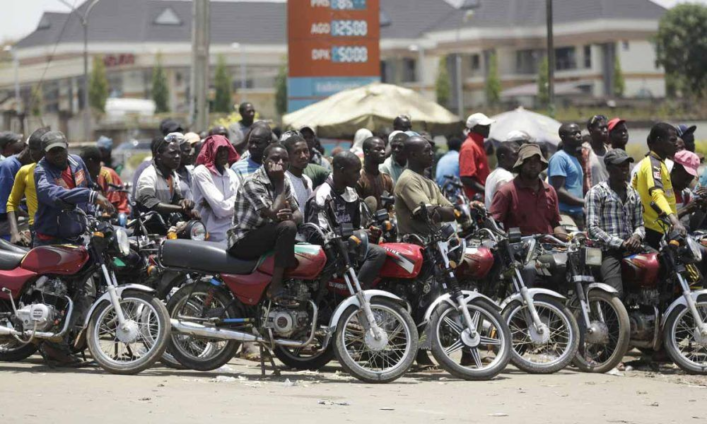
The National Road Safety Authority (NRSA) has described the legalisation of motorcycles for commercial use as a positive step towards improving professionalism and addressing rider indiscipline nationwide.
The Deputy Director of Planning and Programmes at NRSA, Henry Asomani, told the Ghana News Agency in an interview that reckless practices by some motorcycle operators, including driving against traffic, running red lights and using pedestrian walkways had become a serious road safety hazard.
He said those behaviours were partly borne out of the past illegality of commercial motorcycle operations, which forced riders to avoid enforcement by skirting rules.
“Initially, the Okada business was illegal, so they tried to dodge, and that is why they use all these areas. They don’t stop at red lights, they cross at unauthorised places like pedestrian walkways, zebra crossings, etc.
"I've seen some motorcycle riders even using foot bridges, which they are not supposed to use,” Mr Asomani said.
The newly passed Road Traffic (Amendment) Bill, 2025, formally legalises the use of motorcycles, tricycles and quadricycles for commercial passenger transport once it is assented to by the President and gazetted.
The law also amends the Road Traffic Act, 2004 (Act 683) to accommodate these changes and updates provisions on alcohol limits and vehicle safety standards.
The legislation is a culmination of years of discussions and regulatory reviews aimed at formalising one of the country’s most pervasive but formerly unlawful transport practices.
Authorities have been working to revise the Road Traffic Regulations 2012 (L.I. 2180), which previously prohibited motorcycles from carrying fare-paying passengers, to reflect the realities on Ghana’s roads and establish enforceable safety and licensing standards.
Mr Asomani said the legal shift could help reduce the tendency of riders to evade law enforcement and improve overall compliance with traffic rules.
He said when riders were properly licenced, identifiable and regulated, enforcement became easier and more effective.
“We think that will also help them,” he said, adding that the forthcoming Legislative Instrument (LI) would outline procedures for training, licensing and operations under the new regime.
The NRSA and other road safety stakeholders are actively preparing this year to prioritise rider discipline under the new legal framework, with expectations that a regulated environment will foster safer behaviours among commercial motorbike operators.
Latest Stories
-
Conflicts among care providers linked to maternal, neonatal deaths – Expert
2 hours -
GIS marks 10th TIME conference, champions improved teaching practices
2 hours -
BRICS Or Balance? What Ghana’s bid really means
2 hours -
GPRTU wants full TRAFFITECH-GH implementation to start in 2027
2 hours -
Mahama announces plans to import electric wheelchairs for PWDs
3 hours -
KGL U17 Colts 2026: Western beat Prempeh Elite Academy to set up final final with Greater Accra Region
3 hours -
Late Solanke strike salvages 10-man Spurs draw at Man United
3 hours -
Gender Ministry to monitor welfare of Nana Akua Addo’s children amid domestic violence case
3 hours -
Benedict Okyere Yeboah: Ghana’s football problem goes beyond sacking a coach
3 hours -
GPL 2026/27: Darkwah Wiafe’s winner sees All Blacks beat Kotoko
3 hours -
ITF World Tour : Patel Wins Boys’ Singles Final at J100 Accra
4 hours -
Ghana must pursue BRICS partnership if it brings economic benefits – Kpebu
4 hours -
Success and Wright Claims J100 Accra Girls’ Doubles Championship
4 hours -
ITF J100: America’s Wright wins J100 Accra Girls’ Singles Title
4 hours -
Expedition hopes to find aviator Amelia Earhart’s plane on remote island
4 hours