

Audio By Carbonatix
Ghana has chalked another grim milestone as far as the Covid-19 virus is concerned.
The country, according to experts, is experiencing its fourth wave of the pandemic since it broke out in the country in March 2020.
This time, the transmission is being actively driven by the new Omicron variant.
Figures from December 22 showed that the nation's infections reached a record high of 1,320 cases in one day.
Fresh data from Christmas eve indicate that some 1,264 persons contracted the virus, with 8,554 cases currently active out of the cumulative 140,221 confirmed so far.
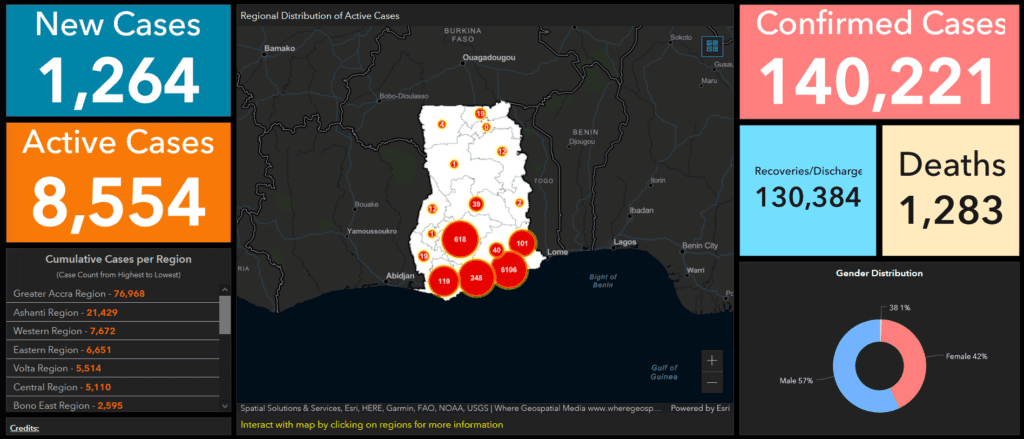
The death toll currently stands at 1,283.
According to the Director of Public Health at the Ghana Health Service, Dr Franklin Asiedu Bekoe, the recent developments are testament to the need for citizens to adhere to health protocols to reduce the spread.
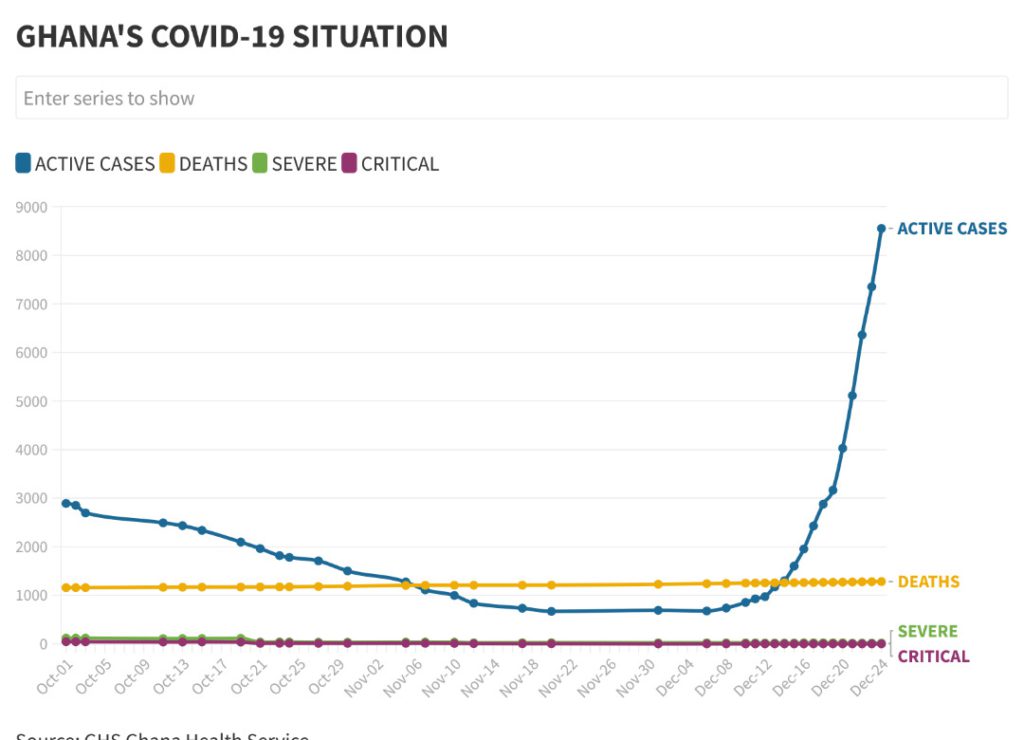
"Clearly, you can see that there is a torrential rise in cases, so if in terms of nomenclature, then we are in it. I mean, if you look at the shape of the curve, we are now a different shape than we had two or three weeks ago," he told JoyNews.
Dr Bekoe is confident that the vaccination campaign being rolled out in the country will help lessen the impact of the Covid-19 virus.
Experts have attributed the hike in numbers to the increase in activities amid the festive season and the highly transmissible nature of the new strain.
Virologist with the Kumasi Centre for Collaborative Research in Tropical Medicine (KCCR), Dr Michael Owusu, believes that Ghana's situation could have been worse but for the milder nature of the new Omicron variant.
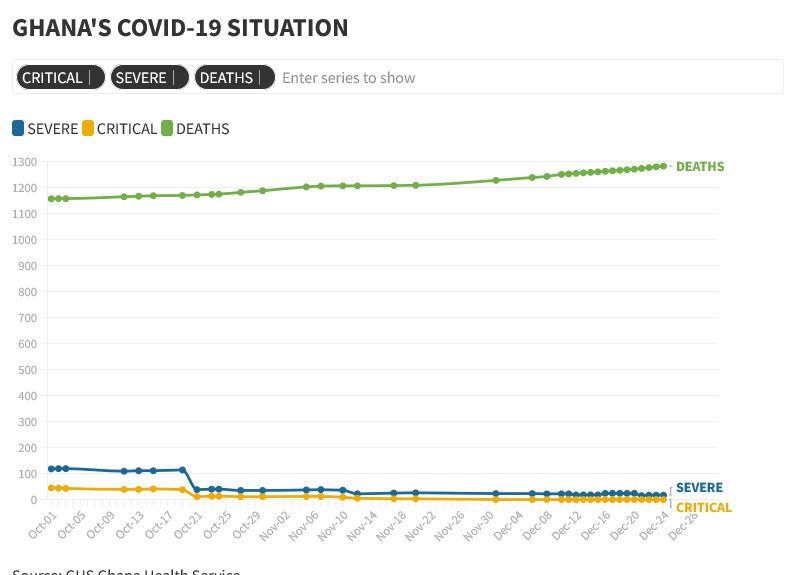
Meanwhile, public health expert Nana Kofi Quakyi is warning that health systems will be stretched beyond their current capacity if much is not done to curtail the spread.
Despite the less destructive nature of the variant compared to the Delta strain, Nana foresees that "If you have large numbers of people infected, that small percentage could translate into a big number."
"And if you have a healthcare system that has limited capacity to care for critical and severe cases, then you can see how once you hit that saturation point, people needing care beyond that may not be able to find it," he added.
Latest Stories
-
Mohammed Kudus drops out of Ghana squad for AFCON 2027 qualifiers against Côte d’Ivoire and Gambia
24 minutes -
Africa World Airlines unveils first Embraer E190 as part of 10-aircraft fleet expansion
2 hours -
Civilian hospitalised after alleged machete attack by prison officers, inmates
2 hours -
Toobu rejects calls to recall Parliament over 3.9-tonne cocaine shipment
3 hours -
Residents in 5 Northern Regions warned of approaching rainstorm
3 hours -
Constituency Games still a work in progress – Sports Minister
3 hours -
Team Ghana set for historic Karting Africa Showrun in Angola
3 hours -
52-year-old South African arrested with suspected heroin after arriving from Accra
3 hours -
Shatta Wale challenges UPSA students to build entrepreneurial mindsets
4 hours -
Finance Minister advises African governments to strengthen regional tax cooperation
5 hours -
NPP accuses NDC of master-minding demolition of Ho regional office fence
5 hours -
Ghana plans stronger regional power trade with Nigeria
5 hours -
GRA Commissioner-General calls for stronger tax cooperation to boost regional revenue mobilisation
5 hours -
NACOC needs more personnel to tackle drug trafficking – Toobu
5 hours -
Railway workers resist KMA eviction order, demand consultation
5 hours