

Audio By Carbonatix
The Ghana Union of Traders Association (GUTA) has called on government to consider pumping dollars from Ghana’s external reserves to arrest the depreciating cedi.
GUTA says its members’ businesses are struggling due to the rate of the cedi’s depreciation, which almost doubled within just a week to 14.21% in March, 2022.
Several factors, including perceived risks in the Ghanaian economy due to high-interest payments on borrowed funds and financial challenges within the economy, have been attributed to the rapid depreciation of the cedi.
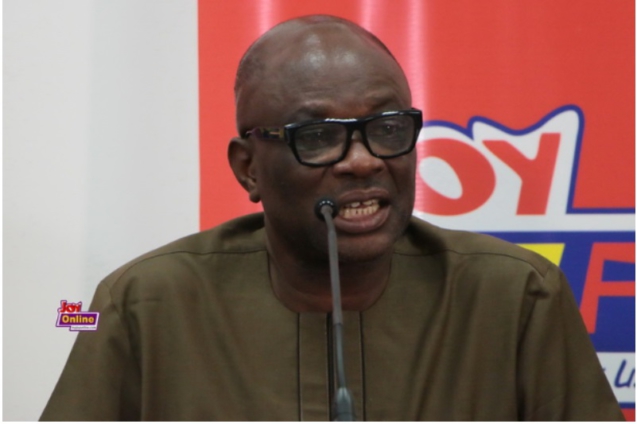
Speaking on JoyNews’ PM Express on Tuesday, March 8, President of the Association, Dr Joseph Obeng, urged government to undertake pragmatic measures to salvage the worsening situation.
“We need to pump in more dollars. But, unfortunately, we don’t have any option because if you do not inspire confidence in the system now to suggest that there’s money available, people are going to buy and hoard this currency.
“People are going to trade in this currency, speculation is going to be rife enough, and it would be even worse. Foreign reserves are there for situations such as this; otherwise, what is the essence of foreign reserves?” he quizzed.
But an Associate Professor of Finance at the University of Ghana Business School (UGBS), Prof Godfred Bopkin, has indicated that if Ghana depletes parts of its foreign reserves, it would be forced to go to the International Monetary Fund (IMF) for support.
The finance expert opined that the only factor keeping Ghana from going to the IMF is the cedi depreciation.
“If you look at the template that Ghana sent to the IMF in 1965 under the watch of Dr Kwame Nkrumah, which is a reflection of what happens over the years. There’s only one thing left which is keeping us from going to the IMF right now, and that has to do with the depreciation of the cedi.”
“If Bank of Ghana decides to fight that, burn through our international reserves, and once the international reserves deplete to a certain level, you have no choice than to go to the IMF in an ambulance,” he explained.
Meanwhile, the World Bank has projected harsher times for Ghana’s economy.
This comes as the exchange rate continues to rise amidst inflation and increasing cost of living coupled with a rise in prices of petroleum products.
Government is already having a tough time rallying support for the controversial E-Levy, insisting it may not be able to settle some statutory obligations without the tax.
But the World Bank Country Director, Pierre Laporte, does not see any end in sight just yet.
“The situation is very difficult right now. Ghana faces a very tough road ahead to restore macro-sustainability,” he said.
Latest Stories
-
Every year, the lawyers come out, and so does the nonsense! – Ace Ankomah writes
55 seconds -
Digital transformation without an ownership culture can digitise poor service
4 minutes -
Fishing communities demand revocation of offshore gold exploration licences over livelihood concerns
7 minutes -
How Ghanaian tycoon Manoj Lakhiani built a water and plastics empire from a $25,000 loan
9 minutes -
GoldBod recovers GH¢38.7m of GH¢55.8m outstanding receivables; remainder subject to legal action – Sammy Gyamfi
15 minutes -
GEXIM Bank donates GH¢200,000 worth of medical equipment to Korle-Bu Child Health Department
18 minutes -
Majority rejects Minority’s claims over GH¢49.7m South Africa evacuation
20 minutes -
GEXIM urges banks to support refurbishment of Korle-Bu Teaching Hospital’s Child Health Department
23 minutes -
Don’t appoint your cheerleader as referee
27 minutes -
Ghana needs stronger international cooperation to fight cybercrime – CSA
30 minutes -
CSA warns of growing cyber threats as Ghana’s digital dependence increases
36 minutes -
USTED dean warns GAUA strike could disrupt Ghana’s restored academic calendar
49 minutes -
Bechem meat processing factory 50% complete, set for March 2027 completion – Kwakye Ofosu
1 hour -
NDC can appoint whoever they want to EC, but Ghanaians will make a decision in 2028 – Titus Glover
1 hour -
GoldBod initiative has created over 1,300 public and private sector jobs – Sammy Gyamfi
1 hour