

Audio By Carbonatix
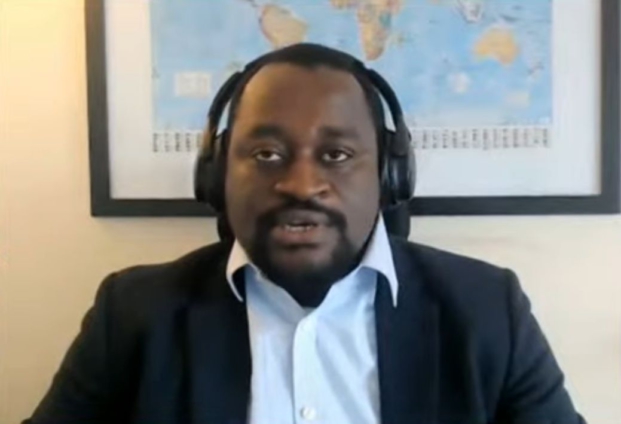
Political Risk Analyst, Dr. Theo Acheampong, says the problems that bedevil the oil industry and its negligible impact in the country’s economic landscape is reflective of how the governance system is run in the country.
This he says can be seen especially in how the country’s public financial management system and the architecture of government financing etc are managed by government.
According to him, the Public Interest and Accountability Committee (PIAC) has since 2013 been hammering on the need for government to spend monies wisely, “that we need to get the institutions responsible for the allocation, distribution and spending of the money to be much more accountable to it” but to no avail.
“The challenge is that, as Nasir was saying PIAC does not have the power to prosecute so just this week there was a big report where they went out to a place in Nsawam and there was meant to have been a market constructed there. They went there and the market wasn’t there.
“There are instances where classrooms or hospital blocks or other infrastructure that are meant to have been done are started, the funding stops and three years later we come back and spend three, four times more money to complete those same projects,” he said.
Speaking on JoyNews’ PM Express Business Edition, he noted that the clear lack of accountability was reflective of the mismanagement of the economy and the resultant mismanagement of Ghana’s oil revenue.
“Because what you can again see is that even with the coming on stream of oil in late 2010 but especially from 2011 onwards it is very clear that there has been very little or negligible impact of those oil revenues on the economy of Ghana at the micro level. And we have done a lot of work simulations around it.
“So if you take even the GDP numbers as a start its only 2 years, 2011 and 2018 that you see a positive impact. All the other years have been small or negligible despite the revenues. You do see some impact of that on our trade balance because the oil export actually constitutes about 28% of our export base as a country now.
But it is not filtering through to the three key areas of the economy, it’s not filtering through into agriculture, neither is it filtering through to manufacturing and we see small evidence of that filtering through to the service sector but even that it does not last,” he explained.
He noted that in a 2016 survey conducted by PIAC asking Ghanaians what they would like the revenues from oil industry to be used for, a majority of Ghanaians had prioritized agriculture and industry.
“Because we know that this is the area that can create more jobs and allow us to diversify, but interestingly, only 8% of the revenues have been used in terms of sustaining the agriculture or trying to use that to develop other industrial aspects of the country. So very little wonder that you don’t see any impact of the oil or very negligible impact of the oil revenues on the overall economy of Ghana,” he said.
Dr. Theo Acheampong revealed that instead 54% of the oil revenue had been dedicated to roads and other infrastructure.
“And the issues are structural, it comes down to the way we practice and run politics in this country, it comes down to the public financial management system and interestingly it also comes down to the point that Professor Lord made that post oil we have had this penchant for borrowing, that we’ve borrowed in excess of $15billion from these Eurobonds and again you don’t really see much of an impact in terms of transforming the economic base of the country,” he added.
Latest Stories
-
Ronaldinho seeks 300th goal with comeback aged 46
2 hours -
Your voice, your future – Opare Addo opens National Youth Forum 2026
3 hours -
GRA pushes data-driven tax administration to boost revenue mobilisation
3 hours -
NSMQ 2026: Presby SHS, Bompata crushes Sacred Heart’s hopes of reaching one-eighth stage
3 hours -
Africa Golf Tourism Convention opens in South Africa to unlock opportunities
3 hours -
BOGISS alleged sexual assault: Dr Apaak demands protection for autism victim
3 hours -
GTEC trains tertiary officials on new affiliation quality assurance framework
3 hours -
Luv FM High School Debate: OKESS, OSASS silence K’Wey Gey and KASS in fierce round of 16
3 hours -
Alcaraz to play US Open after four months out
3 hours -
Even if all foreigners leave, South Africa’s problems will remain – Dr Yamson blames state failure
3 hours -
Mahama announces GH¢500m district housing programme; rollout to begin this year
3 hours -
Energy Committee yet to receive July 29 blackout report – Adomako-Mensah
4 hours -
Five in six Ghana health facilities fall short of basic sanitation standard – WHO/UNICEF
4 hours -
Mohammed Fuseini in talks over Troyes move from Union SG
4 hours -
‘Bear with the system’ – Energy Ministry says temporary power control room to be ready by September
4 hours