

Audio By Carbonatix
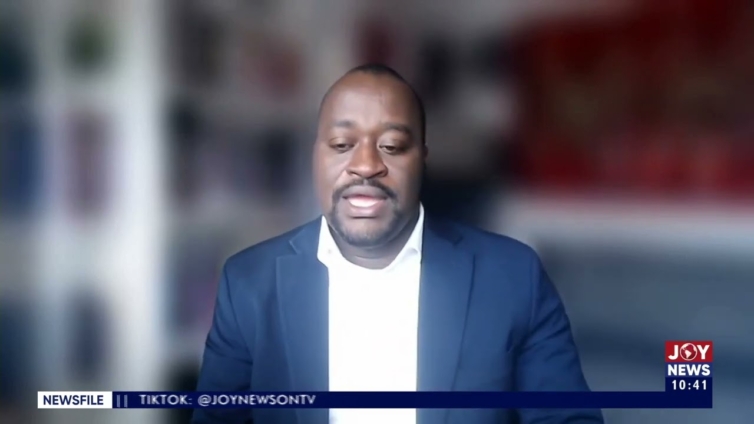
Dr Theo Acheampong, a Mineral and Natural Resources Economist, has revealed that seven out of every ten small-scale miners in Ghana are operating without a valid license, making their activities illegal.
Speaking on JoyNews' Newsfile programme on Saturday, October 12, he highlighted the severe implications of these unregulated operations, which contribute significantly to the ongoing environmental degradation caused by illegal mining, commonly known as galamsey.
Dr Acheampong pointed out that the lack of proper licensing among small-scale miners is one of the main challenges in addressing the galamsey crisis.
He expressed concern that illegal mining continues to flourish due to inadequate enforcement of regulations and a lack of proper governance within the mining sector.
These illegal operations are not only harmful to the environment but also undermine efforts to promote sustainable mining practices in the country.
During the discussion, Dr Acheampong emphasized the need for urgent reforms in the small-scale mining industry.
He called on the government to strengthen regulatory oversight and ensure that only licensed miners are allowed to operate.
He also stressed the importance of investing in more robust systems to monitor and track mining activities across the country, to curb the rising tide of illegal mining.
Dr Acheampong urged stakeholders to collaborate in addressing the root causes of illegal mining, such as poverty and unemployment, which drive many people into these unlawful activities.
He also recommended that the government enhance public awareness of the legal requirements for mining and provide support to miners seeking to regularize their operations.
"We have a collective failure as a people, and let me actually give some context to this. If you look at the data and some of the statistics, about 40% of Ghana’s total gold output comes from these small-scale miners. And when you look at these small-scale miners themselves, around about 70% so basically, 7 in 10 of them are not licensed, and even those that are licensed we don’t know whether they are doing things properly," he said.
Latest Stories
-
Health professionals urged to translate medical knowledge into practice to save mothers
4 minutes -
Conflicts among care providers linked to maternal, neonatal deaths – Expert
2 hours -
GIS marks 10th TIME conference, champions improved teaching practices
2 hours -
BRICS Or Balance? What Ghana’s bid really means
2 hours -
GPRTU wants full TRAFFITECH-GH implementation to start in 2027
3 hours -
Mahama announces plans to import electric wheelchairs for PWDs
3 hours -
KGL U17 Colts 2026: Western beat Prempeh Elite Academy to set up final final with Greater Accra Region
3 hours -
Late Solanke strike salvages 10-man Spurs draw at Man United
3 hours -
Gender Ministry to monitor welfare of Nana Akua Addo’s children amid domestic violence case
3 hours -
Benedict Okyere Yeboah: Ghana’s football problem goes beyond sacking a coach
3 hours -
GPL 2026/27: Darkwah Wiafe’s winner sees All Blacks beat Kotoko
3 hours -
ITF World Tour : Patel Wins Boys’ Singles Final at J100 Accra
4 hours -
Ghana must pursue BRICS partnership if it brings economic benefits – Kpebu
4 hours -
Success and Wright Claims J100 Accra Girls’ Doubles Championship
4 hours -
ITF J100: America’s Wright wins J100 Accra Girls’ Singles Title
4 hours