

Audio By Carbonatix
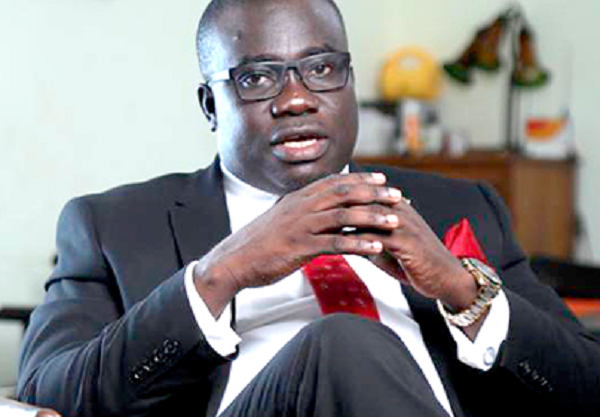
The Member of Parliament for Dormaa East, Paul Apraku Twum Barimah, has indicated that the passage of the €20 million loan agreement between the Government of Ghana and the German Development Bank would help promote the development of renewable energy and further boost energy transition in the country.
Speaking to the Media after the passage of the agreement, Mr. Twum Barimah said this investment into the renewable energy sector will help increase energy production, especially, clean energy in the country’s quest to be energy efficient and sufficient.
He applauded the Minister of Energy for establishing the Energy Transition Committee and also lauded government for ensuring that Ghana meets the standards to rock shoulders with other countries after the COP 26Conference on carbon emissions.
Parliament approved the €20 million loan agreement between the Government of Ghana and the German Development Bank Group, Frankfurt am Main, to finance the Green Credit Line.
The facility, which is under the Reform and Investment Partnership between the Governments of Ghana and Germany, is expected to help cut down carbon emissions.
Green credit lines are a financial intermediation tool with a two-fold objective.
First, they aim at fostering lending to projects with environmental benefits often referred to as ‘green lending’.
Secondly, they aim at building capacity in LFIs to expand the local green lending market after the credit line is closed.
Under a GCL, funds are typically extended by a PFI to participating LFIs that in turn on-lend them to developers of eligible green projects.
GCLs may include advantageous financial conditions, such as reduced interest rates, longer tenors, increased grace periods or incentive payments. GCLs may also include technical assistance (TA), which is usually funded by the PFI and aims at building the capacity of local banks to provide loans to green investment projects and/or capacity of end-borrowers to structure investment proposals.
They also include targeted policy dialogue with governments in recipient countries aimed at improving the general investment climate for green projects.
“While the effects of human activities on earth's climate to date are irreversible on the timescale of humans alive today, every little bit of avoided future temperature increases results in less warming that would otherwise persist for essentially forever. The benefits of reduced greenhouse gas emissions occur on the same timescale as the political decisions that lead to those reductions”, Paul Apraku Twum Barimah said.
Without major action to reduce emissions, global temperature is on track to rise by 2.5 °C to 4.5 °C (4.5 °F to 8 °F) by 2100, according to the latest estimates.
However, it may not be too late to avoid or limit some of the worst effects of climate change, Mr. Apraku Twum added.
Latest Stories
-
Christa Pike discharged from hospital and returned to prison, her lawyers say
37 seconds -
Ghana’s BRICS move requires clear strategy to manage risks – Godfred Bokpin
2 hours -
Pay teachers realistic income – Duncan Amoah to gov’t
2 hours -
Bechem to become chicken capital of Ghana – Mahama projects
2 hours -
Gov’t targets recruitment of 16,500 health professionals in 2026
2 hours -
Two-week strike will not derail academic calendar – GNAT President
3 hours -
Headmaster detained after BBC investigation into alleged sexual abuse of students
3 hours -
GNAT pushes for clear implementation procedures of teachers’ conditions of service
3 hours -
Recurrent strikes threaten quality of education and academic calendars – Prof Bokpin
3 hours -
‘Cockroach’ group leaders among hundreds detained in Delhi protest
3 hours -
Don’t let speed of information become your judgement – CJ tells new lawyers
4 hours -
World Cup visa scandal: People have leveraged public office to facilitate fraud – Senyo Hosi
4 hours -
Glut! Farmers count losses as prices crash, customers happy
5 hours -
GSA postpones auction of unserviceable vehicles
5 hours -
Man charged with attempted murder after stabbing
5 hours