

Audio By Carbonatix
French voters are casting their ballots in the opening round of a presidential race that could become a cliffhanger.
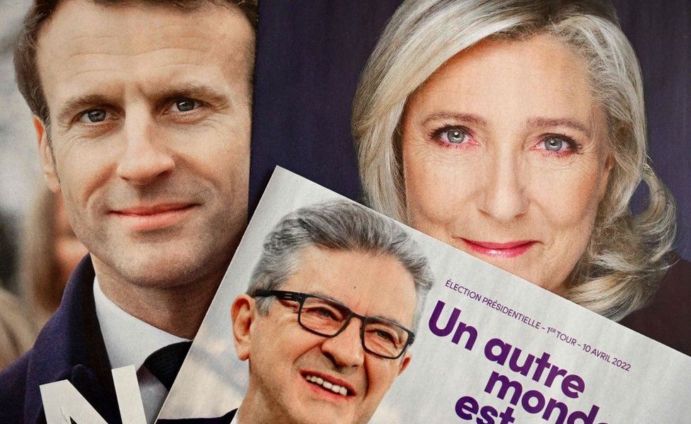
Emmanuel Macron has a fight on his hands from far-right challenger Marine Le Pen, who has been galvanised by a slick election campaign.
Forty-nine million people are eligible to decide which two of 12 candidates should take part in the run-off vote.
The president spent little time on the race, focusing instead on Europe's reaction to Russia's war in Ukraine.
One issue more than any other has predominated this election: the spiralling cost of living in energy bills and shopping baskets.
When he came to power with a new party in 2017, Emmanuel Macron swept away the old allegiances, and the two big parties are still nursing their wounds.
Socialist candidate Anne Hidalgo has struggled to be heard, while on the right Valérie Pécresse has failed to excite the Republicans.
Now, the main challenge to Mr Macron, 44, is coming from Ms Le Pen on the far right and Jean-Luc Mélenchon on the far left.
Some are even predicting the president could lose.
'I still don't know who to vote for'
Voting began at 08:00 (06:00 GMT) in mainland France and ends in the big cities of Paris, Lyon and Marseille at 20:00 local time. What adds to the uncertainty is that days before the vote, one Ipsos opinion poll suggested 37% of people were still undecided.
First the Covid-19 pandemic and then Russia's invasion overshadowed this election.
"The campaign's been going on for two months and there hasn't been much debate," complains Ourdia, a café owner in north-west Paris. "I still don't know who to vote for."
Cost of living crunch
The French economy is in decent shape and unemployment has fallen to 7.4%, but voters are not feeling the benefit.
That's because prices are going up across the board, at the shops, the market, the petrol pump and in domestic energy bills. The phrase you hear everywhere is pouvoir d'achat - which translates as spending power but is better known in English as the cost of living.
Thierry, who lives outside Paris and runs a shoe stall, says prices have gone through the roof. "The cost of shoes has gone up by 20% to 30% and all the taxes have gone up too," he points out.
That is why many of the candidates are promising to boost the minimum wage, in some cases by hundreds of euros. It's due to go up at the start of May to about €1,300 (£1,100; $1,430) a month after tax.
Latest Stories
-
A person stopped by police can record for evidence – NRSA
36 minutes -
New Road Traffic Law introduces separate licensing regime for commercial drivers
49 minutes -
Ghana must move beyond enforcement to tackle road deaths – Appiah Kusi Adomako
1 hour -
Kusi Adomako calls for road crashes to be declared a public health emergency
1 hour -
Ghana makes history with international karting debut
2 hours -
Playback: The Law discussed new road traffic rules
2 hours -
What’s driving men to get penis fillers, despite the risks?
2 hours -
The world’s oldest president left for a ‘brief stay’ in Europe, he hasn’t returned in two months
3 hours -
Trapped driver rescued after accident on Kintampo–Tamale highway
3 hours -
Civil Service must put citizens at centre of decision-making – Vice President
3 hours -
Firefighters battle blaze at Accra New Town apartment
3 hours -
Ghana receives five new envoys to strengthen diplomatic relations – Ablakwa
4 hours -
Europe’s tallest Virgin Mary statue unveiled in rural Poland
4 hours -
Sammi Awuku denies reports of EOCO arrest
4 hours -
Stonebwoy makes history at OVO Arena Wembley with monumental BHIM Festival
4 hours