

Audio By Carbonatix
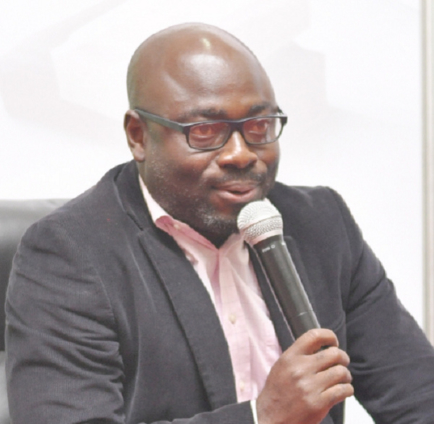
Economist Professor Lord Mensah has advised government to be measured in its expectations of signing a deal with the International Monetary Fund (IMF) before the 2023 budget presentation.
According to him, the IMF would rather look at the 2023 budget, which will be presented in November 2022 to finalise a programme with Ghana.
He urged government to rather focus on using the budget to rebuild investor confidence on toning down on borrowing, while sending signals of debt restructuring to the IMF.
This, Professor Mensah argued will give government some space to negotiate with the IMF from a strong position.
“I don’t think it is possible to get a deal with the IMF before the middle of November when we get ready to present the 2023 budget. My advice will be that we should rather use the budget to position the government for an IMF programme”, he stated.
He explained that the government and the IMF have a lot of processes and fine-tuning to do before signing an economic bailout deal.
He cautioned that the IMF will not just enter into a deal because a country is economically desperate for assistance.
“If you study the IMF carefully, they always want your debt stock to be at sustainable levels before they give you assistance. If your debt levels are bad, the IMF will ask you to do something about it before assisting the country”.
Citing Ghana’s debt levels as worrying, he stated that it is not surprising that the IMF is urging the government to restructure its debt as first requirement as part of the negotiations.
Providing some recommendations, Prof. Mensah advised that it will be prudent for government to come out and engage relevant stakeholders in the domestic financial sector to calm the market.
Such a move, he stressed will not only stabilise the domestic bonds market, but will bring some level of certainty among investors who are currently in the dark on the next move of government.
He warned that keeping investors in the unknown only sparks speculations which aggravate the economic challenges of the country.
He partly blamed the situation on the high inflation and the cedi depreciation, which he warns may get worse.
Latest Stories
-
Finance Minister advises African governments to strengthen regional tax cooperation
13 minutes -
NPP accuses NDC of master-minding demolition of Ho regional office fence
14 minutes -
Ghana plans stronger regional power trade with Nigeria
14 minutes -
GRA Commissioner-General calls for stronger tax cooperation to boost regional revenue mobilisation
15 minutes -
NACOC needs more personnel to tackle drug trafficking – Toobu
19 minutes -
Railway workers resist KMA eviction order, demand consultation
21 minutes -
Legacy Leadership Africa Institute to host boardroom women’s leadership programme
33 minutes -
Ghana needs a law to sustain constitutional reforms – CDD-Ghana
4 hours -
COVID fumigation audit: Auditor-General has a lot of questions to answer – Akwatia MP
4 hours -
Stranded Ghanaian medical graduates in Cuba appeal to Mahama for immediate return
4 hours -
GNFS contains fire outbreak at Teshie Lekma Road near Lekma Hospital
10 hours -
Samia Nkrumah rejects the narrative that Ghanaians were happy after Nkrumah’s overthrow
11 hours -
A Mother’s pain: Tribute by Ivan Baidoo’s mother
12 hours -
‘Forgive us for staying away’ — Samia Nkrumah leads family back to Nkroful, pledges to preserve Nkrumah’s legacy
12 hours -
Ernest Nuamah scores twice as Lyon beat Rennes
12 hours