

Audio By Carbonatix
Mansa, 24, started attending the antenatal care clinic about 2 months into the pregnancy of her second child.
“I was attending antenatal clinic all the time, and everything was smooth,” she recounted not having any issues during the pregnancy period.
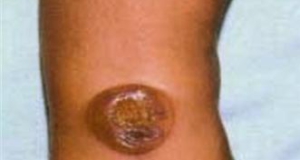
She delivered vaginally in a peripheral hospital to a bouncy baby girl. However, her joy was snapped when she found a mass behind her baby’s back, with feet curved inwards.
“This was definitely not normal,” she said.
Her baby was referred to Komfo Anokye Teaching Hospital right after delivery for further management. She was diagnosed with a condition known as myelomeningocele.
Mansa was informed that even with surgery, her baby had a 50/50 chance of being able to walk again.
Upon being apprised of the cost of surgery, Martha and her husband thought best to resort to herbal medication.
“If the child dies, so be it. We think this will be the best option since we are newly married and with low income jobs like ours, we will need to take some loans to be able to arrive at the huge sum of money needed for the surgery and if the baby’s chances of returning to normalcy is not high, why take the risk when they can always conceive again?” she quizzed.
Myelomeningocele?
Neural Tube Defects (NTDs) are amongst the many adverse outcomes of folic acid deficiency. It refers to abnormalities or deformities of birth involving the coverings of the central nervous system.
It results from defects in the formation of the neural tube.
The neural tube is formed at about 3 to 4 weeks into the pregnancy, at a time when most women may not even be aware that they are pregnant.
They therefore may not have reported to the hospital for confirmation of the pregnancy.
The condition is very detrimental to the child as it culminates in neonatal, infant and childhood mortality. For those who perhaps survive a bit longer, it poses serious life-long challenges which no parent will like to encounter.
It also results in increased medical costs, making use of monies which could have been diverted to develop other areas of health. It also robs the country of its potential human resources due to disability and death of victims.
According to a research, the rates are estimated to be between 1 and 3 per 1,000 births, with studies reporting between 1.15 and 1.6 per 1,000 birth for Ghana.
NTDs are caused by many factors including genetic and environmental factors as well as micronutrient deficiency. It is one of the commonest birth defects. The most common neural tube defects are Spina bifida which is the incomplete closure of the spinal cord and spinal column and anencephaly, a severe underdevelopment of the brain resulting in an abnormally small head.
In an interview with Dr. Adwoa Pokua Boakye Yiadom, a pediatrician neonatologist at the Komfo Ankokye Teaching Hospital, Kumasi, Ghana, she said Neural tube defects are the third most common surgical cases at the Mother-Baby Unit.
“It is the number one cause of neurosurgery at the ward,” she revealed.
According to Dr. Boakye-Yiadom, the treatment depends on the type of neural tube defect. As part of the investigations, a Magnetic Resonance Imaging (MRI) is required, but due to financial constraints of most parents of these children, a Computerized Tomography (CT) is done instead.
“The CT scan is relatively cost effective but exposes the child to radiation which is harmful to the child,” she said.
Also, as part of the management of these babies, their parents are counselled on the condition of their child.
“This is because in our society, babies with congenital anomalies are likely to be killed, neglected at home, abandoned in the hospital among others,” she said.
The Social welfare group is also involved in the care of such children, especially for the less privileged parents. Mortality is low but morbidity or loss of function as an individual is high even after the surgery.
Folic acid
The nutritional status of women before and during pregnancy is very crucial.
The formation and growth of the fetus in the uterus is solely dependent on certain essential nutrients -be it in food or from supplements- in this case, folic acid. As such, if the mother is not taking in these nutrients, there will be abnormal formation of the fetus, especially in the first trimester (up to 12 weeks gestation) -the stage in which some vital organs are being formed and the baby as a whole is rapidly developing.
Folic acid supplementation, which supplies the body with folate, has been shown to protect against congenital malformations that are linked to neural tube defects.
Prevention
According to the research done in the Northern Region of Ghana, intake of folic acid among pregnant mothers was low even though awareness on the supplement was on a higher side.
“I did not know there was a need to take folic acid prior to conception,” Mansa said.
It is recommended, all women, from the moment they begin trying to conceive until 12 weeks of gestation, should take a folic acid supplement (400 micrograms folic acid daily).
Any woman in the reproductive age (15 to 49 years) should increase her food intake of folate and also take in folic acid supplementation.
Foods such as kontomire and bambara beans are rich in folate should be consumed often to avert this condition.
Latest Stories
-
IMF identifies political appointments as major weakness in GPHA, VRA, COCOBOD and other SOEs
5 minutes -
Government reform efforts yet to translate into improved SOEs financial performance – IMF
37 minutes -
Teacher unions demand apology from Muntaka over WASSCE forgery comments
54 minutes -
NSMQ 2026: From 9 points to ADO9 – PRESEC Legon survive thriller to claim 9th trophy
1 hour -
Photos: Inside the thrilling NSMQ 2026 Grand Finale as PRESEC, AUGUSCO and Accra Academy battle for glory
2 hours -
Achimota, five other SHSs pilot waste segregation, clean-air initiative
2 hours -
More women attempt suicide, but men die by suicide more often – National Suicide Analysis Report
2 hours -
Three Ghanaian students launch e-commerce platform, Panta, to support small businesses
2 hours -
KMA passes by-law requiring Metropolitan Chief Executives to occupy official residence
2 hours -
Zoomlion rolls out disinfection, disinfestation exercise across Volta Region
2 hours -
Photos: Mahama swears in three new Supreme Court justices
2 hours -
$260 e-Visa fee could make Ghana less competitive – GHATOF
2 hours -
New Supreme Court justices pledge fairness, impartiality and fidelity to Constitution
2 hours -
Mahama urges Supreme Court to communicate decisions with ‘extreme clarity’
3 hours -
Techiman MCE residence abandoned since 2017; Regional Minister sets December deadline
3 hours